
In today's B2B landscape, 'sales enablement' is more than just content and training. It's the operational backbone of high-performing go-to-market teams—a strategic system designed to equip SDRs, AEs, and leaders with the right data, tools, and processes to close more deals, faster.
But the old playbook of fragmented tools, manual list building, and generic outreach is broken. It leads to burned-out reps spending more time on admin than selling, resulting in stalled pipelines and unpredictable forecasts. The symptoms are painfully familiar: SDRs drowning in manual research, AEs receiving poor-quality handoffs, and sales leaders struggling with visibility into what actually drives revenue. This inefficiency is a direct barrier to scale.
Modern sales enablement is about precision, speed, and intelligence. It’s about replacing a messy, disjointed tech stack with a unified platform that automates low-value tasks and enables personalization at a scale that still sounds human. It's the key to building a predictable, efficient revenue engine.
This guide moves beyond theory to deliver the 10 essential sales enablement best practices that top-performing teams are using to win in 2026. You will learn actionable frameworks for everything from building data-driven ICPs and implementing multi-channel outreach to automating CRM hygiene and establishing a culture of continuous learning. Each practice is a critical component for creating a repeatable go-to-market motion that generates more pipeline without simply adding more headcount.
1. Build a Data-Driven Ideal Customer Profile (ICP)
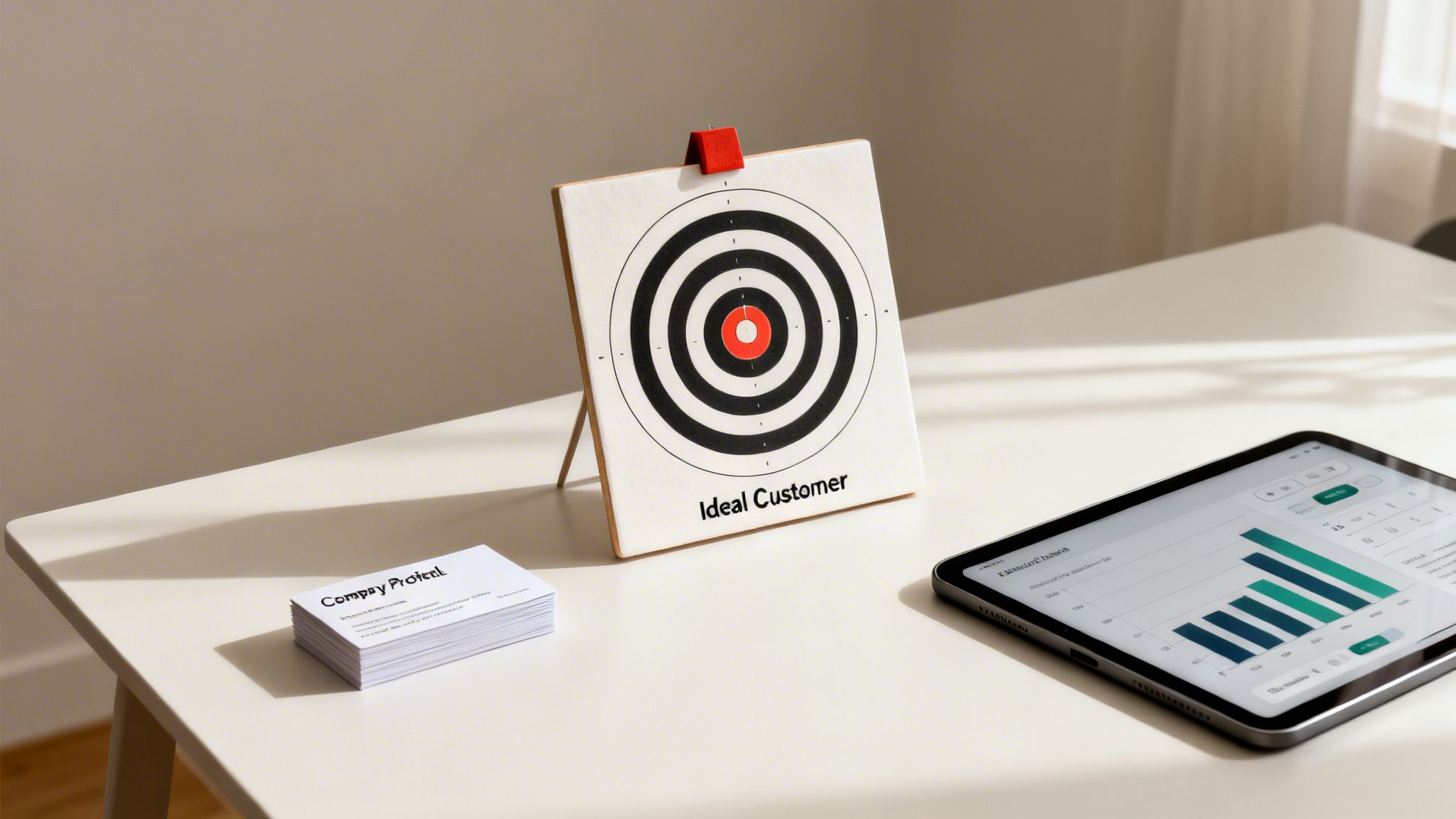
Effective sales enablement starts long before the first cold call. Its foundation is a precise, data-driven Ideal Customer Profile (ICP) that defines the exact characteristics of your best-fit customers. Instead of relying on assumptions, a modern ICP is built on quantitative and qualitative evidence, ensuring your GTM teams focus their energy on accounts most likely to convert, close, and expand.
This data-first approach moves beyond simple firmographics like company size and industry. It layers in technographics (what software they use), behavioral signals (hiring trends, funding events), and deep-seated pain points identified from real customer conversations. By building this specific, multi-dimensional profile, you equip your SDRs to stop wasting time on low-probability accounts and instead engage prospects who have a genuine, urgent need for your solution.
Why It’s a Foundational Best Practice
A well-defined ICP is the central source of truth for your entire go-to-market engine. It informs marketing campaigns, product development, and, most importantly, sales prospecting. For instance, Gong's analysis of B2B SaaS data revealed that companies with 100-500 employees converted at three times the rate of larger enterprises for their specific solution. This insight allowed them to redirect resources toward a more profitable segment. Without this data, they would have continued pursuing less efficient leads.
How to Implement a Data-Driven ICP
Creating a truly actionable ICP is a systematic process, not a one-off brainstorming session.
- Analyze Your Wins: Start by exporting data from your CRM for your top 20% of customers by revenue, deal size, or lifetime value. Look for common denominators across industry, employee count, geography, and annual revenue.
- Layer Multiple Data Sources: Combine your historical win data with insights from customer interviews and market research. What pain points do your best customers consistently mention? What business goals were they trying to achieve?
- Create Tiered Profiles: Develop 2-3 primary ICPs that represent your absolute best fit. Then, define 1-2 secondary profiles for potential expansion into new markets or use cases.
- Update Quarterly: Your ICP is not static. Revisit and refine it every quarter based on new sales performance data and shifting market dynamics.
This focus on data is one of the most critical sales enablement best practices because it creates a repeatable model for pipeline generation. Using an all-in-one platform like Willbe, teams can operationalize their ICP at scale. By leveraging Willbe's unified data engine and advanced filters, you can instantly find thousands of prospects that perfectly match your newly defined ICP criteria, turning a static document into a dynamic, actionable prospecting list.
2. Implement Multi-Channel Outreach with Consistent Personalization
In today's fragmented B2B landscape, buyers don't live in a single channel. Relying solely on email or LinkedIn is a surefire way to get lost in the noise. Effective sales enablement dictates a coordinated, multi-channel outreach strategy that engages prospects across email, social platforms, and phone calls with a consistent, personalized narrative. This approach moves beyond generic, single-thread campaigns and delivers value that feels genuinely tailored to the buyer, regardless of the channel they prefer.
The core principle is to use each channel for its unique strength while maintaining a unified message. Email is for delivering detailed value, LinkedIn is for building social proof and relationships, and a phone call is for high-intent, direct engagement. By orchestrating these touchpoints, you create a cohesive buyer experience that significantly lifts response rates. Research from LinkedIn Sales Solutions consistently shows that combining email and LinkedIn outreach can increase engagement by over 35% compared to using either channel alone.

Why It’s a Foundational Best Practice
A multi-channel strategy reflects how modern decision-makers actually work. They might see your email on their laptop, check your profile on their phone via the LinkedIn app, and then take a call while commuting. A singular approach misses these opportunities. For example, HubSpot's outbound teams masterfully use coordinated sequences that allow reps to reach a buyer 4-5 times across different platforms without triggering spam filters or causing prospect fatigue. This is one of the most crucial sales enablement best practices for building a resilient pipeline that doesn't depend on a single point of failure.
How to Implement Multi-Channel Outreach
Building a successful multi-channel cadence requires strategy, not just more activity. It's about smart orchestration.
- Define Your Core Channels: Start with a powerful email and LinkedIn combination. Reserve phone calls and SMS for high-value accounts or prospects who have shown previous engagement.
- Establish Smart Cadence Rules: Avoid overwhelming prospects. A best practice is to limit touches to 3-4 across all channels within a two-week period. To learn more about structuring these workflows, explore these sales cadence best practices.
- Personalize Every Touchpoint: Use account-level insights like recent funding announcements, new product launches, or key personnel changes to tailor your message. Generic outreach is ignored on one channel; it’s alienating on three.
- Sync All Activity to Your CRM: Ensure every email, LinkedIn message, and call is logged automatically. This creates a single source of truth for every interaction, enabling seamless handoffs and smarter follow-ups.
This disciplined approach transforms outbound from a numbers game into a strategic engagement model. With Willbe, teams can automate this entire process in a single platform. You can build sophisticated multi-channel sequences, and its proprietary, template-free AI generates personalized messaging that maintains a consistent, human-like voice across both email and LinkedIn. This enables you to execute a complex strategy at scale without sacrificing the quality of personalization that drives replies.
3. Equip Sales Teams with Intelligent, Real-Time Account Intelligence
Modern sales enablement moves beyond static training materials and into dynamic, actionable data. The best practice is to equip sales teams with intelligent, real-time account intelligence, giving reps instant access to the contextual information that creates relevance. This includes recent news, funding events, job changes, technology adoption, and hiring patterns that signal a 'why now' moment.
Instead of spending hours on manual research, reps with access to automated intelligence can personalize every outreach with current, verified data. This significantly reduces the time-to-first-touch while simultaneously improving the quality and relevance of the message. The goal is to ensure every engagement is informed by a timely business event, which directly increases the probability of securing a meeting.

Why It’s a Foundational Best Practice
Real-time intelligence transforms generic outreach into strategic, consultative conversations. It's the difference between a cold email that gets deleted and a message that lands because it addresses an immediate priority. For example, analysis from Gong shows that reps using intent data close deals 15% faster and with 10% higher deal values. This is because they aren't just selling a product; they are offering a timely solution to a verified business challenge, a core principle of effective sales enablement best practices.
How to Implement Real-Time Account Intelligence
Operationalizing account intelligence requires a systematic approach to identifying and acting on key buying signals.
- Prioritize Key Signals: Identify the 3-5 intelligence signals most relevant to your ICP. This could include headcount growth in specific departments, recent funding rounds, new executive hires, or product launches.
- Set Up Real-Time Alerts: Configure daily or weekly alerts for your target accounts to catch buying signals the moment they happen. This ensures you never miss a window of opportunity.
- Create Trigger-Based Playbooks: Develop specific outreach sequences for different trigger events. For example, a "Recently Funded Company" playbook should have messaging that focuses on scaling operations and managing growth challenges.
- Train Reps on Positioning: Coach your team to use intelligence to position value, not just for superficial chit-chat. The signal should be the reason for the outreach, directly tied to the prospect’s potential pain point.
This workflow ensures your team is always engaging the right accounts at precisely the right time. The Willbe platform embeds this intelligence directly into the prospecting workflow. You can instantly identify prospects in your ICP who recently raised a Series B, then use Willbe’s proprietary AI to personalize outreach that directly addresses their growth challenges, turning raw data into revenue opportunities at scale without leaving the platform.
4. Create Micro-Segmentation and Dynamic Campaign Strategies
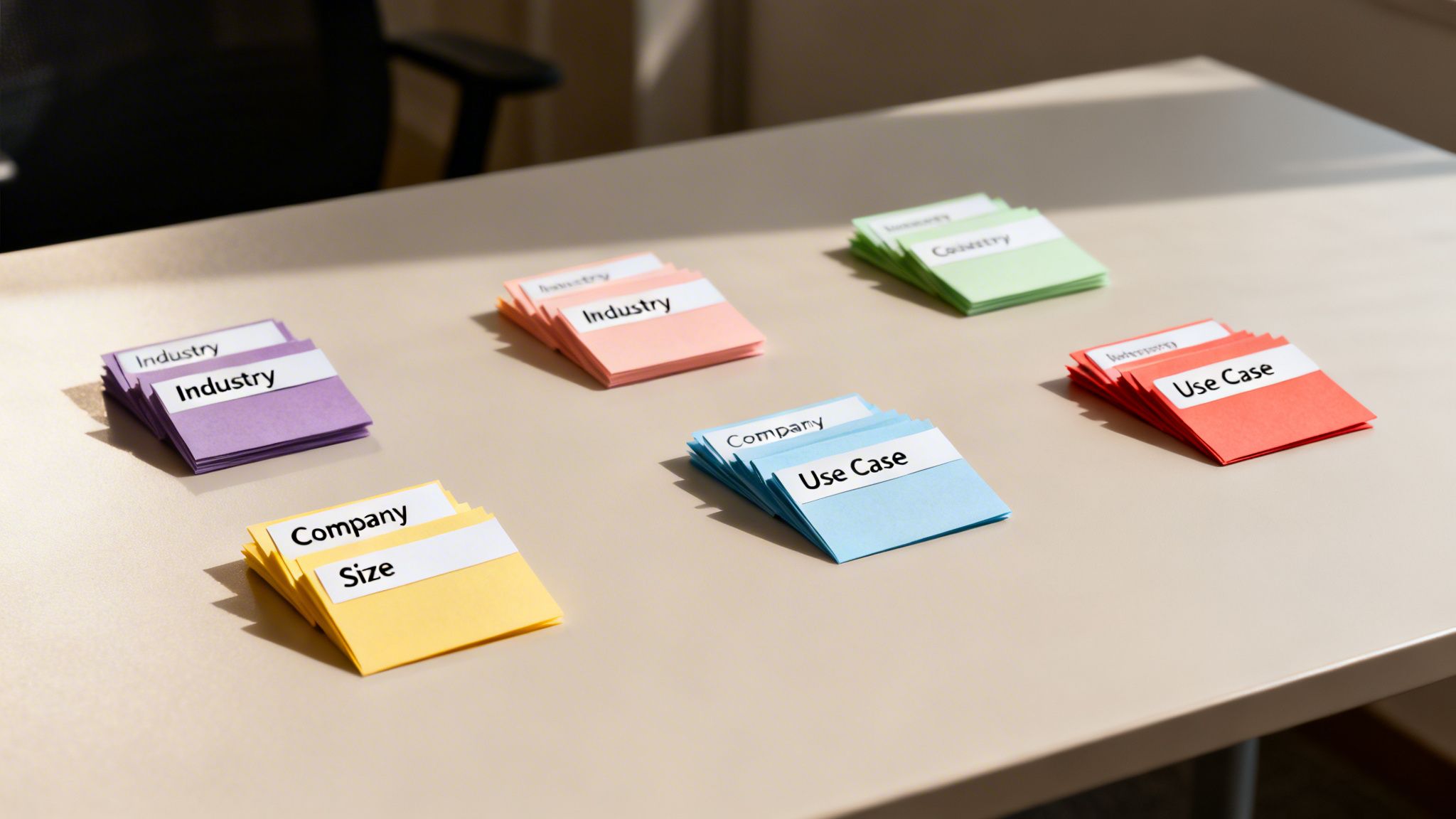
Generic, one-size-fits-all outreach is a relic of the past. Modern sales enablement best practices demand a far more precise approach: breaking down your total addressable market into small, highly targeted micro-segments. Instead of blasting the same message to everyone, this strategy involves creating distinct campaigns for narrow audience groups based on attributes like industry, company size, technology stack, buying intent signals, or specific pain points.
This level of granularity allows sales teams to craft messaging that resonates on a deeper level. A Series A startup’s priorities (speed, efficiency) are vastly different from an enterprise account’s needs (compliance, security, integration). Micro-segmentation acknowledges this reality, enabling you to deliver a unique value proposition to each group, which dramatically increases relevance, boosts response rates, and protects your domain reputation by reducing list burnout.
Why It’s a Foundational Best Practice
Micro-segmentation is the engine of personalization at scale. By tailoring your outreach, you demonstrate to prospects that you understand their specific context and have a relevant solution. For example, HubSpot’s outbound team famously segmented its market by industry vertical and crafted industry-specific use cases, resulting in a 45% improvement in response rates. This approach turns a cold outreach into a warm, context-aware conversation, which is critical for generating high-quality pipeline.
How to Implement Micro-Segmentation
Building a dynamic segmentation strategy is a systematic process that moves from broad categories to highly specific, actionable groups.
- Start with Core Segments: Begin by creating 3-5 core segments based on your primary ICPs. These could be defined by industry, company size, and growth stage (e.g., Series A-C tech startups, mid-market SaaS companies, enterprise financial services).
- Layer in Behavioral and Technographic Data: Go beyond basic firmographics. Use buying signals like recent funding rounds, new executive hires, or specific technologies they use to create more nuanced sub-segments. A company that just hired a VP of Sales is a different opportunity than one that just implemented a competitor’s tool.
- Develop Segment-Specific Value Propositions: For each micro-segment, document their unique problems and map your solution’s benefits directly to those pain points. A message to a <$10M company should lead with "startup-friendly pricing," while a message to a >$100M company should emphasize "enterprise-grade security."
- Test, Measure, and Iterate: Track performance metrics like open rate, reply rate, and meeting booked rate for each segment. Run A/B tests on messaging for two-week sprints, then pause underperforming segments and double down on what works.
This practice transforms your prospecting from a guessing game into a scientific process. Using the all-in-one Willbe platform, you can build these complex micro-segments in seconds. Willbe's advanced filters let you combine dozens of data points, from technographics to real-time growth indicators, to create hyper-targeted prospect lists instantly, ensuring every outreach campaign is precisely aimed at the accounts most likely to convert.
5. Establish Clear Sales Qualification Criteria and Frameworks (BANT, MEDDIC, etc.)
One of the costliest mistakes in sales is investing time in prospects who were never going to buy. Effective sales enablement combats this by establishing a shared, documented framework for qualifying leads. Systems like BANT (Budget, Authority, Need, Timeline) or MEDDIC (Metrics, Economic Buyer, Decision Criteria, etc.) provide a common language for the entire GTM team, ensuring consistent and repeatable qualification.
These frameworks move qualification from a gut-feel exercise to a systematic process. They force reps to uncover critical information early, reducing time spent on unqualified leads and enabling smoother, more informed handoffs from SDR to AE. This alignment between sales and marketing on what constitutes a "qualified" lead is a cornerstone of modern sales enablement best practices, directly leading to higher-quality meetings, more accurate forecasts, and shorter sales cycles.
Why It’s a Foundational Best Practice
A standardized qualification framework is the quality control system for your sales pipeline. It prevents AEs from wasting time on discovery calls with prospects who lack budget or decision-making power. For example, an enterprise software company that implemented a custom framework requiring prospects to have >$100M revenue, a confirmed budget, and a buying timeline within 90 days reduced its volume of unqualified AE meetings by 40%. This allowed AEs to focus their efforts on high-probability deals, dramatically improving pipeline conversion rates.
How to Implement a Qualification Framework
Deploying a qualification framework requires more than just picking an acronym; it requires company-wide adoption and enforcement.
- Choose and Customize: Select a framework that matches your sales complexity. BANT is excellent for simpler, transactional sales, while MEDDIC is better suited for complex enterprise deals. Don't be afraid to create a custom hybrid that fits your business.
- Document and Integrate: Embed the framework directly into your CRM. Create required fields for each criterion (e.g., "Economic Buyer Identified," "Timeline Confirmed") that must be completed before an opportunity can advance to the next stage.
- Script Key Questions: Build qualification questions into your discovery call scripts and SDR handoff templates. This ensures reps consistently gather the necessary information. For more on this, you can learn how to qualify sales leads effectively.
- Train and Review: Conduct dedicated training on the framework and hold reps accountable for using it. Regularly review qualified opportunities to ensure the criteria are being applied correctly and are leading to closed-won deals.
This structured approach turns pipeline generation into a predictable science. With an all-in-one platform like Willbe, you can pre-qualify accounts at scale before outreach even begins. By filtering for accounts that match your ICP and meet firmographic qualification criteria, you ensure your team only engages prospects who have the highest potential to become valuable customers.
6. Implement Sales Coaching and Playbook Systems
Effective sales enablement is not just about providing tools and data; it's about codifying what works and systematically scaling winning behaviors. This is achieved through structured sales coaching and documented playbooks that capture the tactics of top performers. Instead of relying on a few star reps, this approach turns sales excellence into a learnable, reproducible process for the entire team.
This system moves beyond ad-hoc advice. It involves creating detailed guides for every critical sales motion, from initial outreach sequences and discovery call frameworks to objection handling and expansion strategies. When combined with regular coaching sessions where managers review calls using conversation intelligence, you create a powerful feedback loop that elevates the performance of every rep and shortens the ramp time for new hires.
Why It’s a Foundational Best Practice
Documented playbooks and consistent coaching are the bridge between strategy and execution. They ensure that every rep is equipped with proven messaging and tactics, eliminating guesswork and improving consistency. For example, HubSpot reduced new rep ramp time from four months to just eight weeks by publishing internal playbooks for common scenarios like "Getting Past the Gatekeeper" and "Handling Budget Objections." This systematic approach ensures that valuable tribal knowledge is captured, shared, and refined.
How to Implement Sales Coaching and Playbooks
Building an effective coaching and playbook system is an ongoing, collaborative effort.
- Analyze Winning Conversations: Use conversation intelligence tools like Gong to analyze the calls of your top 20% of reps. Identify what makes them successful, such as the specific discovery questions they ask or how they frame value propositions, and build these insights into your playbooks.
- Create Scenario-Specific Playbooks: Don't create one giant playbook. Develop targeted guides for your most common GTM motions, like "Cold Outreach to Funded Startups" or "Upselling Existing Customers." Document winning email templates, follow-up sequences, and key talking points for each.
- Explain the 'Why': A great playbook doesn't just provide scripts. It explains the psychology behind the tactic. For instance, explain why a certain discovery question uncovers pain more effectively, empowering reps to adapt the strategy rather than just recite lines.
- Review and Iterate Monthly: Playbooks are living documents. Review their effectiveness with your team every month. Are reps who follow them outperforming others? What messaging is starting to feel stale?
This system turns sales enablement from a one-time training event into a continuous improvement engine. With an all-in-one platform like Willbe, you can enrich your playbooks with dynamic, AI-generated personalization. By integrating Willbe’s account-specific talking points and messaging angles directly into your outreach sequences, you can arm your reps with hyper-relevant content that makes every playbook execution feel unique and human.
7. Develop Predictive Analytics and Sales Forecasting
Modern sales enablement moves beyond reactive reporting and embraces predictive analytics to forecast pipeline, identify at-risk deals, and prioritize high-value opportunities. Instead of relying on gut feel or lagging indicators, this approach uses historical data patterns to predict future outcomes. Predictive systems analyze sales cycle length, deal size, rep performance, and prospect engagement to give leaders a real-time, forward-looking view of the business.
This data-driven methodology allows managers to shift from simply tracking results to actively shaping them. By analyzing the correlation between rep activities (emails sent, conversations held) and outcomes (meetings booked, deals closed), you can identify the exact behaviors that drive revenue. This equips sales teams to proactively manage their pipeline, intervene when a deal stalls, and accurately forecast revenue with a much higher degree of confidence.
Why It’s a Foundational Best Practice
Predictive forecasting is a cornerstone of effective sales enablement best practices because it transforms sales management from an art into a science. It provides the visibility needed to make smarter, faster decisions that directly impact revenue. For example, Salesforce Einstein Analytics can identify that deals involving four or more stakeholders close at a 65% rate, compared to just 30% for those with only one or two. This insight allows enablement teams to coach reps on multi-stakeholder engagement, a proven path to higher win rates.
How to Implement Predictive Analytics
Building a predictive model doesn't require a team of data scientists. You can start with fundamental metrics and gradually build sophistication.
- Establish Baselines: Begin by tracking simple, core metrics. Calculate your average deal size by rep, sales cycle length by segment, and win rate by product line. This data forms the foundation for all future predictions.
- Correlate Activity to Outcomes: Analyze which sales activities consistently lead to the best results. For instance, does a five-touch sequence over two weeks yield more meetings than a three-touch sequence? Identify what works and scale it.
- Create Deal Risk Scores: Combine key variables to create a simple scoring system. Factors like opportunity size, days in the current sales stage, and the level of stakeholder engagement can help you flag at-risk deals before they slip.
- Review and Refine Models: Predictive models must evolve. Revisit your assumptions and update your models quarterly with new performance data to account for market shifts or internal process changes.
This data-driven approach creates a more predictable GTM engine. Using an all-in-one platform like Willbe, teams can embed these analytics directly into their workflow. Willbe’s real-time dashboards track KPIs like email open rates, reply rates, and meetings booked by segment, helping leaders instantly see which activities are generating pipeline and which reps need coaching, turning raw data into actionable revenue intelligence.
8. Align Sales and Marketing with Shared Metrics and Lead SLAs
One of the most persistent roadblocks to revenue growth is the friction between sales and marketing. Effective sales enablement bridges this gap by creating a unified GTM engine built on shared accountability. This alignment is formalized through a Service Level Agreement (SLA) that outlines mutual commitments, ensuring marketing delivers high-quality leads and sales acts on them with speed and precision.
This modern approach moves beyond siloed goals like "marketing qualified leads" (MQLs) or call volume. Instead, it focuses both teams on revenue-centric outcomes like pipeline contribution, deal velocity, and cost-per-opportunity. When marketing commits to delivering a specific volume of ICP-fit leads and sales commits to a rapid follow-up protocol, you create a transparent, predictable system for converting interest into revenue.
Why It’s a Foundational Best Practice
Misalignment isn't just an internal frustration; it's a direct drain on revenue. When sales ignores marketing leads, valuable budget is wasted. When marketing generates low-quality leads, sales productivity plummets. An SLA enforced by shared metrics, popularized by companies like HubSpot and Marketo, ensures both teams are rowing in the same direction. For example, a B2B SaaS company that implemented an SLA requiring a 30-minute sales response time to qualified inbound leads saw their lead-to-meeting conversion rate jump from 2% to 8% in one quarter.
How to Implement Sales and Marketing Alignment
Creating a functional SLA requires collaboration and a commitment to data-driven decision-making.
- Co-Create Definitions: Sales and marketing must jointly define what a "qualified" lead actually is. This includes agreeing on firmographic, technographic, and behavioral criteria that align with the ICP.
- Establish a Two-Way SLA: Document commitments for both teams. Marketing's SLA might specify delivering 100 ICP-fit, prospecting-qualified leads per month. Sales' SLA would require a 1-hour follow-up time and a commitment to disposition every lead within 48 hours.
- Create Shared Dashboards: Build a central dashboard in your CRM or BI tool that tracks shared KPIs like lead-to-opportunity conversion rate, pipeline generated from marketing sources, and deal velocity.
- Implement Feedback Loops: Sales must provide structured, consistent feedback on lead quality. Marketing uses this data to refine targeting, messaging, and campaign strategy. This is a core component of effective account-based marketing best practices.
This process is one of the most impactful sales enablement best practices because it transforms a historically adversarial relationship into a strategic partnership. Using an all-in-one platform like Willbe, teams can supercharge this alignment. Marketing can use Willbe’s data and analytics to identify high-value segments for campaigns, while SDRs use it to instantly act on those segments with hyper-personalized outreach, ensuring the handoff from marketing intelligence to sales action is seamless and effective.
9. Automate Routine Tasks and CRM Management to Maximize Selling Time
The most common complaint from sales reps is a lack of time for actual selling. Research consistently shows that reps spend less than a third of their day on revenue-generating activities. The rest is consumed by administrative tasks like CRM data entry, manual prospecting, list building, and logging activities. Effective sales enablement directly attacks this inefficiency by automating low-value, repetitive work, freeing reps to focus exclusively on what they do best: engaging buyers and closing deals.
This is not just about using a few macros; it's a strategic shift to an automated GTM engine. By implementing tools that handle contact enrichment, email sequencing, activity logging, and meeting scheduling, you give back hours to every single rep, every single week. This practice transforms the sales role from an administrative burden into a high-impact strategic function, directly improving quota attainment and morale.
Why It’s a Foundational Best Practice
Time is a finite resource, and maximizing "selling time" is one of the most powerful levers for increasing revenue without increasing headcount. Automating just two to three hours of administrative work per rep each day translates into 10-15 additional hours of selling capacity per week. For a team of ten reps, that’s over 100 extra hours dedicated to pipeline generation and deal progression. Leaders like Jason Lemkin have long advocated for this focus on efficiency, as it creates a scalable, predictable system for growth.
How to Implement Sales Automation
Start by identifying the biggest time sinks in your team’s current workflow and systematically replacing them with automated solutions.
- Audit Your Team's Time: For one week, have reps track how they spend their day, categorizing activities into "selling" (calls, demos, negotiating) and "non-selling" (research, data entry, scheduling). Identify the top 3-5 most time-consuming administrative tasks.
- Automate the Prospecting Workflow: The single biggest time-drain is often manual prospecting. Use a unified platform to automate list generation based on your ICP, verify contact data, and create multi-channel sequences with AI-personalized messaging.
- Integrate and Automate CRM: Set up rules in your CRM to automatically log email and call activity, update lead statuses, and create follow-up tasks. This ensures data hygiene and eliminates hours of manual data entry.
- Deploy Scheduling Tools: Use tools like Calendly or native scheduling features in sales engagement platforms to eliminate the back-and-forth emails required to book a meeting.
Automating the top of the funnel is one of the most critical sales enablement best practices for scaling predictably. Using an all-in-one platform like Willbe, teams can consolidate and automate the entire prospecting motion. A rep can define ICP criteria, and Willbe instantly generates a list of verified contacts, crafts personalized outreach sequences with its template-free AI, and syncs all activity back to the CRM. This turns a 5+ hour weekly manual process into a few clicks, giving reps back their most valuable asset: time to sell.
10. Create a Culture of Continuous Learning and Competitive Intelligence
In today's fast-moving market, static playbooks and one-off training sessions become obsolete almost instantly. True sales enablement is not an event but an ongoing process, rooted in a culture of continuous learning and sharp competitive intelligence. This environment ensures your sales team is constantly evolving, adapting to new buyer behaviors, and staying multiple steps ahead of the competition.
This culture goes beyond formal training. It thrives on peer-to-peer knowledge sharing, where top performers break down their successful strategies, and on tight feedback loops that quickly identify what’s working and what’s not in the field. By embedding learning and competitive awareness into the daily rhythm of the sales floor, you transform your team from simply executing plays to actively improving them in real time.
Why It’s a Foundational Best Practice
A culture of continuous learning is the engine of sustained sales performance. It prevents the team from plateauing and ensures that best practices are shared and adopted quickly, rather than remaining isolated with a few top reps. For example, a rep who discovers a new, highly effective way to counter an objection from a key competitor can share that tactic in a team sync, immediately arming the entire team with a proven response. This collective intelligence is one of the most powerful sales enablement best practices for maintaining a competitive edge.
How to Implement a Culture of Continuous Learning
Fostering this environment requires deliberate structure and reinforcement from leadership.
- Establish a "Deal Desk" Rhythm: Hold weekly or bi-weekly pipeline review meetings that focus less on forecasting and more on strategy. Discuss active deals, share insights on what messaging is resonating, and collaboratively brainstorm ways to overcome obstacles.
- Create Competitive Battle Cards: Don't just list competitor features. Build dynamic battle cards that outline their weaknesses, your key differentiators, and specific talk tracks to use when a prospect mentions them. Update these documents quarterly or whenever new market intelligence emerges.
- Implement a Peer Coaching Program: Pair new hires or mid-level performers with seasoned top performers. This creates a direct channel for transferring practical, on-the-ground knowledge that can't be taught in a classroom.
- Leverage Technology for Insights: Use tools that provide data on what’s actually working. For instance, teams can analyze campaign performance in Willbe to see which personalized messages are generating the highest reply rates for a specific ICP. This data provides concrete proof of effective tactics, which can then be scaled across the team.
Sales Enablement Best Practices — 10-Point Comparison
From Best Practices to Revenue Engine
The journey from a siloed sales team to a high-performing revenue engine is not about adopting a single tactic or buying a new tool. It’s a strategic shift built on a foundation of repeatable, scalable systems. Throughout this guide, we've explored the ten core pillars that define modern, effective sales enablement. These aren't just isolated tips; they are interconnected components of a single, powerful machine designed for predictable growth.
From establishing a crystal-clear, data-driven Ideal Customer Profile (ICP) to automating the administrative burdens that drain selling time, each practice works in concert. A precise ICP informs your micro-segmentation. Sharp segmentation fuels hyper-relevant, multi-channel outreach. Real-time account intelligence makes that outreach impactful, and a robust coaching culture ensures your team can execute flawlessly. These are the sales enablement best practices that separate top-tier organizations from the rest.
The Unifying Thread: System, Not Silos
The most critical takeaway is the shift in mindset from individual heroics to systemic excellence. Relying on your top 10% of reps to carry the team is not a scalable strategy. True enablement builds a framework where every team member, from the newest BDR to the most seasoned AE, is equipped to succeed. This means moving beyond fragmented workflows and a patchwork of disconnected tools that create data gaps and friction.
Consider the common pain points we’ve addressed:
- Wasted Time: Reps spending hours on manual research and CRM updates instead of engaging prospects.
- Inconsistent Messaging: Generic, templated outreach that fails to resonate and damages your brand.
- Poor Alignment: Sales and Marketing operating with different goals, leading to low-quality leads and missed opportunities.
- Lack of Visibility: Leaders struggling to forecast accurately because they lack clear data on what activities actually drive pipeline.
Addressing these challenges requires a unified approach. When your data, content, and workflows live in a single system, you create a powerful feedback loop. You can see precisely which accounts to target, which messages convert, and which reps need coaching, all in one place.
Your Action Plan for Implementation
To turn these best practices into reality, you need a clear path forward. Start by auditing your current state. Where are the biggest bottlenecks in your go-to-market motion? Is it lead quality? Conversion rates? Ramp time for new hires? Prioritize the practice that will have the most immediate impact on your primary challenge.
For example, if your pipeline is full but deals are stalling, focus on implementing a clear qualification framework like MEDDIC and reinforcing it with targeted coaching. If your pipeline is empty, your first step is to refine your ICP and build intelligent, multi-channel prospecting sequences. The key is to start with one or two core areas, master them, and then expand. The goal is incremental, sustainable progress that builds momentum.
Ultimately, mastering these sales enablement best practices is about more than just hitting quota. It’s about building a resilient, adaptable, and predictable revenue organization that can thrive in any market. It’s about empowering your people with the intelligence, tools, and processes they need to not only perform but to excel. This transformation doesn't happen by accident; it happens by design.
Ready to replace your fragmented toolstack and operationalize these best practices in a single platform? Willbe unifies data, AI-driven personalization, and multi-channel automation to help you build a predictable revenue engine, faster. See how top B2B teams scale their outbound motion with Willbe.