

Let's cut to the chase. A high-performing email subject line for sales is short, personal, and either hints at tangible business value or sparks enough curiosity to earn a click. It's the one element that decides if your email gets read or deleted, acting as the ultimate gatekeeper between your SDRs and a potential customer.
Why Your Sales Subject Line Is The Ultimate Gatekeeper

We've all seen it happen. An SDR spends hours cleaning a list and crafting the perfect outreach sequence, only for the entire campaign to land with a dismal 5% open rate. That's the unforgiving reality of outbound today. The subject line isn't just a creative flourish you add at the end; it’s a strategic asset that determines whether all your other work—from data enrichment to copywriting—even matters.
Think about it. Your CRM data, account segmentation, and email body could be flawless. But without an open, none of that effort connects with a buyer. Your subject line is that gatekeeper, the first and only line of defense you have to cut through an inbox overflowing with competitors, internal noise, and automated spam.
The Real-World Impact on Pipeline
Let's put this in practical terms. Say an SDR sends 200 personalized emails a day. A weak, generic subject line might pull a 10% open rate, meaning only 20 prospects see the message. But a sharp, relevant one? That could easily double the opens to 20%, giving that same rep 40 at-bats every single day.
Over a month, that simple change adds up to hundreds of extra conversations and a direct, measurable lift in qualified pipeline.
The data backs this up. Research shows a staggering 47% of email recipients open emails based on the subject line alone. Even more concerning, 69% will send an email straight to spam if the subject line feels off, which can wreck your domain reputation. You can dig into more email engagement statistics on SalesLoft's blog.
Your subject line isn't just copy; it's your first pitch. It has about five seconds to earn a prospect's attention. If it fails, that opportunity is gone for good.
This is exactly why top-performing sales teams don't leave this to chance. They treat subject lines as a critical component of their GTM engine, knowing that mastering this small element is key to unlocking predictable, scalable success in their outbound motion.
The Psychology Behind A High-Performing Subject Line
Before writing a single word, you need to understand the mindset of a busy decision-maker. What actually makes them pause their endless inbox scroll and click your email? This isn't about marketing gimmicks or outdated sales tricks; it's about leveraging the core psychological triggers that resonate with executives who are perpetually short on time and instinctively skeptical.
A powerful email subject line for sales does more than summarize the email's content. It's a strategic move designed to interrupt their day in a way that feels valuable, not disruptive. Think of their inbox as a battlefield for attention. To win, you have to think like them, not like a salesperson trying to hit a quota.
Curiosity and the Information Gap
Let's be direct: the most potent weapon in your arsenal is curiosity. When you create a small gap between what someone knows and what they want to know, you create an intellectual itch they feel compelled to scratch. This isn't about writing vague clickbait. It’s about providing just enough context to signal relevance without revealing the entire story.
- Weak Subject Line: "Our Solution for [Company Name]"
- Strong Subject Line: "Question about [Their Recent Project]"
See the difference? The second one works because it's specific and implies you've done your research. It suggests you have a relevant question tied to something they're actively focused on, compelling them to open the email to close that mental loop.
The Power of Relevance and Personalization
Relevance is the foundation of modern B2B sales. A subject line that proves you’ve spent more than 30 seconds researching their company instantly elevates you above the 95% of generic spam they delete without a thought. This is where you demonstrate you’re a strategic partner, not just another vendor blasting a purchased list.
A subject line that feels like it was written for an audience of one will always outperform one written for a thousand. It signals respect for the prospect's time and instantly builds a sliver of trust.
This doesn't require hours of manual work. You can reference signals like:
- A recent press release or funding announcement
- A mutual connection on LinkedIn
- A piece of tech they recently added to their stack
- Something they posted or commented on recently
A subject line like "[Mutual Connection] suggested we connect" is gold because it combines social proof with relevance. It immediately lowers their guard because the introduction comes from a trusted source. We dive deeper into these kinds of tactics in our guide to cold email best practices.
Creating Urgency Without Sounding Desperate
Finally, there's urgency. It’s a powerful motivator, but it must be handled with precision. If you use cliché, hype-filled phrases like "Limited Time Offer!" you’ll sound desperate and likely land in the spam folder.
True B2B urgency isn't about your timeline; it's about their business priorities.
Instead of pushing your own agenda, frame the urgency around their goals. A subject line like "Idea for your Q4 pipeline goal" creates a natural sense of timeliness by connecting your message to a critical business objective they're already focused on. It shows you understand their world.
A Repeatable Framework for Subject Lines That Convert
Stop guessing. Start building a predictable sales pipeline. You can't rely on random luck to get your emails opened. What you need is a reliable, repeatable framework for writing an email subject line for sales that consistently cuts through the noise.
The best frameworks aren't complicated. They’re simple, grounded in what actually works, and easy for any SDR or AE to apply on the fly. This one is built around four core pillars: Clarity, Personalization, Brevity, and Value. Think of them less as a checklist and more as a mental model for every message you send, from the first cold touchpoint to a critical follow-up.
The Four Pillars of an Unbeatable Subject Line
A powerful subject line isn’t about a magic, one-size-fits-all template. It's about applying a few key principles every single time. Here’s what each of these pillars looks like in practice.
- Clarity: Is it immediately obvious why you're emailing them? Vague, cryptic subject lines are a one-way ticket to the trash folder. "Quick question about [Their Project]" is crystal clear; "Checking in" is not.
- Personalization: Does this look like an email you sent to a thousand other people? If so, you've already lost. Prove you've done your homework. Reference a specific company initiative, a mutual connection, or even a recent post they shared on LinkedIn.
- Brevity: Can they read and understand it at a glance on their phone? Aim for 6-10 words. Always put the most important information first—that notification preview is your entire stage.
- Value: What’s in it for them? This is the most crucial part. Your subject line must signal a real benefit, a potential solution, or a genuinely useful insight. "Idea for your Q4 revenue goals" offers value; "Intro to our company" does not.
If this sounds like a lot of effort, consider the payoff. Personalized subject lines can boost open rates by a staggering 50%. Even something as simple as using their name can take opens from 15.7% to 18.3%. Brevity is just as critical—subject lines with 6-10 words hit a peak open rate of 21%, which plummets to just 9% for those over 20 words. If you want to dig into the numbers, Invesp's research on email subject lines is a great resource.
Subject Line Transformation: From Generic to Revenue-Driving
Applying this framework fundamentally changes how you approach outreach. It forces a shift in thinking from what you want to say to what your prospect actually cares about. The difference in performance isn't subtle; it's immediate and measurable.
Let’s look at a few common, low-impact subject lines and see how we can transform them into conversation starters.
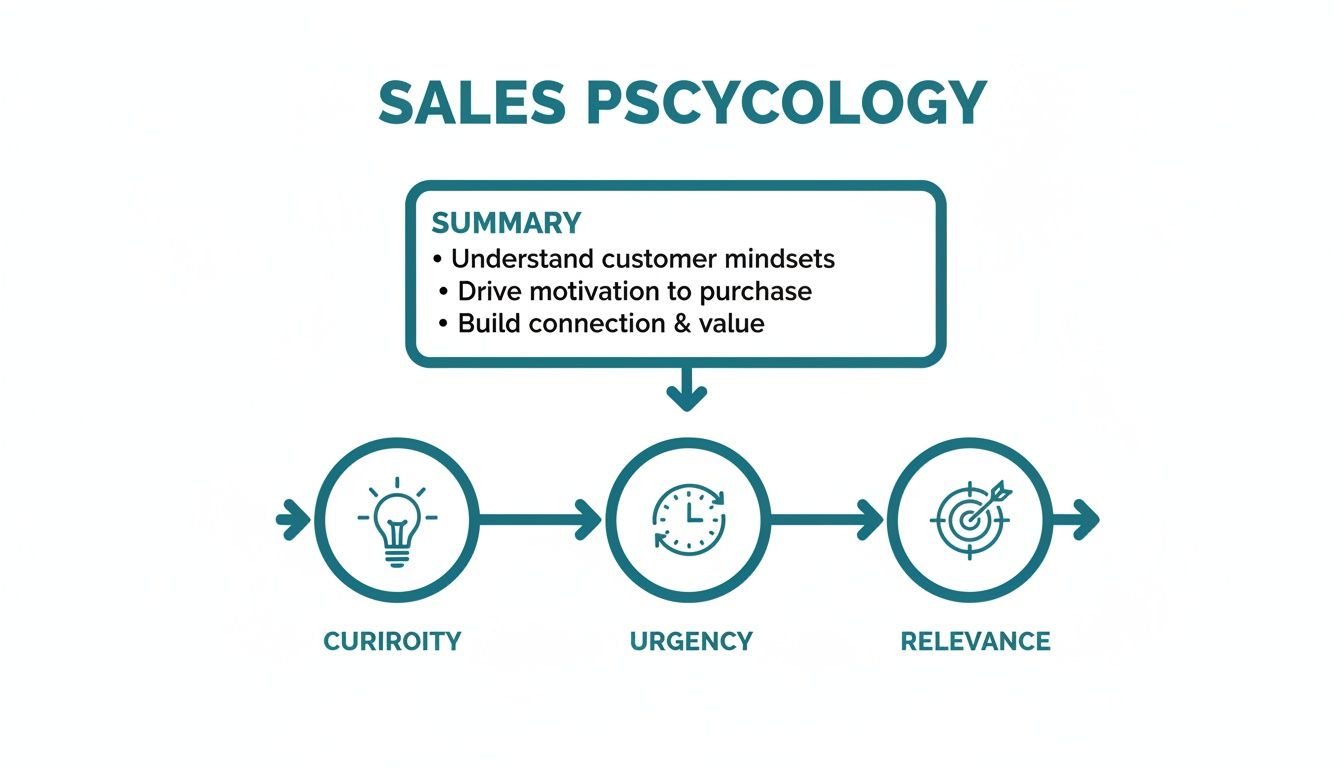
Mastering this framework helps you tap into powerful psychological triggers like curiosity, urgency, and relevance—the real drivers behind why someone chooses to click open.
When you consistently focus on these elements, you don't just get more opens. You set a professional, value-first tone that carries through the entire sales conversation. For more specific examples, especially for those crucial re-engagement emails, take a look at our deep dive on writing effective follow-up email subjects.
Personalizing At Scale Without Sounding Like A Robot

Let's be honest. Dropping {{first_name}} and {{company}} into a subject line isn't personalization anymore. It's the bare minimum, and prospects see right through it. In a world where every SDR has the same automation tools, this low-effort approach often does more harm than good, making your brand look lazy instead of thoughtful.
To actually cut through the noise, your email subject line for sales has to signal that you’ve done real research. It needs to show genuine context and make the person feel like you picked them out specifically, not that they were just another row on a spreadsheet. This is where moving from static data fields to dynamic, real-time triggers changes the game.
From Static Fields to Real-Time Triggers
Instead of relying on static data that might be months out of date, elite sales teams build their outreach around events that are happening right now. These signals, or "triggers," are specific, timely, and provide an authentic reason to reach out.
They turn what would be a cold email into a warm, relevant conversation. Some of the most effective triggers include:
- Company News: Did they just close a funding round, launch a new product, or hire a key executive? A subject line like "Congrats on the Series B funding" immediately shows you're paying attention.
- LinkedIn Activity: Maybe a decision-maker you're targeting posted about a specific business challenge or shared an interesting article. Referencing it with something like "Loved your post on GTM alignment" builds instant rapport.
- Technology Changes: Tools like BuiltWith can signal if a company just adopted new software. A subject line like "Question about your recent Marketo implementation" is incredibly relevant to their current priorities.
These signals are the fuel for subject lines that don't just get opened—they get replies. They prove you understand their business context and have a legitimate reason to be in their inbox.
How to Scale Genuine Relevance
The immediate challenge is scale. How can a single rep find these unique triggers for hundreds of prospects every day without drowning in manual research? This is where the typical sales tech stack—a fragmented patchwork of tools for data, enrichment, and outreach—completely breaks down. The manual workflow is a productivity killer.
This is exactly the problem an all-in-one prospecting platform like Willbe is built to solve. It automates the discovery of these triggers, aggregating relevant signals directly into the sales workflow. Reps can then use this intelligence to instantly build a personalized email subject line for sales based on a prospect's real-time activity or a company announcement.
True personalization at scale isn’t about sending more generic emails faster. It’s about building a system that enables every single message to feel like it was meticulously crafted for an audience of one.
This is how you scale outbound without losing the human touch that actually closes deals. Willbe’s proprietary, template-free AI uses these real-time triggers to generate messages that sound like your best reps, not a generic algorithm. The result? Higher reply rates, more meetings booked, and a predictable pipeline—all without burning through lists or increasing headcount. You're not just automating tasks; you're automating relevance.
How to Test and Optimize Subject Lines for Predictable Wins
Top-performing sales organizations don't run on gut feelings. They build a predictable revenue engine by systematically testing what works, what doesn't, and why. That same data-driven discipline they apply to pipeline forecasting needs to be applied to the very first touchpoint: the email subject line for sales.
Moving from the art of writing to the science of optimization is how you turn good reps into great ones. It's about building a playbook of subject lines proven to resonate with your ICP, so your team can stop guessing and start converting. This isn’t about chasing vanity metrics; it’s about tying every subject line back to a real business outcome.
Establishing A Practical A/B Testing Methodology
For a busy sales team, A/B testing can sound like a complex marketing exercise. It doesn't have to be.
The key is to keep it simple. Focus on changing one variable at a time and measure what actually moves the needle. Forget complex multivariate tests for now and stick to clear, binary choices that give you actionable feedback.
Here are a few high-impact variables your team can start testing right away:
- Questions vs. Statements: Does "Question about your Q4 goals" get more replies than "Idea for your Q4 goals"? Questions are great for sparking curiosity and encouraging an open.
- Personalization Triggers: Test a subject line that references a recent company announcement against one that mentions a prospect's LinkedIn post. This will tell you which signals your buyers value most.
- Length and Brevity: Pit a short, punchy subject line like "Your hiring goals" against a slightly longer, more descriptive one such as "Idea to hit your Q4 hiring goals." You might be surprised what performs better.
- Urgency Framing: Does referencing a specific date ("15 mins on Tuesday?") create more opens than a general ask ("Time to connect next week?")?
Measuring What Actually Matters
This is where many RevOps and sales teams go wrong. Obsessing over open rates alone is a trap. A clickbait subject line might generate a ton of opens, but if it gets a 0% reply rate, it just wasted your rep's time and damaged your brand's credibility.
The only metrics that matter are the ones that lead to revenue. Your primary KPIs should be reply rate and, most importantly, meeting-booked rate. These are the true indicators that your message didn't just get opened—it resonated.
A lower open rate with a higher reply rate is always a win. It means you're attracting the right people who are genuinely interested in a conversation, not just casual browsers. It’s also critical to ensure your testing doesn’t hurt your sender reputation. You can learn more in our guide to email deliverability best practices.
Platforms like Willbe provide the sales analytics to connect subject line performance directly to these crucial down-funnel metrics. This gives sales leaders a clear view of which messaging strategies are actually generating pipeline, allowing them to coach with data, not just anecdotes. This data-backed approach transforms your outbound motion from a series of random shots into a predictable, scalable system for growth.
Answering Your Top Questions About Sales Subject Lines
Even with a strong framework, real-world questions always come up in the trenches. Your sales team needs quick, practical answers for specific scenarios to maintain momentum.
Here are the most common questions I hear from SDRs, AEs, and Sales Leaders about nailing the perfect email subject line for sales.
What are the best subject lines for cold outreach?
The best ones are short, hyper-relevant, and spark curiosity. Ditch the generic sales jargon and focus squarely on the prospect. Your goal is to prove you've done your homework in the first five words. That's how you earn their attention.
Try referencing a mutual connection ("[Name] suggested I reach out"). Or ask a specific question tied to their current priorities ("Question about your Q3 hiring goals"). Even a simple, specific observation works wonders ("Saw your post on AI in logistics").
These all feel like they were written for one person, and in an inbox full of automated spam, that's what gets you noticed.
Should I use emojis in my sales subject lines?
This depends entirely on your ICP. If you're selling into traditional industries like finance or law, it's almost always a hard no. But if your audience is in a more modern sector like tech or marketing, a single, tasteful emoji might just make your email stand out.
A word of caution: going overboard looks unprofessional and can be a one-way ticket to the spam folder, which will tank your deliverability.
The only way to know for sure is to test it. Run a small A/B test with an emoji version against one without. Don't rely on gut feelings; let the open and reply rates tell you what your audience responds to.
How long should a sales email subject line be?
When in doubt, go shorter. The data consistently points to a sweet spot between 6-10 words.
But here’s the critical part: over half of all emails are now opened on a phone. That means your prospect probably only sees the first 4-7 words in their notification preview. Your subject line must land its punch immediately. Always front-load it with the most compelling hook or personal detail to give yourself the best chance of getting noticed.
Does "RE:" or "FWD:" actually work?
Using deceptive prefixes like "RE:" or "FWD:" on a cold email is a cheap trick. It's a short-term tactic that can permanently damage your credibility and your domain's reputation.
Sure, you might trick someone into opening the email once, but they'll instantly see there was no previous conversation. That doesn't just create distrust; it trains them to ignore you from that point on and can get your domain flagged for deceptive practices.
Building a sustainable pipeline comes from trust and genuine relevance, not gimmicks. Focus on providing real value from the very first touchpoint.
Ready to stop guessing and start building a predictable outbound engine? Willbe is the all-in-one prospecting platform that replaces your fragmented sales stack. Find better accounts, generate personalized outreach that sounds human, and convert pipeline faster—without burning your lists.
See Willbe in action and learn how top sales teams scale what works.