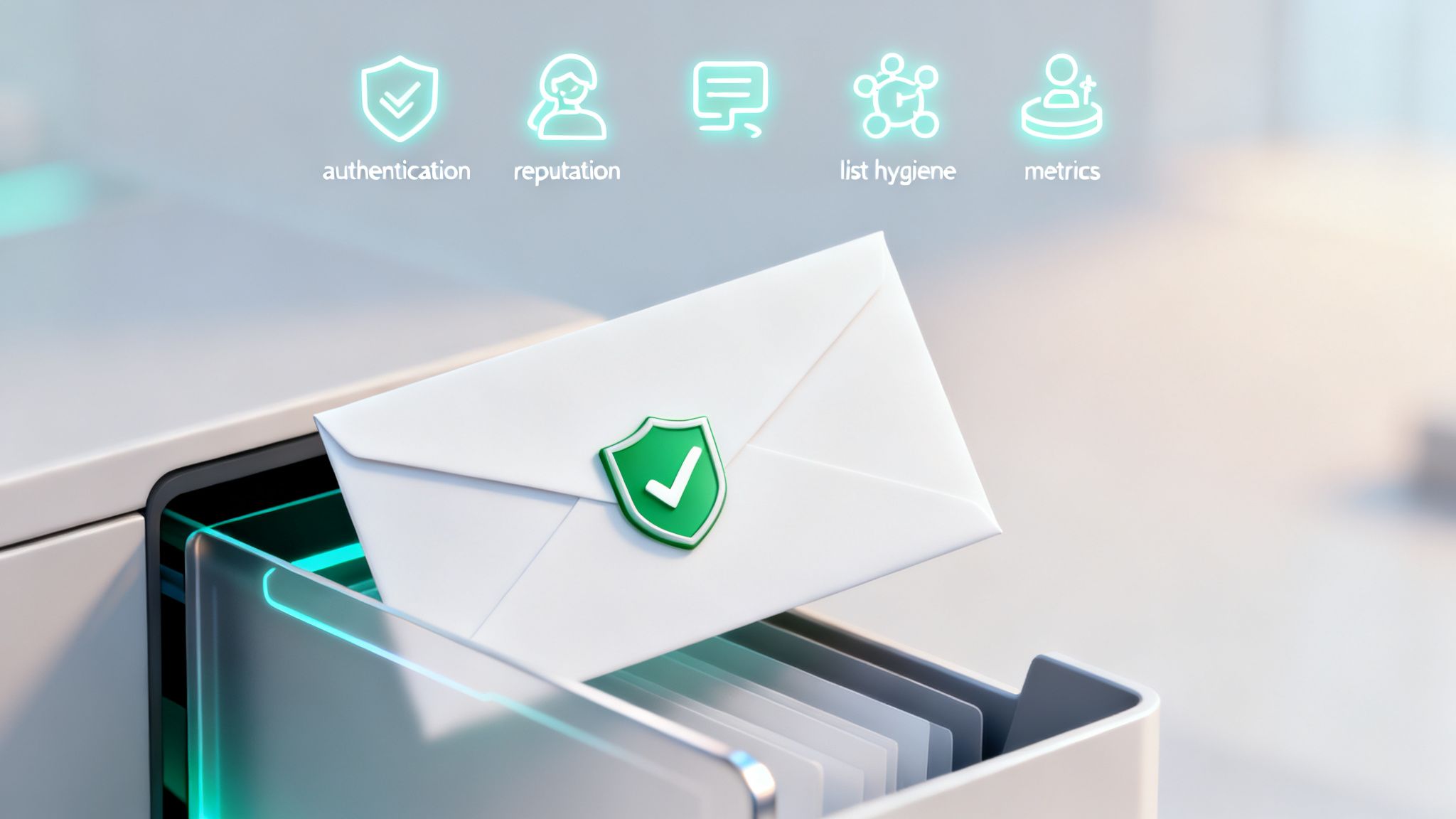

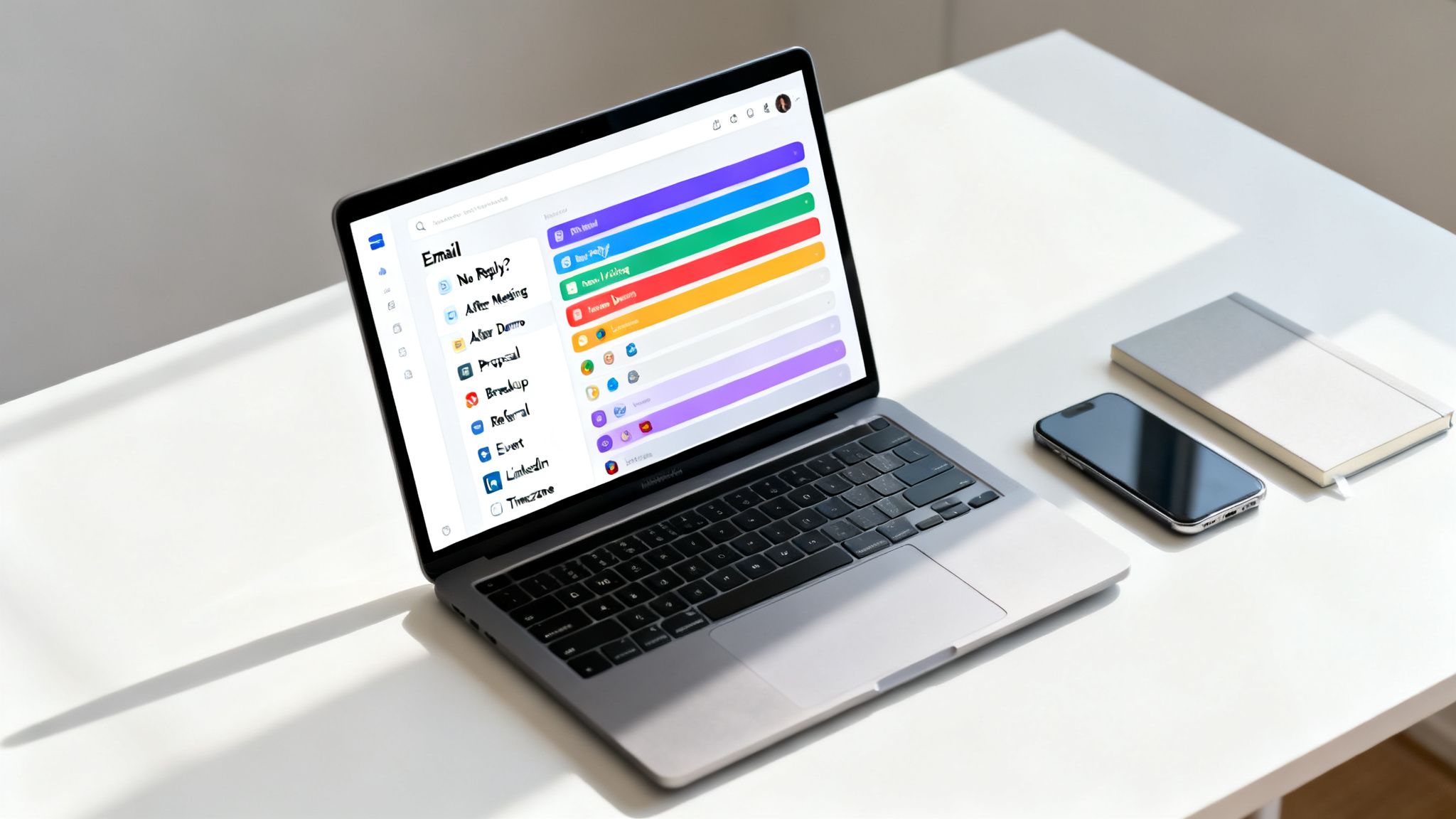
In B2B sales, the real work starts after the first email. But most follow-ups are deleted on sight. The problem isn’t a lack of effort; it's a failure to cut through an over-crowded inbox. Generic subject lines like “Checking in” or “Following up” are a clear signal to busy decision-makers that your message is low-value and can be safely ignored.
For SDRs, AEs, and sales leaders building a predictable pipeline, this is a critical conversion leak. The difference between a booked meeting and a dead lead often comes down to the first five words they see. When your team relies on fragmented tools and manual workflows, crafting compelling, personalized follow-ups at scale is nearly impossible. This leads directly to burned lists, missed opportunities, and stalled pipeline.
This guide goes beyond generic advice. We provide a tactical playbook of ten battle-tested, scenario-specific follow up email subjects for modern GTM teams. We’ll break down the psychology behind why they work and how to execute them effectively using an all-in-one prospecting platform like Willbe, which unifies data, personalization, and orchestration. It's time to stop guessing and start building conversations that drive revenue.
1. The Curiosity Gap - 'Re: [Original Subject] - Quick thought'
This subject line leverages a powerful psychological trigger: curiosity. By referencing your original email and adding a vague but intriguing "quick thought," you create a knowledge gap. The recipient's brain naturally wants to close this gap, compelling them to open the email to discover what you noticed.
This approach is highly effective for SDRs and BDRs following up on initial outreach. It feels less like a generic, automated follow-up and more like a genuine, spontaneous idea from a real person. The key is that the "thought" in the email body must deliver immediate value, reinforcing that you're a strategic partner, not just another vendor.
When to Use This Subject Line
This is one of the best follow up email subjects for re-engaging a cold prospect who has gone silent. Use it 3-5 days after your initial email. It’s particularly potent when sent to prospects who opened your first email but did not reply, as you already have a flicker of their attention.
Pro Tip: Avoid a bait-and-switch. Your email body must contain a genuinely brief and valuable insight. This could be a relevant statistic, a link to a competitor's recent news, or a concise observation about their GTM strategy.
Examples in Action
- Follow-up:
Re: Reducing sales cycle - One thing I noticed
- Follow-up:
Re: Q4 hiring - A quick thought on this
By keeping the promise of a "quick thought," you build trust and increase the chances of getting a reply.
2. The Value Shift - 'One more reason we reached out'
This subject line pivots from your original pitch to introduce a new, timely value proposition. It signals to the prospect that you've done fresh research since your last email, transforming a standard follow-up into a relevant update. Instead of just "checking in," you're providing a concrete, data-backed reason for re-engaging right now.
This method is ideal for multi-touch sequences where new trigger events have surfaced. It shows you are actively monitoring their business landscape and can connect their recent activities (like a funding round or key hire) to a specific pain point you solve. It frames you as a strategic partner who brings insights, not just a salesperson pushing a product.
When to Use This Subject Line
This is one of the most effective follow up email subjects for re-engaging a prospect 3-5 days after an initial email that received no reply. It works best when a tangible business event has occurred, allowing you to connect your solution directly to their immediate priorities. It demonstrates diligence and a genuine interest in their company's trajectory.
Pro Tip: Your "one more reason" must be specific and directly tied to a benefit. Vague observations will be ignored. Use real-time data to find a compelling trigger, like a competitor's product launch or a recent expansion announcement, and explain its relevance concisely.
Examples in Action
- Follow-up:
One more reason we reached out - your Series B
- Follow-up:
One more reason - noticed your competitor just launched
By tying your outreach to a fresh business signal, you create urgency and relevance that commodity follow-ups lack. This strategy proves you are a vigilant, informed seller, increasing your odds of securing that first meeting.
3. The Social Proof - '[Name], [Company] just saw results with us'
This subject line immediately answers the prospect’s silent question: "Has anyone like me ever succeeded with your solution?" By leading with a specific, peer-based result, you leverage social proof, one of the most powerful principles of influence. Prospects inherently trust the validation of their peers more than a vendor's claims.
This approach is perfect for Account Executives following up after an initial discovery call or for SDRs trying to re-engage a high-value account. It instantly establishes relevance and credibility by demonstrating that you solve tangible problems for companies in their exact vertical. It’s a direct way to prove your value and cut through the noise of generic follow-ups.
When to Use This Subject Line
This is one of the most effective follow up email subjects for mid-funnel prospects who have shown interest but gone quiet. Use it after a demo or proposal when you need to reinforce your value proposition. It’s particularly powerful when targeting specific industry verticals, as you can showcase hyper-relevant wins.
Pro Tip: Ensure the company you reference is a close match in size, industry, and business model. A mismatched example can backfire and make you seem out of touch. If confidentiality is a concern, anonymize the data (e.g., "a leading SaaS firm in your space").
Examples in Action
- Follow-up:
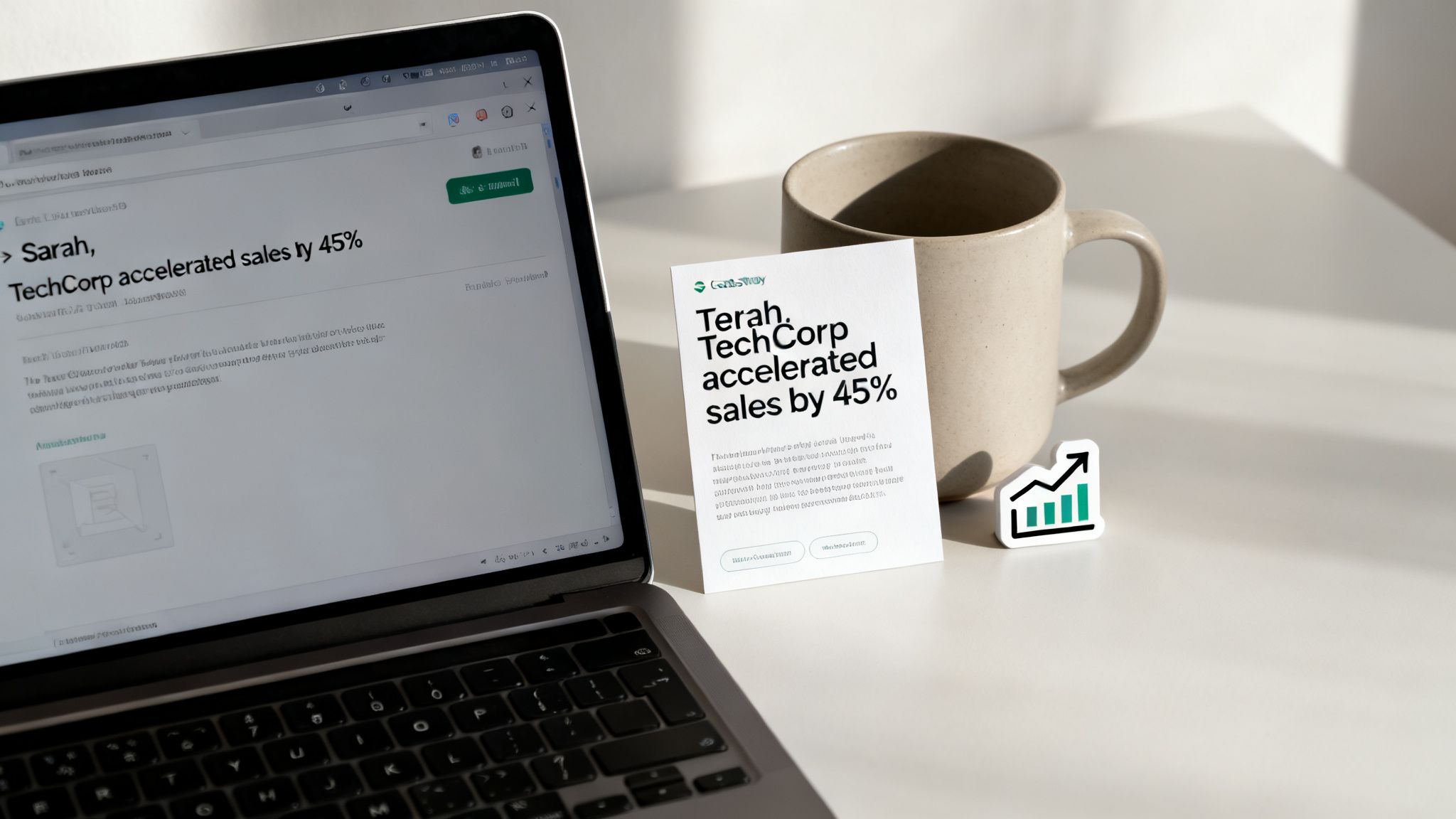
Sarah, TechCorp just accelerated their sales cycle by 45% with us
- Follow-up:
Michael, we helped a similar insurance firm cut prospecting time by 12 hours/week
- Follow-up:
Jennifer, [Competitor's Name] reduced their cost-per-meeting by 38% last quarter
By pairing this specific, outcome-driven subject with concrete metrics in the email body, you build an undeniable case for why they should re-engage.
4. The Time Sensitivity - '[Original topic] - 30-day window'
This subject line introduces urgency by framing a limited-time window around a specific business event or cycle. By connecting your follow-up to an external deadline like a budget cycle, market shift, or seasonal hiring freeze, you give the prospect a compelling, non-salesy reason to act now. It moves the conversation from "nice to have" to "need to address."
This strategy is highly effective because it anchors your value proposition to the prospect’s existing timeline, not one you invented. It shows you’ve done your research and understand the external pressures influencing their decisions, positioning you as a strategic advisor. It’s particularly powerful for expansion and upsell sequences where timing is critical.
When to Use This Subject Line
This is one of the most effective follow up email subjects for prospects you know are in a specific buying cycle. Use it in follow-ups two through four when you need to introduce legitimate urgency. It’s ideal for SaaS, finance, and recruiting, where decisions are often tied to quarterly or annual business calendars.
Pro Tip: Authenticity is everything. Only use genuine time constraints that you can tie back to a real business driver (e.g., end-of-quarter budget allocation, an upcoming industry event). Fabricated urgency will destroy credibility instantly.
Examples in Action
- Follow-up:
Re: Sales efficiency - 30-day hiring window
- Follow-up:
Budget allocation - Q4 procurement cycle
By aligning your outreach with the prospect’s reality, you create a natural and powerful incentive to reply. To ensure your timing is perfect, integrate these subject lines into a well-structured outreach cadence, following proven sales cadence best practices for maximum impact.
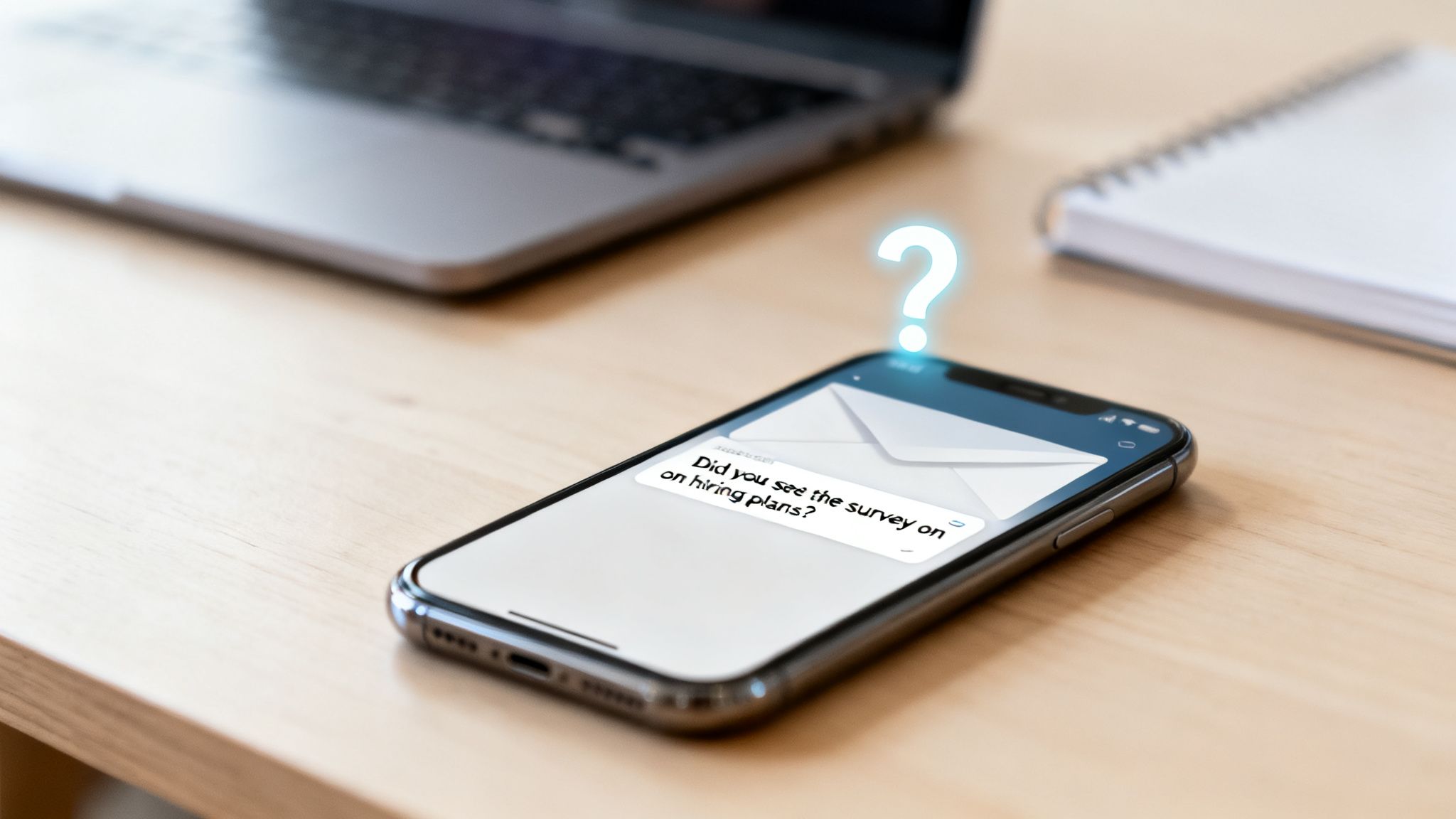
5. The Question-Based Follow-Up - '[Name], did you see...?'
This subject line reframes your follow-up from a statement into a genuine question, immediately shifting the dynamic. Human brains are wired to answer questions, making this approach far more engaging than a simple "checking in" message. It positions you as an inquisitive peer rather than just another salesperson pushing a pitch.
This technique is exceptionally effective because it prompts a response without demanding one. It opens a conversation loop by focusing on a specific, relevant piece of information, demonstrating that you've done your homework and are thinking strategically about their business. It’s one of the most versatile follow up email subjects because it can be adapted to nearly any stage of the sales cycle.
When to Use This Subject Line
Use this subject line 2-3 days after an initial email that received no engagement. It’s a powerful way to re-engage a prospect by proving you’ve done more research. It also works well to restart a conversation with a prospect who has gone cold after a meeting or demo, as it provides a low-pressure reason to get back in touch.
Pro Tip: Your question must be specific and something you genuinely want to understand. Leverage prospect research from your CRM or sales intelligence platform to ask about a recent company event, a newly announced initiative, or a relevant industry trend.
Examples in Action
- For a cold prospect:
Sarah, did you see the new survey on Q4 hiring plans for fintech? - After a discovery call:
John, quick question - how is that new project intake process at ABC Corp? - Re-engaging a lead:
Maria, did the recent supply chain update affect your Q3 logistics?
By grounding your question in specific research, you prove your value and respect the prospect's time, significantly increasing the likelihood of a reply. This approach builds rapport and turns a cold follow-up into a warm conversation.
6. The Reference or Authority - 'Per [Industry Report/Executive], [insight]'
This subject line immediately establishes credibility by borrowing authority from a respected third-party source. By leading with a data point from a well-known industry report or a quote from an influential executive, you shift the conversation from a sales pitch to a strategic discussion based on objective facts. It positions you as an informed advisor who understands the prospect's world.
This approach is highly effective for engaging senior decision-makers and navigating complex B2B sales cycles. Instead of just claiming your solution is valuable, you're using market evidence to prove it. This data-driven opener frames your follow-up as a relevant, timely insight rather than another generic check-in.
When to Use This Subject Line
This is one of the most powerful follow up email subjects for re-engaging senior-level prospects 4-7 days after an initial outreach went unanswered. It's especially useful when targeting leaders in data-centric fields like finance, operations, or RevOps, who value evidence over assertions. Use it to cut through the noise when basic value props have failed to land.
Pro Tip: Your email body must connect the cited statistic directly to a problem your prospect likely faces. Link to the source report to build transparency and trust, then pivot smoothly to how your platform helps solve the exact challenge highlighted by the data.
Examples in Action
- Follow-up:
Per Gartner: 78% of CSOs struggle with pipeline visibility
- Follow-up:
McKinsey found a 60% efficiency gap in outbound
- Follow-up:
LinkedIn Data: Companies using [practice] see 3x faster hiring
By grounding your outreach in credible, external data, you elevate the conversation and significantly increase your chances of earning a response from a strategic-minded executive.
7. The Permission-Based Re-engagement - 'Permission to close your file?'
This subject line, often called a "breakup email," respectfully signals that you're closing the loop on your outreach. It leverages the psychological principle of loss aversion. By indicating this is your final attempt, you create a sense of scarcity, which can motivate a previously unresponsive prospect to act now rather than miss a potential opportunity.
This approach is invaluable for sales teams focused on maintaining a healthy list and a positive brand reputation. It acknowledges the prospect’s silence without being passive-aggressive, giving them an easy way to opt out. Counterintuitively, this polite and permission-based approach often generates responses from prospects who felt bombarded and now appreciate the professional courtesy.
When to Use This Subject Line
This is one of the most effective follow up email subjects for the final step in a 5-7 touch outbound sequence. Use it after a prospect has been completely unresponsive to your previous emails and calls. It serves as a final effort to get a response while simultaneously cleaning your active pipeline.
Pro Tip: Genuinely respect the outcome. If a prospect replies "no" or doesn't reply at all, remove them from your active sequence. Platforms like Willbe can automate this process, moving non-responders into a separate, long-term nurture cadence instead of burning the lead forever.
Examples in Action
- Follow-up:
Re: [Original Subject] - one last try
- Follow-up:
Sarah, should I close your file?
- Follow-up:
Permission to close your file on [topic]?
By framing your final touchpoint as a respectful disengagement, you not only increase your chances of getting a last-minute reply but also leave a professional, lasting impression.
8. The Mutual Connection - '[Referrer] suggested I reach out'
This subject line instantly cuts through the noise by leveraging social proof and trust. Referencing a shared connection is one of the most powerful ways to get an email opened because it immediately shifts the dynamic from a cold outreach to a warm introduction. The recipient is far more likely to engage when they see a familiar name, as it implies a level of pre-vetting and credibility.
This approach is a staple for any sales professional looking to break into new accounts or re-engage prospects who have gone silent. It transforms a generic follow-up into a personalized, high-relevance message. The key is to make the connection feel genuine and purposeful, demonstrating that you’ve done your homework and aren't just name-dropping.
When to Use This Subject Line
This is one of the most effective follow up email subjects for any stage of the sales cycle, but it’s particularly potent for initial outreach or re-engaging a cold prospect. It’s also invaluable when trying to connect with senior decision-makers who are typically protected by gatekeepers. Mentioning a mutual contact provides the internal credibility needed to get your message seen.
Pro Tip: Always get consent or give a heads-up to your mutual connection before using their name. A surprise reference can backfire and damage your relationship with both parties. Keep the referrer’s name concise in the subject line to avoid triggering spam filters.
Examples in Action
- Follow-up:
John Miller suggested I reach out
- Follow-up:
From Sarah at ABC Corp - a quick question
- Follow-up:
Your colleague, David, and I were discussing [Challenge]
By grounding your outreach in a shared relationship, you build immediate rapport and dramatically increase your chances of starting a meaningful conversation.
9. The Check-In Without Pitch - 'Checking in on [topic]'
This subject line shifts the dynamic from selling to conversing. By abandoning the sales pitch entirely and focusing on a relevant, recent event tied to the prospect's company, you demonstrate genuine interest and industry awareness. Paradoxically, removing the direct sales pressure often lowers the recipient's guard, making them more receptive to engagement.
This human-centric approach positions you as a peer or a well-informed consultant rather than just another vendor. It works exceptionally well in later follow-up sequences where previous, more direct pitches have not landed. The key is to ask a sincere question based on real-time company intelligence, which makes the outreach feel timely and personal, not automated.
When to Use This Subject Line
This is one of the most effective follow up email subjects for re-engaging a prospect 1-2 weeks after initial pitch attempts have gone silent. It's ideal for building relationships with high-value accounts where a long-term, consultative approach is more effective than aggressive, short-term tactics.
Pro Tip: Your curiosity must be authentic. Use a platform like Willbe to identify fresh triggers, such as recent product launches, funding announcements, or executive hires. Your email body must then ask a thoughtful question related to that event.
Examples in Action
- Follow-up:
Checking in on the new V3 launch
- Follow-up:
Your work with Acme Corp was impressive
This method resets the conversation on a foundation of mutual interest, not a one-sided sales agenda.
10. The Pattern Interrupt - '[Number]/[Surprising stat] about [industry/role]'
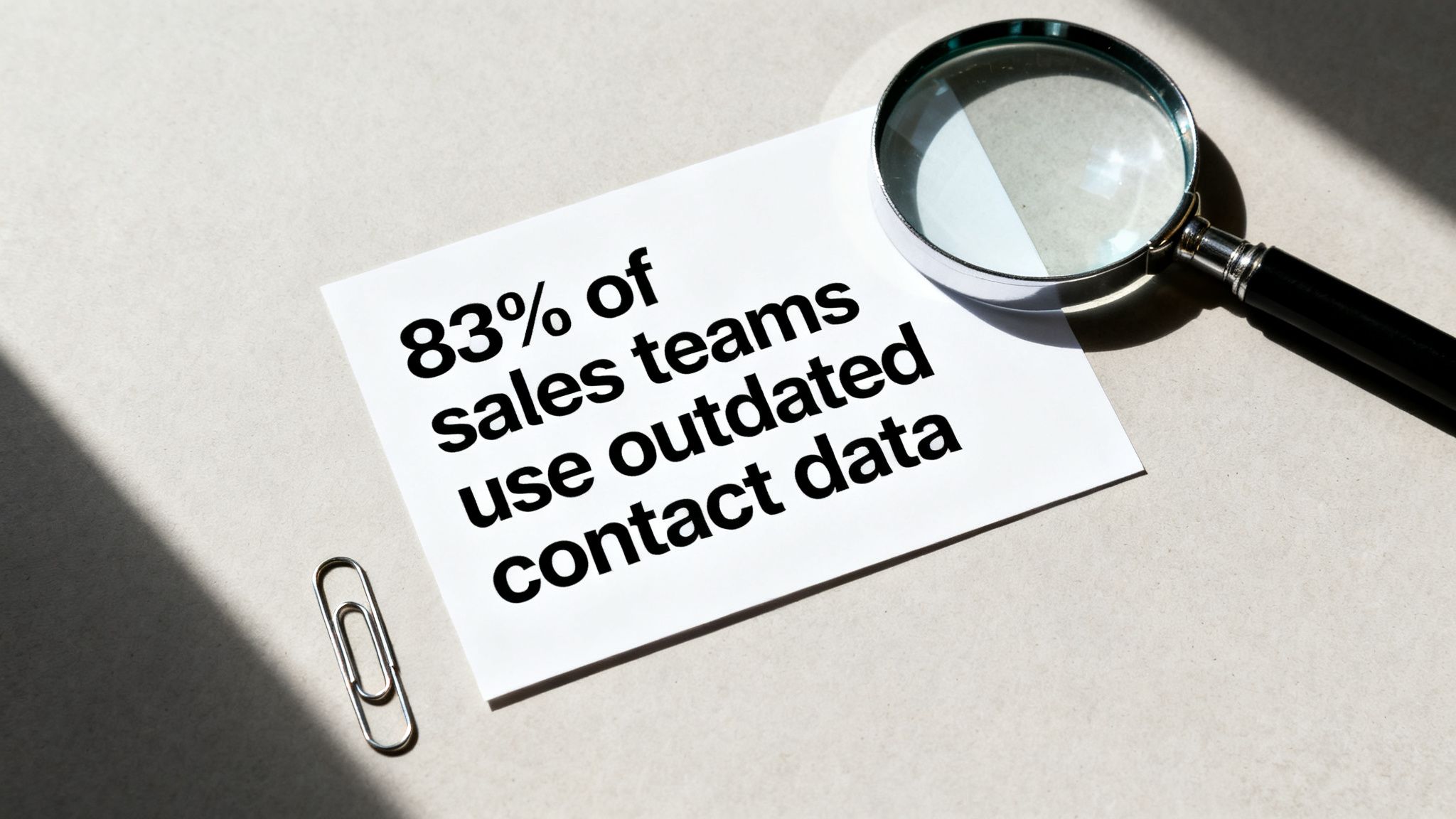
This subject line stops prospects mid-scroll by leading with a counterintuitive number or surprising statistic directly relevant to their world. It works by breaking their pattern recognition; they expect sales language but instead get a compelling piece of data. This jolt triggers curiosity and positions you as an insightful expert rather than just another seller.
This method is highly effective for cutting through inbox noise, especially when targeting data-driven roles like RevOps or analytical leaders. The key is to use a statistic that implies a significant, costly problem you are uniquely positioned to solve. It frames your follow-up not as a generic nudge but as a critical business insight.
When to Use This Subject Line
This is one of the most powerful follow up email subjects for re-engaging a prospect who hasn't replied to your initial outreach. Use it 3-5 days after your first email to present a fresh, high-value angle. It’s particularly effective for establishing credibility quickly and getting prospects to view your email as a resource, not a sales pitch.
Pro Tip: Your statistic must be both credible and directly tied to the prospect’s pain. Reference reputable sources like Gartner, Forrester, or your own proprietary data. In the email body, immediately connect the stat to a consequence for their business and pivot to your solution.
Examples in Action
- To a Head of Sales:
Only 2% of outbound emails get replies - To a Head of HR/Recruiting:
The #1 reason hiring slows (hint: not budget) - To a RevOps Leader:
83% of sales teams use outdated contact data
By leading with a data-backed pattern interrupt, you earn the prospect's attention and create a natural opening to discuss the business impact. This tactic elevates your outreach from a simple request to a strategic conversation.
10-Way Comparison of Follow-Up Email Subjects
From Subject Lines to Signed Deals: Systemize Your Follow-Up Strategy
Mastering follow up email subjects is more than a creative exercise; it's a critical component of a predictable revenue engine. Throughout this guide, we've broken down specific, high-converting subject lines for nearly every sales scenario. From re-engaging a cold prospect with a "Pattern Interrupt" to adding value after a demo with a "Value Shift," the core principle is the same: your subject line must earn the click by signaling relevance and value in a crowded inbox.
The best SDRs and AEs understand that a subject line isn't an isolated trick. It's the tip of the spear for a much larger GTM strategy. The power of a subject line like "Per Gartner: 78% of CSOs struggle with pipeline visibility" is amplified when it's sent to a hyper-targeted segment of accounts that you know care about that specific report. Similarly, a mutual connection follow-up is only possible if your prospecting platform efficiently identifies those shared relationships at scale. The subject line is the entry point, but the underlying data, segmentation, and timing are what truly drive conversions.
Key Takeaways for Your Team
To translate these examples into repeatable success, focus on these core pillars:
- Context is King: The best follow up email subjects are never generic. They are deeply rooted in the prospect's context—a previous conversation, a recent trigger event, or a known industry challenge. Real personalization isn't just using
{{first_name}}; it's about demonstrating genuine awareness of their business. - Systemize, Don't Improvise: Relying on individual reps to manually invent clever subject lines for every email is not a scalable strategy. Build a centralized playbook of proven subject lines categorized by persona, industry, and sales stage. This ensures consistency and allows you to systematically A/B test and optimize what works across the entire team.
- Orchestrate Your Outreach: An email follow-up is exponentially more effective when it's part of a multi-channel sequence. A great subject line can be the catalyst that drives a prospect to accept your LinkedIn connection request or view your profile, creating multiple touchpoints that reinforce your message without feeling repetitive.
Ultimately, the goal isn't just to get more emails opened; it's to start more qualified conversations that lead to closed-won deals. The follow up email subjects shared here are powerful levers, but their true potential is unlocked when integrated into a modern, unified GTM platform. By moving beyond fragmented tools and manual workflows, you can ensure that every message, from the subject line to the final call to action, is precisely targeted, highly relevant, and systematically tracked. This is how high-growth companies build predictable pipeline and scale revenue without burning out their teams or their lists.
The most effective sales teams don't just write better subject lines; they build a system where the right message always reaches the right person at the right time. Willbe is the all-in-one B2B prospecting platform that automates data enrichment, AI-powered personalization, and multi-channel orchestration so your team can focus on closing deals, not manual tasks. See how top-performing teams use Willbe to build a predictable revenue engine by visiting Willbe and booking a demo today.