

In 2026, simply 'being on LinkedIn' is no longer a GTM strategy. Sales teams are drowning in a sea of generic connection requests and templated messages that prospects ignore. SDRs waste hours on manual research, AEs get handed low-quality opportunities, and sales leaders lack visibility into what actually converts. The result? Burned lists, low morale, and a pipeline that feels anything but predictable. This isn't just a tooling problem; it's a workflow problem.
Winning teams are moving beyond fragmented tools and manual processes. They're adopting all-in-one prospecting platforms that combine precise targeting, AI-powered personalization that sounds human, and multi-channel orchestration to build a repeatable go-to-market engine. This unified approach is essential for any modern B2B organization focused on predictable pipeline and performance visibility.
This guide cuts through the noise to deliver 10 advanced LinkedIn marketing tactics built for this reality. Forget generic advice. We'll break down the exact plays that help SDRs, AEs, and sales leaders find better accounts, reach the right people with messages that land, and scale what works—without increasing headcount. Each tactic is a component of a larger system designed to generate qualified meetings consistently, improve conversion rates, and give you a clear, automated path from prospect to pipeline. These are the actionable frameworks top teams use to turn LinkedIn into their most reliable revenue channel, moving past manual effort to achieve scalable, predictable growth.
1. LinkedIn Sales Navigator for Precision Prospect Targeting
Moving beyond the standard LinkedIn experience, Sales Navigator is a premium suite built for sales professionals who need a repeatable system for finding and engaging high-value prospects. It provides a direct line to LinkedIn's massive first-party dataset, layered with advanced filters that allow teams to zero in on the exact decision-makers they need to reach. This makes it a cornerstone of modern B2B LinkedIn marketing tactics, turning the platform from a simple networking site into a dynamic prospecting engine.
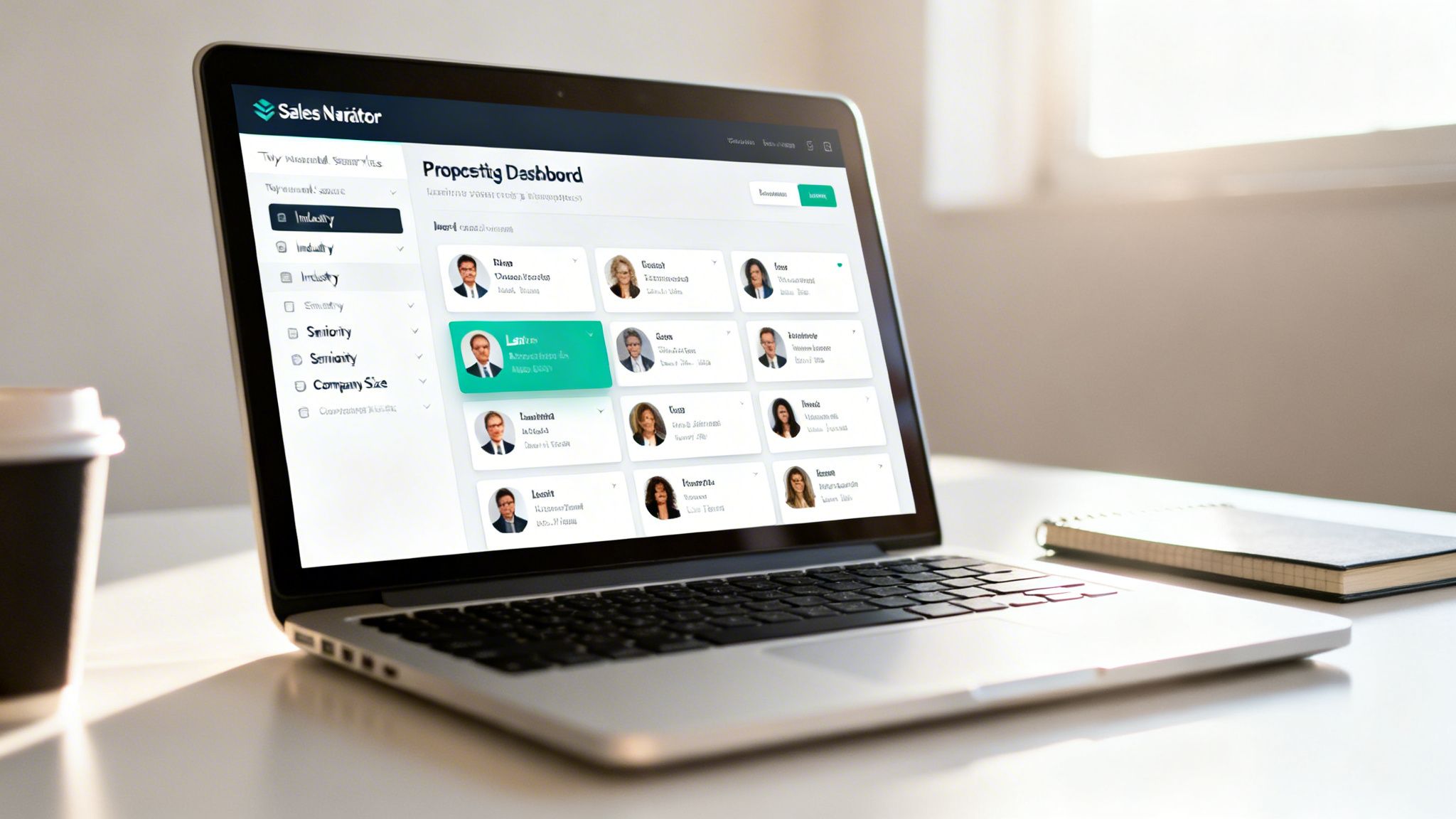
This tool is central to executing account-based selling (ABS) and multi-threaded outreach. Instead of sending generic messages to a broad audience, SDRs can build hyper-targeted lists based on company size, industry, recent job changes, technology used, and even keywords in a person's profile. This precision ensures that outreach efforts are focused on accounts that are most likely to convert, saving time and increasing pipeline quality.
How to Use Sales Navigator for Prospecting
- Define Your ICP: Start by translating your Ideal Customer Profile into Sales Navigator's filter set. This includes firmographics (company size, location, industry) and persona-specific details (job title, seniority, function).
- Build and Save Lead Lists: Create multiple, highly-specific saved searches for each buyer persona you target. For example, a search for "VPs of Engineering in SaaS companies with 200-500 employees that are currently hiring" is far more effective than a general search for "engineers."
- Set Up Alerts: Activate alerts for your saved searches and key accounts. Prioritize "Job Change" alerts, which signal a powerful opportunity to connect with new budget holders before competitors do.
- Engage Strategically: Use the "TeamLink" feature to identify prospects who are connected to your colleagues for a warm introduction. Monitor your feed for shares and posts from target leads to engage with their content before sending a direct connection request or InMail.
Key Insight: The true power of Sales Navigator isn't just finding people; it's understanding their context. A job change, a company funding announcement, or a post they've shared provides the specific trigger you need to make your outreach relevant and timely, not generic.
Example in Action
A B2B SaaS company selling DevOps tools uses Sales Navigator to create a saved search for fast-growing tech companies that have recently posted job openings for "Site Reliability Engineer." When a new company appears in the search, the SDR team adds the Head of Engineering and CTO to an account list. They then execute a coordinated campaign, with one SDR engaging the Head of Engineering on LinkedIn while another sends a personalized email to the CTO referencing their company's growth, making the outreach feel informed and relevant.
Metrics to Track
- Lead Acceptance Rate: The percentage of prospects who accept your connection requests.
- InMail Response Rate: The reply rate to your paid Sales Navigator messages.
- Meetings Booked from Navigator Leads: The ultimate measure of success, tracking how many leads sourced through the tool convert to initial meetings.
For teams looking to improve their targeting even further, you can get a better understanding of how to use LinkedIn's search capabilities to their full potential.
2. LinkedIn Outreach Personalization at Scale
Generic, templated outreach is dead. Prospects can spot it a mile away. Personalization at scale is the practice of customizing LinkedIn connection requests and messages with specific details about each prospect, making outreach feel authentic and one-to-one, even when executed across hundreds of contacts. This moves beyond simple [First Name] and [Company Name] tokens. It integrates deep prospect research into the messaging itself—referencing a recipient’s role, recent activity, or company-specific events to build immediate rapport and credibility.
This method is central to modern outbound prospecting because it directly counters the signal-to-noise problem on LinkedIn. As inboxes fill with automated spam, a message that demonstrates genuine research stands out, dramatically increasing acceptance and response rates. For B2B teams, this isn't just a tactic but a core philosophy that powers their entire GTM engine, turning cold outreach into warm conversations.
How to Use Personalization at Scale
- Build a Personalization Matrix: Identify 2-3 key "personalization hooks" for each message. These can include a prospect's recent post, a company funding announcement, a new product launch, or a shared connection.
- Establish a Research Workflow: Instead of hours of manual research, use an all-in-one platform to surface key insights. A good system aggregates data to find a relevant trigger event in seconds, not minutes.
- Craft Conversational Copy: Write messages that sound human, not like corporate-speak. With a platform like Willbe, proprietary AI can generate template-free copy that sounds like you and adapts to the prospect’s context, making personalization feel natural, even across multiple languages.
- Test Personalization Elements: Isolate different parts of your message to see what works best. Test your opening hook, the company insight you reference, and your call-to-action to optimize performance continuously.
Key Insight: True personalization isn’t about just mentioning a fact; it's about connecting that fact to a problem you can solve. Stating "Congrats on the funding" is generic. Saying "Saw your recent funding to expand the engineering team; leaders I work with often face X challenge during rapid growth" is a powerful conversation starter.
Example in Action
An enterprise AE targeting a Fortune 500 company notices their target account just announced a major sustainability initiative. Instead of a generic connection request, the AE sends a message to the VP of Operations saying, "Noticed your company's new commitment to carbon-neutral operations. Our platform has helped similar firms like [Competitor Name] reduce their supply chain emissions by 15% in the first year. Worth a brief chat to see if we can support your goals?" This contextualized approach immediately aligns with the prospect's priorities.
Metrics to Track
- Connection Acceptance Rate: The percentage of personalized requests that are accepted. High-performing teams often see rates above 40%.
- Positive Reply Rate: The percentage of replies that are not "no" or "not interested." This measures genuine engagement.
- Meeting Booked Rate: The ultimate success metric, tracking how many personalized conversations convert into scheduled meetings.
For teams looking to refine their outreach, you can learn more about crafting the perfect message for a LinkedIn connection.
3. LinkedIn Content Strategy & Thought leadership for Lead Generation
Shifting from outbound-only prospecting to an inbound-attraction model requires a disciplined LinkedIn content strategy. This tactic involves consistently publishing valuable, industry-relevant content such as posts, articles, and carousels to establish authority and build audience trust. It transforms your LinkedIn presence from a simple resume into a magnetic resource that generates inbound interest and warms up cold outreach efforts, making it one of the most effective LinkedIn marketing tactics for modern sales teams.
By demonstrating a deep understanding of your prospects' challenges, you create a gravitational pull for qualified leads. This approach complements outbound campaigns by providing social proof and a reason for a prospect to accept your connection request or reply to your message. This is how top B2B teams drive both brand awareness and inbound sales conversations.
How to Build a Content & Thought Leadership Engine
- Establish Content Pillars: Define 3-5 core themes your Ideal Customer Profile cares about. For a company selling to sales leaders, pillars could include "Pipeline Generation," "SDR Coaching," and "Sales Technology." Rotate through these pillars to maintain focus and relevance.
- Optimize for Readability: Use short paragraphs, line breaks, and simple formatting. LinkedIn's algorithm rewards posts that are easy to read and keep users on the platform. The first 1-2 lines must deliver immediate value or insight to stop the scroll.
- Engage to Boost Reach: Respond to every comment within the first 1-2 hours of posting. This signals to the algorithm that your content is creating conversation, which can significantly expand its distribution to a wider audience.
- Balance Value and Promotion: Follow a 70/30 rule. 70% of your content should provide pure value and insight without a direct sales pitch. The remaining 30% can include a clear call-to-action (CTA) or promotional element.
Key Insight: Thought leadership isn't about having a groundbreaking opinion every day. It's about consistently showing you understand your audience's world better than anyone else. Reference specific challenges, metrics, and workflows your prospects deal with to prove your expertise.
Example in Action
An Account Executive at a B2B SaaS company targets VPs of Marketing. She notices a common pain point is proving marketing ROI. She creates a simple text-and-image post outlining "3 Dashboards Every Marketing VP Needs to See Before Their Next Board Meeting." The post generates high engagement and several inbound connection requests from her target persona. She then follows up with a message: "Glad my recent post on marketing dashboards resonated. We help teams automate that exact reporting. Worth a quick chat?" This turns a piece of content into a direct sales opportunity.
Metrics to Track
- Post Views and Engagement Rate: The number of people who see your content and the percentage who like, comment, or share it.
- Inbound Connection Requests from ICP: Tracking how many ideal prospects initiate contact after seeing your content.
- Profile Views: An increase in profile views often indicates your content is reaching the right audience.
- Conversations Started from Content: The number of DMs or meetings booked that directly reference a piece of content you published.
4. Multi-Threaded Account-Based Outreach (ABM-Aligned LinkedIn Strategy)
Traditional prospecting focuses on individuals, but modern B2B sales are won by committee. Multi-threaded outreach is an account-based strategy that recognizes this reality by treating the entire account as the prospect. It involves executing coordinated, multi-touch campaigns that target multiple decision-makers and influencers within a single high-value account simultaneously, often across both LinkedIn and email. This approach dramatically increases account penetration and the probability of securing a meeting.
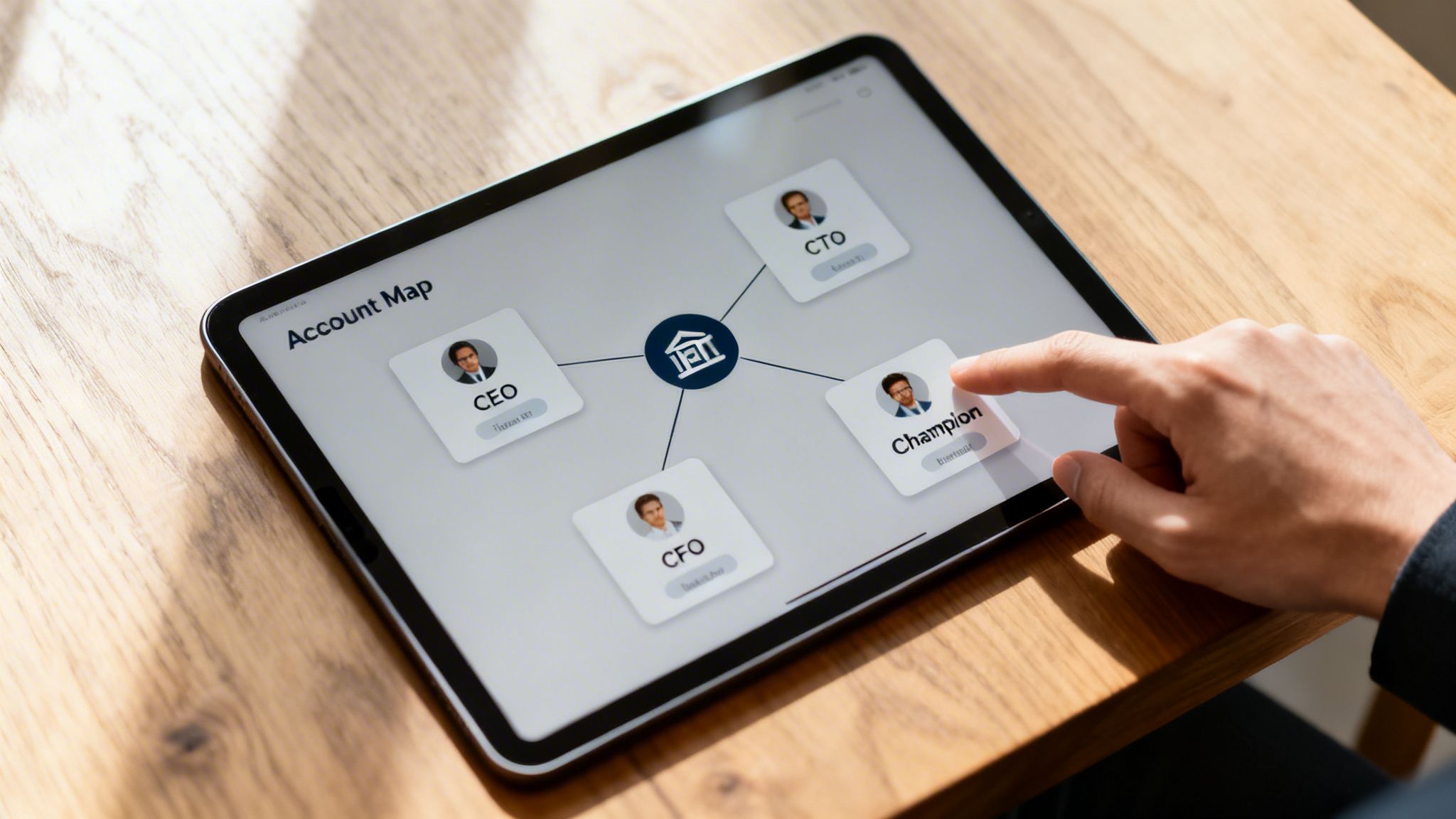
Instead of one SDR sending cold messages to one person, a team coordinates outreach to several key personas at once. This method is a core component of effective LinkedIn marketing tactics for enterprise and mid-market sales. It surrounds the account with relevant messaging, creating internal conversations and building consensus before you even book the first call. This is how focused B2B teams win their top 50 target accounts.
How to Execute a Multi-Threaded LinkedIn Strategy
- Build Your Account Map: Before any outreach, identify the key players. Map out the Economic Buyer (with budget), Technical Buyer (who vets the solution), User Champion (who will use it daily), and any other critical influencers or potential blockers.
- Develop Persona-Specific Value Propositions: Tailor your message for each role. The CFO cares about ROI and cost savings, while the Head of Engineering is focused on technical efficiency and integration. Your messaging must address their unique pain points.
- Coordinate and Stagger Your Outreach: Create a sequence that hits different contacts on different days to build momentum without overwhelming the account. For instance, engage the Economic Buyer on Day 1, the Technical Buyer on Day 3, and the User Champion on Day 5.
- Mix Your Channels: Don't rely solely on LinkedIn. Send a connection request and InMail to one contact while simultaneously sending a personalized email to another. This channel variety helps your message cut through the noise.
Key Insight: Multi-threading works because it mirrors how buying decisions are actually made. When the Head of Sales sees a relevant message a day after their top sales manager mentioned your company, your outreach feels like a timely solution, not a cold interruption.
Example in Action
A B2B SaaS company selling a security compliance platform targets a mid-market financial services firm. The SDR team identifies the CISO (Economic Buyer), the Director of IT (Technical Buyer), and a Senior Compliance Manager (User Champion). On Monday, SDR 1 sends a LinkedIn connection request to the CISO referencing a recent data privacy regulation. On Wednesday, SDR 2 emails the IT Director with a case study on seamless integration. On Friday, SDR 1 engages with the Compliance Manager's recent LinkedIn post before sending an InMail about reducing manual reporting. The coordinated effort generates a reply from the IT Director, who loops in the other stakeholders for a demo.
Metrics to Track
- Account Engagement Score: A cumulative score tracking all interactions (views, replies, accepts) across all contacts within a target account.
- Meetings Booked per Target Account: Measures how many of your designated high-value accounts convert to a meeting.
- Multi-Contact Engagement Rate: The percentage of target accounts where you successfully engage two or more contacts.
For teams who need to find and verify multiple stakeholders at scale, you can use Willbe's aggregated B2B databases to quickly build accurate account maps.
5. LinkedIn Profile Optimization for Credibility & Sales Conversion
Your LinkedIn profile is not just a digital resume; it's a critical sales asset that works for you 24/7. Strategic profile optimization establishes your credibility, improves discoverability in searches, and directly impacts whether a prospect accepts your connection request or replies to your message. It's one of the most fundamental LinkedIn marketing tactics because it acts as the landing page for all your outreach, turning your personal brand into a tool for warming up cold prospects before you even send the first message.
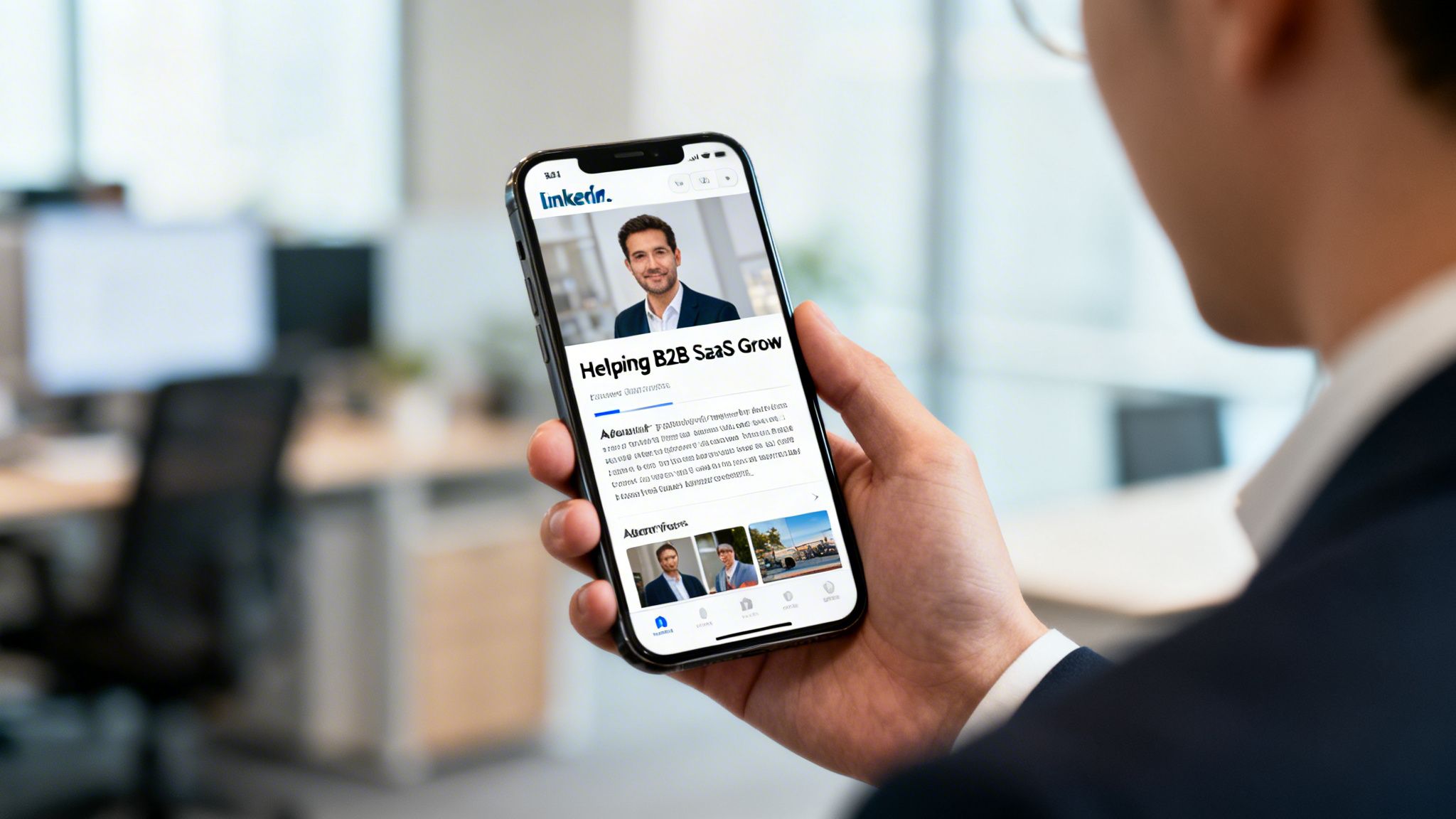
When a decision-maker receives an InMail from an SDR with a generic profile, their first instinct is to ignore it. But when that same message comes from a rep whose profile clearly articulates the value they provide, showcases measurable results, and features social proof from happy customers, the dynamic changes. The outreach feels less like a random pitch and more like a conversation starter from a credible expert, making it a foundational element for building trust at scale.
How to Optimize Your Profile for Sales
- Craft a Benefit-Driven Headline: Ditch generic titles like "Sales Development Representative." Instead, focus on the outcome you deliver for clients. Try: "Helping B2B SaaS Teams 3x Cold Email Response Rates | SDR @ [Company Name]." This immediately tells prospects what you can do for them.
- Rewrite Your 'About' Section: Lead with the value you offer your target audience. Structure it with 2-3 key achievements backed by metrics (e.g., "Helped clients increase pipeline by 40%"). Conclude with a clear call to action, like directing them to your company's case studies or your calendar link.
- Use the Featured Section: Showcase your best content, customer testimonials, or links to high-value resources. This section acts as a portfolio that validates your expertise.
- Gather Social Proof: Actively request recommendations from recent customers and respected colleagues. A strong recommendation from a known leader in your target industry is more powerful than any self-written bio.
- Maintain an Active Presence: Post or share relevant content at least once a week. This signals to both the algorithm and your prospects that you are an active, engaged professional in your field.
Key Insight: Your LinkedIn profile is the first thing a prospect checks after receiving your outreach. It should answer their unspoken question: "Why should I listen to you?" A profile optimized for conversion builds authority and makes your outreach feel more like a referral than a cold call.
Example in Action
An Enterprise Account Executive targeting CFOs in the manufacturing sector optimizes her profile. Her headline reads, "Partnering with Manufacturing CFOs to Unlock 15% in Operational Savings | Enterprise AE." Her "About" section details two specific client wins, and she has three recommendations from finance leaders she's sold to. When she connects with a new CFO, her profile has already established her credibility and relevance, leading to a 30% higher connection acceptance rate.
Metrics to Track
- Profile Views: An increase in views, especially from your target audience, indicates your headline and content are working.
- Connection Request Acceptance Rate: The percentage of prospects who accept your requests, a direct measure of your profile's perceived credibility.
- Inbound Connection Requests: Tracking weekly requests from ideal prospects is a sign of strong personal branding.
A well-optimized profile is a core component of your digital presence. You can measure its effectiveness in part by checking how it affects your Social Selling Index (SSI) score.
6. LinkedIn Sponsored InMail & Direct Message Campaigns
While organic outreach is powerful, sponsored messaging tools like Sponsored InMail and Direct Message Campaigns offer a direct, guaranteed path into a prospect's inbox. This tactic cuts through the noise of connection requests and profile views, enabling you to reach high-value prospects who might otherwise be inaccessible. It’s a key part of many B2B LinkedIn marketing tactics, providing a scalable way to deliver high-intent messages to a precisely defined audience.
These paid campaigns allow B2B marketers and demand generation teams to bypass the need for a 1st-degree connection, ensuring their message lands directly in the recipient's primary inbox. Unlike standard InMail, which is limited, sponsored messages are built for campaign-level execution, making them ideal for time-sensitive promotions, webinar invitations, or engaging passive candidates.
How to Use Sponsored Messaging Campaigns
- Select the Right Tool: Use Sponsored InMail to reach users who are not in your network. Reserve Direct Message Campaigns for warmer audiences, such as those who have engaged with your page, visited your website, or are on a matched audience list.
- Define Your Audience: Start with broader targeting to gather initial performance data. Use LinkedIn’s campaign manager to segment by industry, company size, job function, and seniority. As you collect data, narrow your audience to focus on the best-performing personas.
- A/B Test Your Copy: Create multiple versions of your message to test different approaches. Experiment with benefit-driven subject lines ("Increase pipeline by 30%") versus question-based ones ("Struggling with lead quality?"). Keep the message body under 250 characters for clarity and respect for the user's time.
- Include a Single, Clear CTA: Your message should guide the reader to a single action. Whether it’s "Register for the webinar," "Book a demo," or "Download the report," a focused call-to-action prevents confusion and increases conversion rates.
Key Insight: The main advantage of sponsored messaging is guaranteed delivery to an active user's inbox. While organic connection requests can be ignored, a sponsored message appears as a direct, professional communication, giving your offer a better chance to be seen and considered.
Example in Action
A B2B SaaS company wants to drive registrations for its upcoming webinar on AI in sales. They launch a Sponsored InMail campaign targeting VPs of Sales and Sales Directors at tech companies with 50-500 employees. Their message highlights a key pain point and offers a solution, with a direct CTA to the registration page. By monitoring the response rates by job title, they discover that Sales Directors are converting at a higher rate and reallocate their budget to focus on that segment, maximizing their event sign-ups.
Metrics to Track
- Open Rate: The percentage of recipients who opened your message.
- Click-Through Rate (CTR): The percentage of recipients who clicked your call-to-action link.
- Cost Per Lead (CPL): The total campaign spend divided by the number of leads generated.
- Conversion Rate: The percentage of clicks that result in a completed goal (e.g., a webinar registration).
7. LinkedIn Engagement-Based Lead Warm-Up (Before Cold Outreach)
Sending a cold message on LinkedIn without context is like walking into a meeting unannounced. This tactic flips the script by warming up prospects before you ever ask for their time. It involves strategically engaging with a prospect’s content (liking, commenting, and sharing) for a period of one to two weeks before sending a direct outreach message. This simple warm-up phase establishes familiarity, signals genuine interest, and dramatically increases the likelihood of a positive response.
This approach is fundamental to modern social selling and is a core part of effective LinkedIn marketing tactics. It humanizes your outreach, showing the prospect you see them as a person with valuable insights, not just a name on a list. High-growth B2B teams report response rates jumping by 40-60% when they pair this engagement strategy with personalized outreach, demonstrating its direct impact on pipeline generation.
How to Use Engagement to Warm Up Leads
- Build a Targeted Engagement List: Using a tool like Sales Navigator, identify a focused group of 20-30 high-value prospects. The goal is quality over quantity, as you will be investing time in building micro-relationships.
- Engage Thoughtfully and Consistently: Commit to engaging with their content 3-5 times per week for two weeks. Leave specific comments that add to the conversation and show you understand their industry. Avoid generic praise like "Great post!"
- Time Your Engagement: Interact with their posts within the first 12 hours of them going live. This ensures you appear higher in their notifications, increasing your visibility and making your name more memorable.
- Send a Contextual Connection Request: After a few meaningful interactions, send a connection request. Reference your recent engagement in the note: "Hi [Name], I've been following your posts on [topic] and really appreciated your take on [specific point]. Would love to connect."
- Monitor for Buy Signals: If a prospect visits your profile, likes your content, or replies to your comments, consider it a strong signal to initiate a direct conversation.
Key Insight: The goal of the warm-up is not to sell; it's to earn familiarity. When your name is already recognized from their notification feed, your subsequent direct message feels less like an interruption and more like a natural continuation of a conversation that has already begun.
Example in Action
An account executive at a B2B software company targets VPs of Marketing in the e-commerce space. She creates a list of 25 prospects and spends 15 minutes each morning for two weeks engaging with their content. She comments on a post one VP made about rising customer acquisition costs, adding a relevant statistic. The VP replies to her comment. A week later, she sends a connection request, and once accepted, she sends a direct message: "Glad to connect. Your post on CAC really resonated. We've helped other e-commerce leaders like [Competitor Name] tackle that by improving on-site conversion. Open to a brief chat about it?" This feels informed and relevant, not cold.
Metrics to Track
- Profile Views from Targets: The number of target prospects who view your profile after you engage with their content.
- Engagement-to-Connection Acceptance Rate: The percentage of prospects who accept your connection request after a warm-up period.
- Reply Rate on Post-Engagement Outreach: Compare the reply rate of messages sent after a warm-up to those sent completely cold.
8. LinkedIn Group Strategy & Community Building for Thought Leadership
While direct outreach has its place, some of the most valuable relationships are built within focused communities. LinkedIn Groups offer a unique environment to establish expertise and generate inbound interest by participating in conversations where your ideal customers already gather. This approach positions you not as a seller, but as a trusted expert, making it a powerful, long-term LinkedIn marketing tactic for building a high-quality pipeline.
The goal is not to sell but to serve. By consistently offering helpful advice, answering questions, and sharing relevant insights without a sales pitch, you build social capital. This turns cold outreach into warm engagement, as prospects will already recognize your name and associate it with value. Communities like Pavilion or niche industry groups for CMOs and RevOps leaders are prime examples of where genuine participation can directly lead to qualified meetings.
How to Use LinkedIn Groups for Thought Leadership
- Identify High-Value Groups: Find and join a small number of active groups where your ICP congregates. Three highly relevant, engaged groups are far more effective than ten inactive ones. Focus on niche communities (e.g., "Sales Development Professionals") over broad ones.
- Dedicate Time for Participation: Commit to 20-30 minutes daily to monitor discussions. Your goal is to answer questions thoroughly, start thoughtful conversations, and share insights from your experience.
- Provide Genuine Value: Avoid any direct selling. When you answer a question, cite data or a personal experience to back it up. The objective is to become the go-to person for your specific area of expertise.
- Transition to Direct Conversations: After consistently engaging with a member for several weeks, you can send a connection request or a direct message. Reference your previous interactions in the group to provide context and make the outreach feel natural, not random.
Key Insight: The currency in LinkedIn Groups is helpfulness, not promotion. Use group discussions as a market research tool to understand customer pain points. Your answers and posts should address these exact problems, making your eventual outreach feel like a solution, not a sales pitch.
Example in Action
A BDR for a RevOps platform joins the "RevOps Leaders" LinkedIn Group. For a month, she consistently answers questions about lead routing and CRM data hygiene, sharing non-promotional tips. After having a public back-and-forth conversation with another member about data enrichment challenges, she sends a connection request: "Hi [Name], really enjoyed our chat in the RevOps group about data enrichment. Noticed you're at [Company], would love to connect." The prospect accepts, already familiar with her expertise, creating a warm entry point for a future conversation.
Metrics to Track
- Group Engagement Rate: Comments and reactions on your posts and answers within the group.
- Profile Views from Group Members: An increase in views from people who share groups with you.
- Connection Acceptance Rate: The percentage of group members who accept your connection requests.
- Meetings Booked from Group Interactions: Tracking how many initial meetings originate from relationships built in groups.
For those looking to deepen their community engagement, consider pairing it with a strong content strategy on your personal LinkedIn profile to amplify your expertise.
9. Intent Data & Job Change Triggering for Timely Outreach
Successful outreach is less about what you say and more about when you say it. Using intent data and job change triggers turns prospecting from a guessing game into a calculated science. This tactic focuses on identifying key moments—like a company receiving funding or a key decision-maker starting a new role—which signal that a prospect is far more likely to be receptive to new solutions. It’s one of the most effective LinkedIn marketing tactics for breaking through the noise with relevance.
These trigger events create a window of opportunity where budgets are being set, strategies are being re-evaluated, and new tools are being considered. Instead of sending a cold message out of the blue, your outreach arrives at the exact moment your prospect is actively thinking about the problems you solve. This dramatically increases the chances of getting a positive response and booking a meeting.
How to Use Triggers for Timely Outreach
- Set Up Automated Alerts: Use LinkedIn Sales Navigator to create and save searches for your ideal customer profiles. Activate "Job Change" alerts for these lists and for your key target accounts. Enable push notifications to ensure you can act within 24-48 hours.
- Monitor Company-Level Intent: Track signals like funding announcements, significant hiring sprees (especially in relevant departments), product launches, and new C-suite appointments. These often indicate growth, expansion, or a shift in strategy.
- Prepare Templated Messages for Speed: Create pre-written but easily personalizable message templates for each common trigger event. For example, have a template ready for a new VP of Sales, another for a company that just raised a Series B, and another for a new Head of Engineering.
- Reference the Trigger Directly: Your opening line should immediately establish context. Start your message with, "Congratulations on the new role," or "Saw the news about your recent funding round, that's exciting." This proves you’ve done your homework.
Key Insight: A trigger event is not just a reason to reach out; it's the foundation of your entire message. The new role or company milestone gives you a specific, built-in pain point to speak to, making your solution feel like a direct answer to their current challenges.
Example in Action
A fintech SaaS company monitors funding announcements in the B2B space. When a target company announces a $30M Series C round, an SDR immediately identifies the new CFO and the Head of Finance. The SDR sends a personalized connection request to the CFO on LinkedIn, saying, "Congrats on the new funding round! Teams experiencing rapid growth often need to scale their financial stack quickly. Curious if you're re-evaluating your AP/AR automation tools." This timely, context-aware message leads directly to a discovery call.
Metrics to Track
- Response Rate by Trigger Type: Analyze which events (e.g., job change, funding, hiring spike) generate the highest reply rates.
- Time-to-Response: Measure how quickly your team acts on an alert. The goal should be outreach within 24 hours.
- Meeting Booked Rate from Trigger-Based Outreach: Track how many of these timely messages convert into qualified meetings.
10. LinkedIn Video Content & Live Video Engagement for Credibility & Connection
While text and images have their place, video content offers a direct path to building trust and humanizing your brand on LinkedIn. Short-form videos, recordings of webinars, or live Q&A sessions can stop the scroll and establish a genuine connection with prospects far more effectively than text-only posts. This tactic is a powerful part of any modern LinkedIn marketing strategy because it moves you from a faceless profile to a credible authority prospects feel they already know.
Video allows you to convey personality, expertise, and confidence in a way that static content cannot. It helps your team demonstrate your solution, share customer stories, or offer valuable industry insights, all while building familiarity. This approach gives prospects a reason to engage with you beyond a simple sales pitch, making them more receptive when you finally reach out directly.
How to Use Video Content for Engagement
- Create Short, High-Value Clips: Record 30-90 second videos sharing a single, powerful tip, a common mistake to avoid, or a quick reaction to industry news. Post these natively to LinkedIn for maximum visibility.
- Repurpose Webinar Content: Don't let a great webinar die after the live event. Edit it down into bite-sized clips, each focusing on a specific question or topic, and schedule them as individual posts over several weeks.
- Host "Ask Me Anything" (AMA) Live Sessions: Go live on LinkedIn to answer questions from your audience in real-time. This is excellent for building community and demonstrating your deep expertise on a subject. Announce the live session a few days in advance to build anticipation.
- Use Video in Direct Messages: For high-value prospects, a short, personalized video message can dramatically increase response rates. Use it to introduce yourself and reference a specific trigger event or a piece of their content you appreciated.
Key Insight: The goal of LinkedIn video isn't Hollywood production quality; it's authenticity and value. A video shot on your smartphone that delivers a genuinely helpful tip will outperform a slick, corporate video that says nothing of substance.
Example in Action
An Account Executive at a cybersecurity firm notices a prospect, a CISO at a target account, shared an article about new data breach regulations. The AE records a 60-second video on their phone, saying, "Hi [Prospect Name], I saw your post on the new regulations. One thing we're telling our clients to watch for is [mention a specific, non-obvious compliance risk]. Thought it might be useful." They post this video to their own feed, tagging the prospect's company and relevant hashtags. This provides value publicly and creates a perfect, context-rich reason to connect.
Metrics to Track
- Video Views (3-second and full): Measures how many people are stopping to watch your content.
- Engagement Rate: The total number of likes, comments, and shares as a percentage of views.
- Profile Views from Video Posts: Tracks how many viewers clicked through to your profile after watching.
- Inbound Connection Requests: An increase in relevant people reaching out to you after viewing your content.
10-Point LinkedIn Marketing Tactics Comparison
From Tactics to a GTM Engine: Unifying Your LinkedIn Strategy
Executing the ten LinkedIn marketing tactics detailed in this guide will undoubtedly generate sparks of success. A standout video message might secure a key meeting, a well-timed comment could open a conversation, and a polished profile will certainly build credibility. But isolated sparks don't forge a predictable revenue machine. The real challenge for modern sales leaders, RevOps professionals, and founders isn't discovering one more trick; it's eradicating the friction between finding accounts, personalizing outreach, orchestrating sequences, and syncing data back to the CRM. This is where individual efforts fall short and a systems-based approach becomes essential.
The core problem is that a fragmented toolset creates operational drag. When your SDRs are bouncing between Sales Navigator for targeting, a separate tool for email verification, a spreadsheet for tracking, and then manually personalizing messages, you're not just losing time. You're creating data silos, inviting human error, and killing the momentum needed for effective, scaled outbound. This disjointed process is why so many teams struggle with inconsistent pipeline and burn through valuable prospect lists with generic, poorly timed outreach. The goal isn't just to do LinkedIn marketing; it's to build a unified go-to-market engine where every action is connected and measurable.
Shifting from Actions to a System
A modern outbound motion requires a single source of truth where your team can move fluidly from one stage to the next without context switching. Imagine this workflow, all within one platform:
- Precision Targeting: Your team builds a hyper-specific list of accounts and contacts in Sales Navigator.
- Seamless Integration: That list is instantly available within your main prospecting platform, enriched with verified contact data from aggregated B2B databases.
- AI-Assisted Personalization: Proprietary, template-free AI analyzes the prospect’s profile and company data to generate human-sounding, relevant opening lines for both LinkedIn messages and emails, all based on your unique value proposition.
- Orchestrated Sequences: You launch a multi-channel sequence that intelligently combines connection requests, InMails, comments, and emails over several weeks, automatically adapting based on prospect engagement.
- Clean Data Sync: Every action, reply, and status change is automatically synced back to your CRM, giving leaders a crystal-clear view of performance without manual data entry.
This is the critical shift from a series of disconnected LinkedIn marketing tactics to a scalable, repeatable system. When your data is clean, your messaging is human-centric, and your analytics are clear, you stop burning lists and start building real pipeline. Your team moves faster, your AEs get cleaner handoffs with more context, and your leadership gains the predictability needed to scale the business with confidence. The true value emerges when you stop managing tools and start orchestrating a strategy.
Ultimately, mastering these advanced LinkedIn marketing tactics is about more than just sending better messages. It's about building a systematic advantage that allows your team to spend less time on administrative tasks and more time on high-value conversations that directly lead to revenue. It’s how high-growth companies build a GTM engine that works, scales, and wins in 2026 and beyond.
Ready to replace your patchwork of prospecting tools with an all-in-one platform built for speed and predictability? See how Willbe unifies data, AI personalization, and multi-channel orchestration to help your team build a repeatable revenue engine. Explore how top teams scale outbound with Willbe.