


When we talk about automated lead generation, we're not talking about blasting out generic, spammy templates. That's the old way. Modern automation is about building a smart, systematic engine that finds, engages, and converts the right accounts into pipeline—all with speed and precision.
It's the difference between a chaotic, unpredictable sales funnel and a predictable revenue machine.
What Is Modern Automated Lead Generation?

Most of us have lived the old way of prospecting. It's a grind. SDRs spend half their day cobbling together lists from a dozen different tools, manually punching data into the CRM, and firing off one-off emails, just hoping something sticks.
This approach isn't just inefficient; it's a recipe for rep burnout and missed targets. It leaves sales leaders in the dark about what's actually working and saddles AEs with poor-quality handoffs. It's organized chaos, at best.
Modern automated lead generation flips that script. It’s not about sending more junk faster. It's a strategic system that uses an all-in-one platform to run the entire top-of-funnel process with intelligence and precision, replacing a fragmented tech stack.
Manual Prospecting vs. Automated Lead Generation
The shift from manual, disjointed tasks to an intelligent, automated workflow is a game-changer for revenue teams. It takes the guesswork and grunt work out of prospecting.
Here’s a side-by-side look at how the old way stacks up against a modern, automated approach.
This comparison highlights the core difference: one is about manual labor, while the other is about strategic execution.
From Manual Chaos to Predictable Revenue
The modern approach is designed to solve the daily headaches that plague revenue teams. It does this by unifying critical functions that, until now, were handled by separate, disconnected tools.
It all boils down to a few key components working together in a single platform:
- A Unified Data Foundation: Instead of hunting for data, you tap into clean, verified contact and company information from multiple providers to build hyper-specific target lists. No more manual research.
- Authentic AI Personalization: This isn't about stale templates. Proprietary AI writes messages that sound genuinely human, referencing a prospect’s actual role, company initiatives, or pain points to get a reply.
- Orchestrated Multi-Channel Outreach: The system coordinates every touchpoint across email and LinkedIn in a seamless, logical sequence. This ensures prospects get a professional and consistent experience, not a series of random pings.
- Automatic CRM Sync: Every interaction, from the first email sent to the final meeting booked, is automatically logged in your CRM. This kills manual data entry and gives RevOps a pristine, single source of truth.
The goal of modern automation isn’t just to save a few hours. It’s to give your sales team back its most precious resource: time to actually sell.
When you remove the administrative drag, your reps can finally focus on what they were hired to do—building relationships, running discovery calls, and closing deals.
This shift takes a sales team from reactive firefighting to proactive, strategic execution. SDRs hit their meeting quotas with less stress, AEs get a pipeline full of truly qualified opportunities, and leaders finally get the predictability they need to forecast with confidence. For a deeper dive into the fundamentals, our guide on what is lead generation in sales is a great place to start.
Ultimately, an all-in-one platform like Willbe provides the operating system to turn your outbound sales motion from an unpredictable art into a repeatable science.
The Pillars of a Modern Lead Generation Engine

Building a predictable revenue machine is like building a high-performance engine. It's not about one shiny part; it's about critical components working together in a single, integrated system. Each piece solves a real, everyday problem that sales teams know all too well.
When these components are unified on a single platform like Willbe, they don't just add efficiency—they create a powerful strategic advantage. Let's look under the hood at the five core pillars that make automated lead generation a reality for modern revenue teams.
Pillar 1: Data Aggregation and Quality
Anyone who's carried a quota knows the grind. Prospecting used to start with a painful, manual scavenger hunt for contacts. Your reps would spend hours stitching together lists from different data vendors and sifting through LinkedIn profiles, only to end up with outdated or inaccurate information.
Modern automation flips that script. A strong outbound motion is built on a foundation of massive, clean, and constantly refreshed data. Willbe, for instance, aggregates information from over 30 B2B data sources to give you a single, unified view of your entire market.
This instantly solves major headaches for sales leaders and their teams:
- No more buying stale lists: You get access to a live, verified pool of contacts, so you’re not wasting budget on data that goes bad in a week.
- An end to manual digging: Reps can stop hunting for email addresses and phone numbers and start focusing on what they do best—having valuable conversations.
- Confident global expansion: Find the right people in any region, giving your team the accurate data they need to break into new territories.
Ultimately, having integrated data means your team starts with a decisive advantage instead of a handicap.
Pillar 2: Intelligent Segmentation
A huge dataset is useless if you can't find the right needles in the haystack. This is where intelligent segmentation comes in. It’s the difference between a surgical, targeted campaign and a spammy email blast that gets you blacklisted.
True segmentation is about pinpointing the exact companies and buyer personas that fit your Ideal Customer Profile (ICP). This isn't about basic filters like industry or company size. A modern platform gives you laser precision, letting you layer multiple criteria—like the tech they use, a recent funding round, departmental growth, or specific job titles—to build hyper-targeted account lists in minutes.
A sales leader once told us, "I don't need my team to find more leads; I need them to find more of the right leads." Intelligent segmentation makes that a reality.
When you get this right, your Account Executives are handed opportunities with prospects who are a genuine fit. This dramatically improves pipeline quality and makes forecasting far more accurate.
Pillar 3: Proprietary AI Personalization
Let's be honest: generic outreach is dead. Decision-makers can spot a templated message or robotic AI-written email from a mile away, and it gets deleted on sight. This is why a proprietary, template-free AI is no longer a nice-to-have; it's a core pillar of any successful outbound strategy.
Unlike generic AI tools that churn out repetitive, soulless text, Willbe’s proprietary AI was designed to mimic your best sales reps. It analyzes a prospect's LinkedIn profile, company news, and role-specific challenges to create messages that sound genuinely human and, more importantly, are actually relevant.
The outcomes speak for themselves:
- Real engagement: Prospects feel like you've done your homework because the outreach speaks to their specific world, which drives higher reply rates.
- Personalization at scale: Your team can send hundreds of uniquely personalized messages across email and LinkedIn without manually writing a single one.
- Global-ready communication: The AI can adapt its tone and messaging across 80+ languages, enabling effective global campaigns.
Pillar 4: Multi-Channel Orchestration
Your prospects don't live in their email inboxes. An effective outbound strategy has to meet them where they are, coordinating touchpoints across both email and LinkedIn. Trying to manage this manually is a nightmare of missed follow-ups and a clunky buyer experience.
Multi-channel orchestration automates this entire sequence. For example, an all-in-one platform like Willbe can run a playbook like this automatically:
- Day 1: Send an AI-personalized LinkedIn connection request.
- Day 3: Follow up with an AI-personalized email that references a shared connection or a recent company trigger event.
- Day 5: Like one of their recent posts or send a brief follow-up message on LinkedIn.
The system handles the entire cadence and is smart enough to pause the moment a prospect replies. This creates a consistent and professional experience for the buyer while taking a huge mental load off your SDRs.
Pillar 5: Real-Time CRM Sync
Ask any RevOps leader about their biggest frustration, and "data debt" will be at the top of the list. It’s the mess that happens when disconnected tools and manual data entry run rampant. When reps forget to log activities, your CRM becomes a black hole, making accurate forecasting impossible.
Real-time, bi-directional CRM sync is the pillar that cleans up this mess for good. Every single action—every email, every LinkedIn message, every reply—is logged in your CRM automatically, without anyone lifting a finger.
This creates a clean, unified record for every interaction, establishing a single source of truth for the entire revenue organization. For sales leaders, it means crystal-clear visibility into what's working. For RevOps, it means clean data and a GTM system you can finally trust.
How Automation Empowers Your Entire Revenue Team
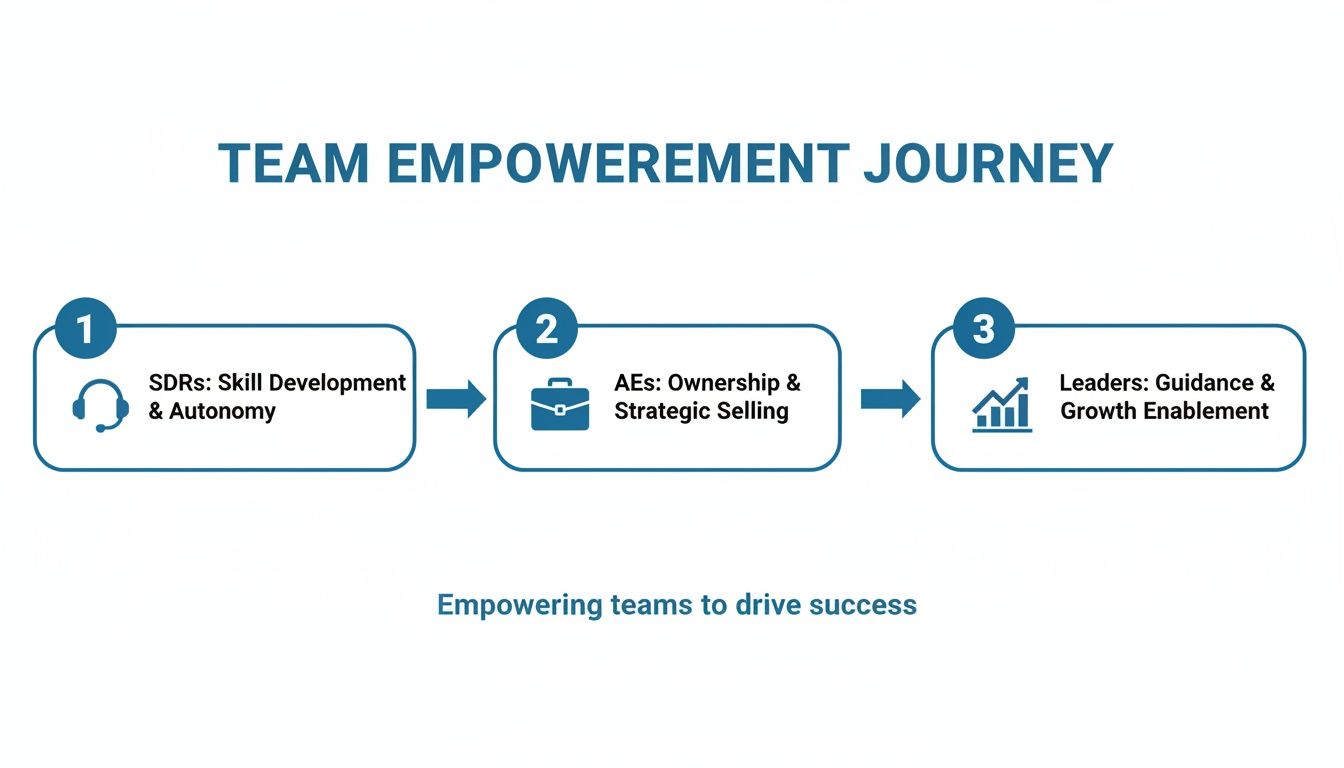
Automated lead generation isn't just another tool for your SDRs. Think of it as a fundamental upgrade for your entire revenue engine. When you consolidate prospecting on a single, all-in-one platform, you solve the distinct, daily headaches that each person on your go-to-market team feels.
This is about connecting the right technology to the actual jobs people are trying to do. For your Sales and Business Development Reps (SDRs/BDRs), it's the most direct path to hitting their number. For Account Executives (AEs), it means a pipeline they can trust. For sales leaders, it creates predictability, and for RevOps, it's the key to clean data and a system that works as promised.
For SDRs and BDRs: It Means Hitting Quota Faster
The daily reality for most SDRs is a painful grind. They spend hours hopping between LinkedIn, company websites, and data tools just to build a list. This manual research and data entry eats up the clock, leaving little time for the one thing they're paid to do: talk to prospects. It’s no wonder burnout is so high.
An automated platform like Willbe gives them that time back.
- End the Manual Prospecting Hunt: Instead of painstakingly building lists one contact at a time, SDRs can instantly generate hyper-targeted lists based on your exact ideal customer profile. This turns hours of research into minutes of strategy.
- Scale Personalization Without Sounding Robotic: Manually writing hundreds of unique, relevant messages is impossible. A good automation platform uses proprietary AI to draft outreach that sounds human, so reps can engage prospects with messages that get replies.
- Eliminate Mind-Numbing Admin Work: With real-time CRM sync, every email sent, LinkedIn connection made, and reply received is logged automatically. This kills the data entry tasks that drain motivation and lets reps focus entirely on booking qualified meetings.
For Account Executives: It Means a Higher-Quality Pipeline
There's nothing more deflating for an AE than a "qualified" meeting that goes nowhere. A handoff with a poorly vetted prospect or zero context wastes everyone's time, clogs the pipeline with dead-end deals, and puts revenue goals at risk.
Automation ensures the opportunities that land on an AE’s calendar are from prospects who are genuinely ready for a sales conversation.
It does this by making sure leads are properly warmed up, not just tossed over the fence. Smart segmentation filters out bad-fit accounts from the start. Then, orchestrated outreach sequences across email and social channels educate prospects and build interest before the first call is ever booked.
AEs get to speak with prospects who have already raised their hand and been qualified against a clear set of criteria. The result is a cleaner pipeline, shorter sales cycles, and higher win rates.
For Sales Leaders: It Means Predictable Forecasting
If you're a VP of Sales or a Sales Director, unpredictability is your worst enemy. When you have no clear view into your team's top-of-funnel activity, forecasting becomes a glorified guessing game. A messy, fragmented tech stack makes it impossible to see what’s actually driving results.
A unified automation platform creates a single source of truth for your outbound motion.
- See What’s Actually Working: Leaders get a clear dashboard showing which outreach plays, messages, and channels are generating the most meetings and pipeline.
- Spot and Scale Success: It becomes easy to see what your top reps are doing differently and then replicate those successful strategies across the entire team.
- Make Decisions with Data, Not Gut Feelings: Stop relying on anecdotes. You can now make strategic adjustments based on real-time performance, turning your outbound efforts from an art into a predictable science.
For RevOps and Marketing: It Means Alignment and Clean Data
Revenue Operations teams are often the unsung heroes stuck cleaning up the data mess created by disconnected tools and manual processes. Inaccurate records, broken integrations, and a bloated tech stack create "data debt" that silently undermines the entire go-to-market strategy. For a closer look at the tools that can help, check out our guide on the best AI sales tools.
A platform like Willbe consolidates the prospecting workflow, giving RevOps exactly what they need.
- A Consolidated Tech Stack: It replaces several point solutions for data, enrichment, and outreach, which cuts down on complexity, cost, and integration headaches.
- Pristine CRM Data: With a real-time, two-way sync, the CRM stays accurate and up-to-date automatically, freeing up your team from endless data cleanup projects.
- True Go-to-Market Alignment: Marketing can finally ensure that outbound sales efforts are perfectly in sync with their account-based marketing (ABM) campaigns, because both teams are working from the same ICP definitions and target account lists.
When it all comes together, automation allows each part of the revenue team to perform at a much higher level, creating a truly cohesive and efficient engine for growth.
Building Your First Automated Outbound Playbook
Alright, let's get practical. Theory doesn't mean much if it doesn't translate into a predictable pipeline. Moving from manual, one-off emails to a fully automated system might seem daunting, but it boils down to building your first solid playbook. This is where your strategy becomes a real, repeatable process for booking qualified meetings.
We’re not talking about blasting a generic template to thousands of contacts. The goal is to build a smart, multi-channel sequence that delivers a highly relevant message to the right person at exactly the right time.
Step 1: Pinpoint Your Target Account List
Your outbound efforts are only as strong as the list you’re working from. It’s the classic "garbage in, garbage out" problem. The first move is to get incredibly specific about who you're targeting, going far beyond your basic Ideal Customer Profile (ICP).
Instead of just filtering by industry and company size, a modern platform like Willbe lets you layer on much smarter buying signals to find your perfect-fit accounts. Start thinking in terms of:
- Technographic Data: Who’s using a competitor’s software? Or a tool that pairs perfectly with yours?
- Hiring Trends: Are they rapidly hiring for a specific department? That's a huge sign of investment and need.
- Trigger Events: Did they just close a funding round, launch a major product, or bring on a new executive?
- Keyword Intel: What language are they using on their website or in recent job descriptions that signals a problem you can solve?
By combining these data points, you can whittle down a massive market into a manageable, high-intent list of accounts. It's the difference between taking a wild shot in the dark and executing a targeted strike. Focus on quality over quantity.
Step 2: Orchestrate Your Multi-Channel Sequence
With your target list locked in, it's time to map out the actual outreach. Today’s buyers are everywhere, so a single-channel approach gets lost in the noise. A great playbook coordinates touches across both email and LinkedIn to create an experience that feels professional and persistent, but never annoying.
This approach creates a unified front that aligns your entire revenue team. SDRs know exactly how to engage, AEs get a steady stream of qualified handoffs, and sales leaders finally have a clear, measurable view of what’s working.
Here's a simple but effective playbook you can automate. It shows how to thoughtfully combine channels over a 14-day period.
Sample 14-Day Multi-Channel Outbound Playbook
This table maps out a two-week sequence that balances automated outreach across LinkedIn and email. The idea is to build familiarity and value before making a direct ask, all without your reps having to manually track every single step.
The best part? This entire sequence runs on its own. The system is smart enough to immediately pause the cadence the second a prospect replies, freeing up your sales reps to step in and have a real, human conversation.
Step 3: Write Messages That Actually Sound Human
This is the hurdle where most automation efforts stumble. Generic, robotic copy gets ignored, deleted, or worse, marked as spam. To break through, your outreach has to feel like it was written just for them, even when it’s sent at scale.
Your prospect shouldn’t be able to tell if the message was crafted by your top SDR or by AI. The goal is genuine relevance, not automated efficiency.
This is exactly what Willbe’s proprietary AI was built for. It doesn't use rigid templates. Instead, it analyzes a prospect's LinkedIn profile, recent posts, and company news to generate unique outreach that sounds like a person wrote it. For instance, instead of the tired "I saw you're a VP of Sales," it can create messages like these:
- For Email: "Saw the news about [Company]'s expansion into the APAC region. Given your team is hiring SDRs in Singapore, I imagine scaling your outbound playbook efficiently is a top priority right now."
- For LinkedIn: "Your recent post on the challenges of managing a remote sales team really resonated. Many leaders we work with are struggling to maintain visibility, especially as they scale."
That level of specific relevance is what earns replies. It proves you've done your homework and understand their world, turning a cold touchpoint into the start of a warm conversation. This is how you build a real strategic advantage with automated lead generation.
Measuring Performance and Optimizing Your Strategy
Running an automated lead generation engine without proper measurement is like driving a high-performance car with the dashboard blacked out. You can feel the engine running, but you have no idea how fast you're going, if you're low on fuel, or if you're even headed in the right direction. You're flying blind.
If you can't track what’s working, you end up wasting time and budget on campaigns that go nowhere. The real power of an automated system is that it gives you the data to stop guessing. You can finally make decisions based on hard evidence, turning your outbound sales efforts from a guessing game into a predictable science.
Moving Beyond Vanity Metrics
For years, sales teams measured success by volume. How many calls did we make? How many emails did we send? These are "activity" metrics, and while they're easy to count, they don't tell you anything about quality or impact. It’s the classic trap of being busy instead of being productive.
Modern automated lead generation requires a smarter way to measure performance. Success isn't about how much noise you make; it's about the results you generate.
The KPIs that actually move the needle for a revenue team are:
- Positive Reply Rate: This is the ultimate test of your messaging. Are people replying with genuine interest ("Sounds interesting, tell me more") or just hitting delete? A high positive reply rate is proof that your AI-driven personalization is connecting with people.
- Meetings Booked: This is the most direct output of your team's hard work. It's the clearest sign that your outreach is turning curiosity into a real sales conversation.
- Pipeline Generated: For any sales leader, this is where the rubber meets the road. How much real, potential revenue is your outbound motion adding to the pipeline every week?
- Conversion Rate by Persona or Channel: Are you getting more traction with VPs of Finance over email, or are Directors of Ops more responsive on LinkedIn? This data tells you exactly where to point your resources for the biggest wins.
Gaining Real-Time Visibility with a Unified Platform
Trying to pull these critical KPIs from a dozen different tools is a nightmare. Any RevOps professional will tell you the pain of stitching together data from your prospecting tools, your outreach sequencer, and your CRM. By the time you get a report, the data is already old news.
This is exactly where an all-in-one platform like Willbe changes the game. By bringing the entire top-of-funnel workflow into one place, it gives leaders a single command center to see what’s happening in real-time. You can instantly see which playbooks are landing, which messages are resonating, and which reps are crushing it.
With the right data, you're no longer just managing activity; you're strategically guiding your team toward predictable outcomes.
For instance, imagine you log in and see a specific playbook targeting CTOs is booking meetings at a 3x higher rate than anything else. You don't have to wait for a weekly report. You can immediately roll that playbook out to the entire team. On the flip side, if a sequence is dead in the water, you can pause it, figure out what's wrong, and re-focus those efforts without another dollar wasted. This level of agility is simply impossible when you're stuck waiting for someone to wrangle spreadsheets. For teams looking to sharpen their approach even further, our guide on lead scoring best practices offers powerful strategies.
Common Pitfalls in Sales Automation and How to Avoid Them
The promise of automation is huge, but it's easy to get it wrong. A "set it and forget it" approach is a surefire way to burn through your target accounts, annoy prospects, and damage your brand. I’ve seen it happen time and again. Teams get excited about the tech but forget the strategy.
But here’s the thing: these mistakes are completely avoidable. If you know where the common landmines are, you can build an outbound engine that’s not only efficient but also resilient and genuinely effective at starting conversations.
Pitfall 1: The "Spray and Pray" Volume Trap
This is the number one mistake. You get access to a powerful platform, and the first instinct is to blast thousands of generic emails, hoping a few bites will come back. It’s a tempting shortcut, but it’s a shortcut off a cliff.
This approach doesn’t just yield terrible results; it actively poisons your well. ISPs and spam filters are smart. They see low open rates and high complaint numbers, and they will blacklist your domain. Suddenly, none of your emails are getting through, and your entire outbound operation is dead in the water.
How to get it right: Shift your focus from sheer volume to surgical precision. The goal of automated lead generation isn't to send more emails; it's to start more qualified conversations. Use intelligent segmentation to build tight, relevant lists of accounts that are a perfect fit. A platform like Willbe helps by integrating data verification from the start, ensuring your messages actually land in valid inboxes and protecting your domain health.
Quality is the only metric that leads to revenue. Everything else is just noise.
Pitfall 2: Sounding Like a Robot
Decision-makers have finely-tuned BS detectors. They can spot a generic, AI-written email from a mile away. You know the one: "I noticed you work at {Company} and are a {Title}..." It screams lazy, impersonal, and gets deleted instantly.
This kind of outreach doesn't just fail; it makes your company look bad. You're telling a potential customer that they aren't worth the effort of a thoughtful message.
How to get it right: You need AI that doesn't sound like AI. Look for a platform with a proprietary engine built specifically for sales outreach, not a generic chatbot model. For example, Willbe’s AI was designed to mimic human research and writing patterns. It digs into a prospect’s real-time activities and professional context to craft messages that feel personal and well-researched, which is exactly what you need to get a reply.
Pitfall 3: Prospecting in a Data Silo
This is where the truly embarrassing mistakes happen. Your sales team is firing off emails from one system, but it has no idea what’s happening in your CRM. The result? You end up prospecting a happy customer, pitching a lead who is already in the final stages of a deal with another AE, or—worst of all—contacting someone who explicitly opted out.
Every one of these errors erodes trust and makes your entire company look disorganized. It creates a clunky, disjointed experience for the buyer and a nightmare for your RevOps team trying to keep the data clean.
How to get it right: A unified platform with a live, bi-directional CRM sync is non-negotiable. Your outreach tool must talk to your CRM in real time. Willbe, for instance, constantly checks your outreach lists against your CRM data, automatically filtering out current customers, open opportunities, and suppression lists. This creates a single source of truth, preventing cringeworthy mistakes and ensuring your data stays clean and reliable.
Common Questions About Automating Lead Generation
Even when the strategy makes sense, leaders and their teams always have practical questions about what it really looks like to automate lead generation. Let's tackle some of the most common ones we hear from teams getting ready to upgrade their B2B prospecting.
What’s a Realistic Timeline for Seeing Results?
You’ll notice the first change almost instantly: your reps get their time back. Within the first week, the hours they used to burn on building lists and copy-pasting data are freed up for selling.
Within 30-45 days, you’ll start seeing the needle move on key activity metrics. Think more outreach going out the door and a noticeable lift in positive reply rates as the AI-powered personalization kicks in.
The real prize, though, is a predictable jump in qualified meetings and solid pipeline. That typically takes about 60-90 days to fully materialize. By then, your playbooks are humming, and you have enough data to see exactly what’s working and double down on it.
Is This Only for Large Sales Teams?
Not at all. In fact, smaller teams often see the most dramatic impact. When you're running lean, every minute of a rep's day is precious. Automation acts as a force multiplier, giving a small team the firepower and precision of a much larger sales organization.
Instead of wrestling with a half-dozen different tools, a lean team using an all-in-one platform like Willbe can pour its energy into what actually matters—having great conversations with potential customers. It’s the secret to building a repeatable growth engine without needing a massive budget for headcount.
Automation levels the playing field. It lets smaller, focused teams compete with—and often outperform—larger competitors who are slowed down by inefficiency.
Does Automation Kill Personalization?
This is probably the biggest myth out there, and the answer is a hard no. Let’s be clear: bad automation creates generic, robotic outreach that everyone hates. Good automation, on the other hand, is what makes true personalization possible at scale.
Forget about basic {FirstName} mail merges. A modern platform uses proprietary AI to understand a prospect's real-world business context, then helps you craft messages that are genuinely relevant and sound human. It ensures every email is informed by real data points, making prospects feel like you've actually done your homework.
The result is outreach that’s far more personalized than what a busy sales rep could ever hope to write manually while trying to connect with hundreds of prospects a week.
Ready to stop juggling fragmented tools and manual tasks? See how a single, intelligent platform helps top sales teams build a predictable revenue machine. Explore how Willbe works.