

Success in B2B appointment setting isn't about just booking calls. It's about turning a cold list of prospects into a steady stream of genuinely qualified sales meetings. Think of it as a strategic process: you identify the right companies, engage them with a message that actually resonates, and schedule conversations that have a real shot at becoming new business.
Building Your Foundation for High-Value Appointments
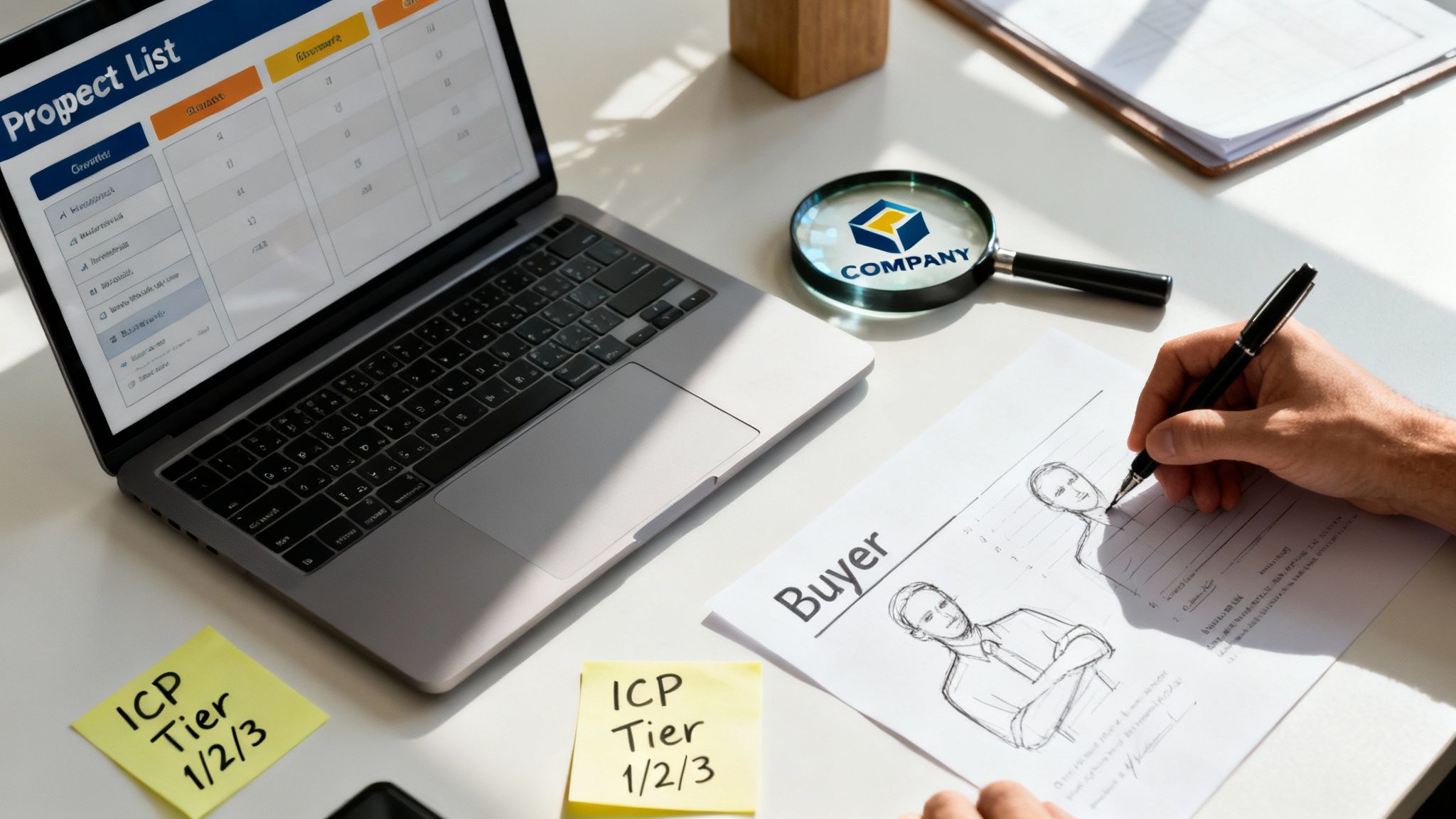
Before you even think about writing an email or dialing a number, the most important work begins. This foundational stage sets the tone for your entire outreach campaign. If you get this part wrong, nothing else matters. It's like building a house on a shaky foundation—it's just not going to stand.
The first move is to get crystal clear on your Ideal Customer Profile (ICP). This goes way beyond surface-level details like industry or company size. A truly powerful ICP digs into technographics (what tools are they already using?), behavioral data (how are they engaging online?), and crucial buying signals.
Identifying Critical Buying Signals
Buying signals are the game-changers. These are the triggers that tell you a company is actively looking for a solution like yours or is at least open to a change. Focusing on these signals means your outreach hits at the perfect time.
Keep your eyes peeled for a few key signals:
- Recent Funding Rounds: A fresh pile of cash often means new budgets are being set for tools that can fuel growth.
- Key Executive Hires: When a new VP of Sales or CMO comes on board, they almost always spend their first 90 days re-evaluating their department's strategy and tech stack.
- Company Expansion: Are they opening new offices or moving into new markets? That's a huge sign they need solutions that can scale with them.
- Negative Public Mentions: A competitor's unhappy customer venting on social media or a review site is a wide-open door for you to present a better way.
When you track these kinds of events, you stop being a cold prospector and start being a relevant problem-solver. You're no longer just another salesperson in their inbox; you're someone showing up with a timely solution. For a closer look at this early stage, our guide on what lead generation in sales truly entails is a great resource.
Tiering Your Target Accounts for Maximum Impact
Let's be honest: not all accounts that fit your ICP are created equal. Some have the potential to be your biggest and best customers, while others are just a decent fit. This is where account tiering comes in. It’s all about helping your team focus their most valuable asset—their time—where it will have the biggest impact.
A tiered account list is the blueprint for a high-performing sales team. It tells your reps where to spend their A-game efforts and where to use scaled, automated outreach, preventing burnout and maximizing pipeline.
A simple but incredibly effective way to do this is with a three-tier system. This framework helps you prioritize accounts based on how well they match your ICP and their potential value, ensuring you're not wasting your best efforts on low-priority targets.
ICP Segmentation Tiers for Focused Outreach
By segmenting your list this way, you turn a static spreadsheet into a dynamic playbook. Your team knows exactly where to direct their energy, ensuring your most intensive, white-glove efforts are saved for the accounts most likely to close. This creates a predictable and efficient engine for successful B2B appointment setting.
Crafting Outreach That Actually Gets a Reply
Let's be honest: every executive's inbox is a war zone. If your outreach looks and sounds like everyone else's, it's dead on arrival. Effective B2B appointment setting isn't about finding a clever template and hitting "send." It's about crafting a message so relevant and insightful that it feels like you wrote it just for them.
The goal is simple: make the prospect feel understood before you ever ask for their time. This means taking all that research you did on their buying signals and turning it into a message that hits home. Instead of leading with what you do, lead with a problem you know is on their mind.
Turning Research into Relevance
Real personalization is so much more than [FirstName] and [CompanyName]. It's about connecting the dots between what you offer and what's happening in their world right now. You have to show you’ve done your homework.
Look for specific triggers and weave them into your opening lines:
- LinkedIn Activity: Did your target just share an article about the headaches of scaling their sales team? Open with that. "Saw your post on the challenges of scaling SDR teams—it's a tough nut to crack, especially when trying to maintain quality."
- Company News: Maybe they just announced an expansion into Europe. You can address that directly: "Congrats on the expansion into the EMEA market. I know from experience that maintaining data consistency across regions can become a major hurdle early on."
- Job Postings: If a company is suddenly hiring ten new Account Executives, you can bet they have a pipeline problem. Frame your outreach around that reality: "Noticed you're significantly growing your sales team. A key challenge with that level of growth is ensuring every new AE has a full calendar from day one."
This one simple shift immediately separates you from the 90% of sellers sending generic noise. It proves you understand their world, which earns you the right to have a conversation.
The Anatomy of a High-Converting Cold Email
A great cold email is short, sharp, and all about the prospect. It's not a brochure. The structure should be clean and simple, guiding them from a personalized observation to a clear, low-friction ask.
Let's walk through a real-world example. Say you're reaching out to a company that just hired a new VP of Sales.
Example Email Breakdown
This email is under 100 words. It respects their time, shows you've done your research, and makes a compelling case for a conversation. If you want to dig deeper into the foundations of these activities, we've got some great insights in our article on B2B lead generation best practices.
Going Beyond Email: The Multi-Channel Approach
Relying on email alone in 2024 is like betting your entire retirement on one stock. It's just too risky. Decision-makers are flooded, and your message can easily get buried. A smart multi-channel sequence uses different platforms to build familiarity and reinforce your message without being annoying.
The secret to multi-channel outreach is making each touchpoint add a little more value, not just repeating the same ask. Think of it as a conversation unfolding across different platforms over a few days.
A simple but incredibly effective sequence might look like this:
- Day 1 (Email): Send that sharp, personalized email we just broke down.
- Day 1 (LinkedIn): Visit their profile. That's it. This simple action often gets them to look at your profile, creating a flicker of recognition.
- Day 3 (LinkedIn): Send a connection request with a short, non-salesy note. "Hi [FirstName], your perspective on [Topic from their recent post] was interesting. Would be great to connect."
- Day 5 (Email): Follow up, but don't use the tired "just checking in" line. Add more value. "Hi [FirstName], thought you might find this case study on how [Similar Company] solved their pipeline gap interesting."
- Day 7 (LinkedIn): If they accepted your request, send a short message. "Thanks for connecting. If you’re ever exploring ways to improve sales team productivity, I’d be happy to share a few ideas."
This approach respects the unwritten rules of each channel and builds rapport over time. You stop being a random name in their inbox and become a helpful professional who shows up in a few different places with relevant ideas. That's how you dramatically increase your odds of booking that first meeting.
Designing an Outreach Cadence That Gets Noticed
When it comes to B2B appointment setting, there's a fine line between persistence and becoming a genuine nuisance. A well-thought-out outreach cadence is what keeps you on the right side of that line. It's not about just hammering a prospect's inbox; it's about creating a series of strategic touchpoints across different channels that feel helpful, not harassing.
The real goal isn't just to "follow up." It's to build familiarity and deliver a little piece of value every single time you reach out. A lazy "just checking in" email a couple of days after your first one gets you nowhere. But a thoughtful sequence? That’s how you can gradually warm up a completely cold lead until they’re ready for a conversation.
Balancing Automation and Personalization
The secret to a great outreach cadence lies in a smart blend of automation and good old-fashioned manual personalization. Automation is your best friend for scaling those initial touchpoints and making sure no one falls through the cracks. But for your top-tier accounts—the ones that could really move the needle—a more human touch is non-negotiable.
Think of it this way: an automated email can kick off the sequence, but a quick, manual comment on a prospect's latest LinkedIn article shows you're actually paying attention. That's the kind of thing that builds real rapport.
- Automation: Perfect for initial emails, scheduled follow-ups, and sending over pre-approved content like a relevant case study. This is your workhorse.
- Personalization: Save this for high-impact moments. We're talking custom opening lines that reference a specific company trigger, engaging with their social media posts, or even leaving a thoughtful voicemail.
This hybrid approach makes your outreach feel authentic while still being something you can actually manage at scale. You're essentially using technology to buy yourself more time for the human connections that actually book meetings.
Mapping Out a Multi-Channel Sequence
Relying only on email is a surefire way to get lost in the sea of unread messages. A powerful cadence layers in other channels, especially LinkedIn and even a few strategic phone calls. When you show up in more than one place, you create multiple chances for a prospect to recognize your name and start connecting it with the value you offer.
Here’s a look at how a simple but effective multi-channel sequence might play out over a week.
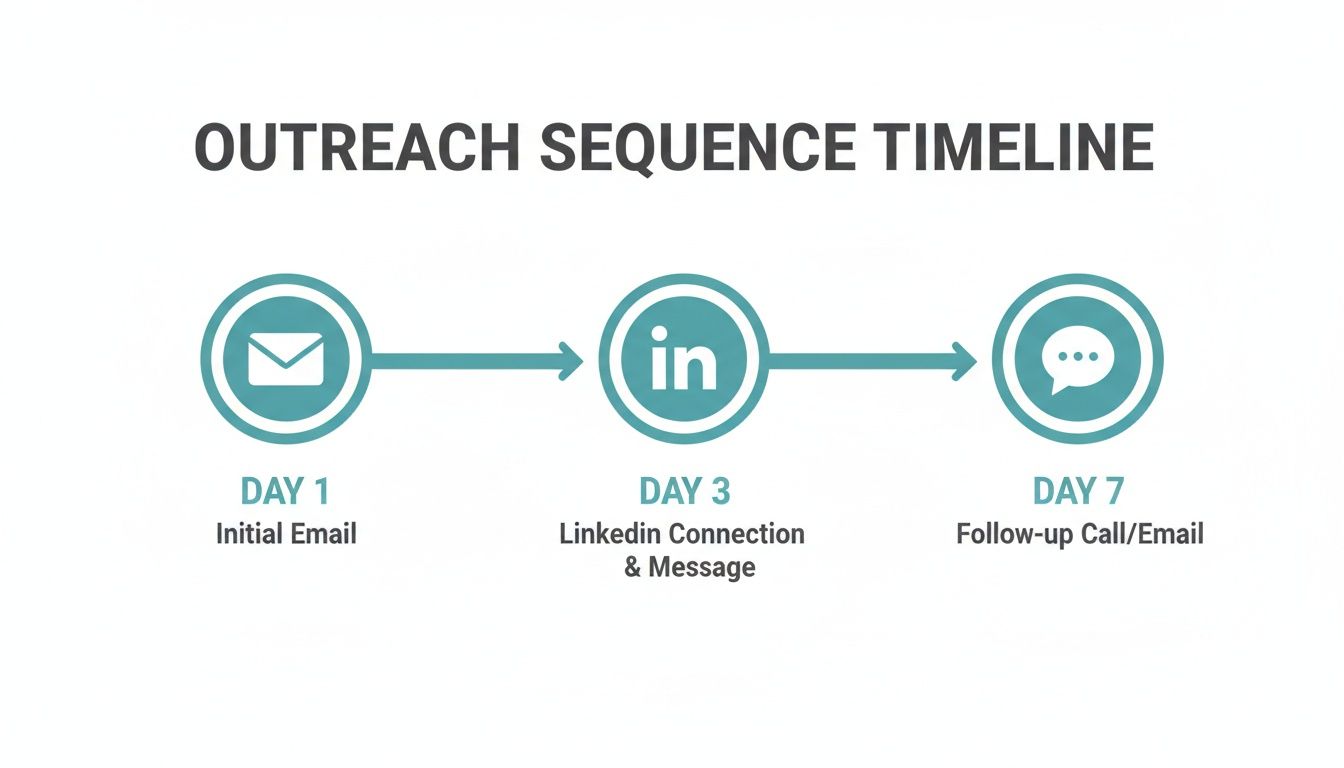
As you can see, combining email, social, and direct follow-ups in a short window creates a cohesive presence that’s hard to ignore.
A typical 10-day cadence could look something like this:
- Day 1: Send a highly personalized email. At the same time, view their LinkedIn profile (they’ll get a notification).
- Day 3: Follow up on your first email, but bring a new piece of value—maybe a compelling stat or a link to a short, relevant article. Now, send a LinkedIn connection request.
- Day 5: If they accept your request, send a brief thank-you message on LinkedIn. Don't pitch. Just be human.
- Day 7: Time for a strategic phone call. The goal isn’t to launch into your full pitch, but simply to reference your previous outreach and ask for 30 seconds to explain why you’re calling.
- Day 10: Send a final "breakup" email. This is a polite, no-pressure message that respectfully closes the loop. You’d be surprised how often this is the one that gets a response.
The best cadences are built on what I call 'persistent value.' Every single touchpoint should offer a new insight or a helpful resource, not just another ask for a meeting. This simple shift in mindset frames you as an expert, not just another salesperson.
Knowing When to Use the Phone
The cold call isn't dead, but its role has definitely changed. It’s no longer the opening salvo; it’s a powerful tool you bring in mid-sequence to accelerate a connection. Once you’ve built a little familiarity through email and LinkedIn, a call feels far less random and intrusive.
Let's be real, though—the odds are still steep. Recent data from industrial sales shows B2B cold calling conversion rates hover around just 2.3%. That means you might be looking at 40-45 dials just to land one meeting. This is exactly why you should reserve calls for your highest-value prospects, where the potential payoff justifies that serious effort. You can dive deeper into these benchmarks with cold calling statistics on EBQ’s blog. It's worth noting that top-performing teams can push that conversion rate up to 5-8%, which just shows the massive gap between average and elite execution.
When you do get someone on the phone, keep it tight. Reference your earlier touchpoints ("Hey, I sent an email last week about…") and have a crystal-clear, concise value prop ready to go.
By designing a thoughtful, multi-channel cadence, you stop being an interruption and start becoming a welcome, familiar presence. You’re showing respect for their time while confidently demonstrating the value you can bring to their world—and that combination is the key to truly successful B2B appointment setting.
Using AI and Automation to Prospect Smarter
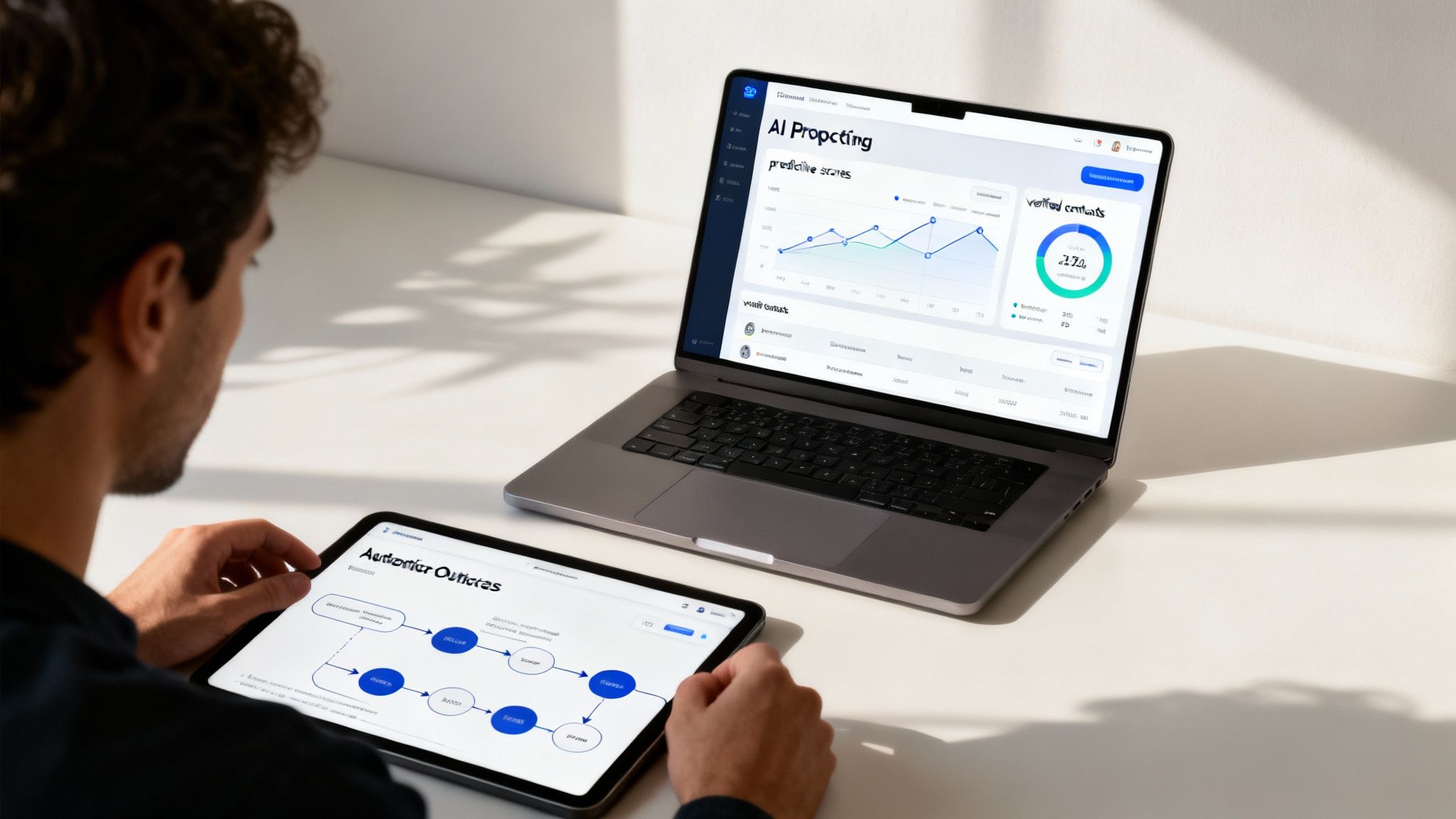
Let’s be honest: trying to scale B2B appointment setting with pure manual effort is a recipe for burnout and mediocre results. In today's sales world, technology isn't a "nice-to-have"—it's the engine that keeps you from falling behind.
This isn't about replacing your best reps with robots. It's about empowering them. The right AI and automation tools take over the repetitive, soul-crushing tasks, freeing your team to focus on what humans do best: building real relationships and closing complex deals.
Automating the Grunt Work to Free Up Your Reps
Imagine your sales development reps (SDRs) spending less time digging for contact details and more time crafting that perfect, needle-moving email to a dream client. That's exactly what automation brings to the table. It’s a workhorse for the essential but low-return parts of the job.
Think of all the time spent on tasks like:
- Contact Data Discovery: Instead of hours of manual searching, AI-powered tools can pull verified emails and direct-dial numbers for your entire target list in minutes.
- Data Cleansing and Verification: Automation keeps your CRM clean from outdated contacts, which means better email deliverability and no more time wasted on dead ends.
- Activity Logging: Every call, email, and social touchpoint gets logged automatically. Your reps get a perfect engagement history without lifting a finger for data entry.
This isn't just a time-saver. It builds a rock-solid, reliable foundation for your entire outreach strategy. You can see how modern AI-driven prospecting features pull all of this into a single, cohesive workflow.
Using Predictive Analytics to Find Buyers First
One of the most exciting developments in appointment setting for B2B is predictive analytics. These tools are like a crystal ball for sales, analyzing massive datasets to flag companies showing strong buying intent—often before they’ve even thought about contacting a vendor.
Instead of a static, stale list, your team gets a live feed of accounts that are actively researching solutions like yours, hiring for key roles that signal a need, or hitting a major growth spurt. This lets your SDRs show up at the exact moment their prospect is feeling the pain, which radically improves the odds of booking that first meeting.
By the time a prospect requests a demo, they've often already made a shortlist. Predictive AI gets you into the conversation while they are still defining the problem, giving you the chance to shape their thinking.
This tech-forward approach is reshaping the industry. We're seeing a clear trend toward blending AI-driven insights with hyper-personalization, as noted by experts like Intelemark in their look at the future of B2B appointment setting. The game is shifting from broadcasting static campaigns to running intelligent, data-rich outreach aimed at accounts mapped by genuine intent.
Orchestrating Smart Outreach Sequences
Automation is also a game-changer for executing the multi-channel sequences we've been talking about. Rather than manually tracking every email, LinkedIn message, and call, you can build smart sequences that run on autopilot.
This creates the consistent, professional persistence needed to break through the noise. No lead falls through the cracks just because an SDR got pulled into a meeting. A well-designed sequence can automatically send a follow-up email if the first one isn't opened, then tee up a LinkedIn connection request two days later.
But the real magic happens when you blend automation with a human touch. The best platforms will pause a sequence the moment a prospect replies, handing the conversation back to the SDR to take over with a genuine, one-to-one response. This powerful combination is the key to a scalable, predictable engine for generating qualified meetings.
Measuring the Metrics That Drive Pipeline Growth
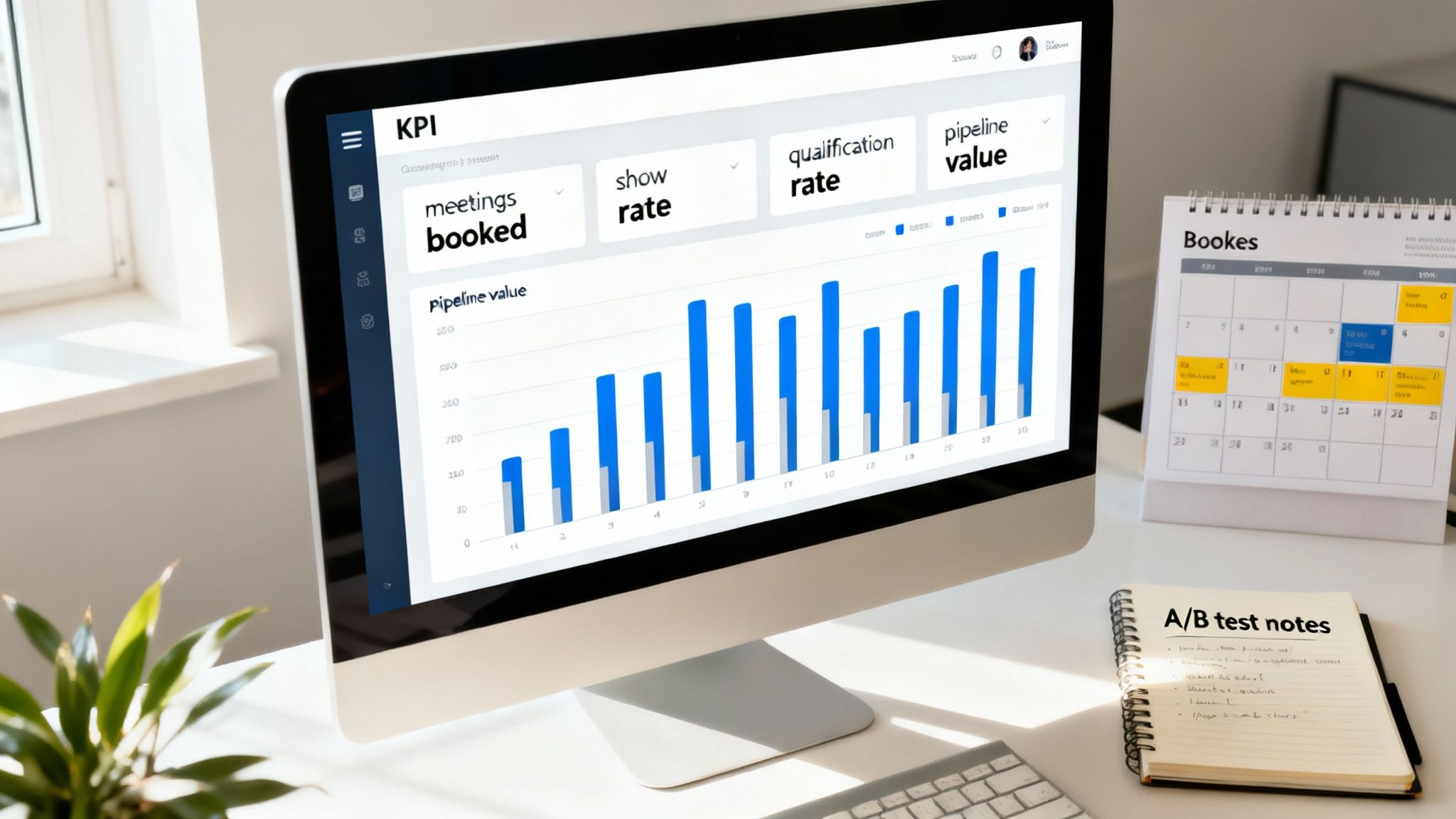
Running a great outreach campaign is one thing, but if you aren’t measuring what's actually working, you're just firing shots in the dark. Truly effective B2B appointment setting isn't about chasing high open rates; it’s about building a predictable engine that generates real, tangible pipeline.
This means you have to look past the vanity metrics. We need to focus on the key performance indicators (KPIs) that directly connect your team's daily activities to revenue. Activity for the sake of activity burns time and money, but the right data turns your process from guesswork into a scalable growth machine.
Focusing on Pipeline-Driving KPIs
While metrics like email open and reply rates can give you some clues, they don't paint the whole picture. Let’s be honest: a 10% reply rate means nothing if none of those conversations lead to a qualified meeting. To get a real sense of performance, you have to track the metrics that follow a lead's journey through the sales funnel.
These are the KPIs that actually matter:
- Meetings Booked: This is the most direct output of your SDR team's work and the first concrete win.
- Meeting Show Rate: What percentage of those booked meetings actually happen? A low show rate can point to problems with your qualification, a weak value proposition, or even a sloppy reminder process.
- Qualification Rate: Of the meetings that do happen, how many does the Account Executive accept as "sales qualified"? This is the ultimate stress test for your ICP targeting and messaging.
- Pipeline Generated: What's the total dollar value of the opportunities created from your appointments? This is the number that ties SDR activity directly to revenue.
Tracking these KPIs gives you an honest, unfiltered look at the health of your appointment setting process. It helps you pinpoint exactly where things are breaking down—whether it's weak targeting, ineffective messaging, or a clunky handoff.
A dashboard focused on meetings booked, show rate, and qualification rate is your single source of truth. It cuts through the noise and tells you exactly where to focus your coaching and optimization efforts.
A Simple Framework for Continuous Improvement
The best appointment setting teams I've seen are never satisfied. They are constantly testing, learning, and tweaking their approach to get better results. You don't need a complex data science setup to do this; a simple A/B testing mindset can have a massive impact over time.
The key is to test one variable at a time so you can get clean, reliable results.
What to A/B Test in Your Outreach
By systematically testing elements like these, you start replacing assumptions with hard data. You'll quickly discover which messages resonate with your audience and which cadences drive the most engagement, letting you build a playbook that’s based on what's proven to work.
Ensuring a Seamless CRM Handoff
Finally, none of this data is useful if it's stuck in different systems. Every touchpoint—every email, call, and LinkedIn message—has to be synced automatically to your CRM. This creates that crucial single source of truth and lays the groundwork for a smooth handoff from the SDR to the Account Executive (AE).
When an AE walks into a meeting already knowing the full context of the prospect's journey, the conversation is immediately more productive. They know the exact pain points that were discussed and the specific messaging that got the prospect to say "yes." This clean data flow is what makes an appointment setting engine truly scalable.
Getting this right is a significant investment, as the average qualified B2B appointment can cost anywhere from $550 to $1,700. You can explore more about the investment required for modern outbound efforts to see why a data-driven process is so critical. This relentless focus on measurement and optimization is how you build a reliable machine for generating qualified meetings that turn into real business.
Answering Your Toughest B2B Appointment Setting Questions
Even with a killer playbook, setting appointments in the B2B world is full of curveballs. You're going to run into tricky situations and have questions pop up. Let's dig into some of the most common challenges sales development teams hit and give you some straight, actionable advice to get past them.
How Do I Handle No-Shows for B2B Appointments?
It's one of the most frustrating things in sales: the dreaded no-show. But getting angry won't help. The real key is building a system that both minimizes them in the first place and gives you a graceful way to handle them when they inevitably happen.
A proactive approach is your best defense. The moment a meeting is booked, send a confirmation email. But don't stop there. Follow that up with a reminder 24 hours before the call—and make it more than just a calendar alert. Restate the value and include a clear agenda to remind them why they said yes.
For your most important prospects, I've found a quick, personal message on LinkedIn the morning of the meeting can work wonders.
If they still don't show up, don't sweat it. And definitely don't take it personally. Just have a simple, non-accusatory follow-up ready to go.
"Hi [Name], looks like we missed each other for our call today. No worries if something came up. Is there a better time to connect later this week?"
This keeps the door open without putting them on the defensive. But also, pay attention to the pattern. If you're seeing a consistently high no-show rate, it might be a red flag. It could be a sign that your team is booking meetings with people who aren't genuinely interested or don't have any real decision-making power.
What's the Ideal Number of Touchpoints in an Outreach Sequence?
There's no single magic number here. The right amount of outreach really depends on what you're selling and who you're selling it to. A complex, enterprise-level solution is going to require a different approach than a simple SaaS tool.
That said, a well-regarded best practice in the B2B world is a multi-channel sequence of 8-12 touchpoints spread out over three or four weeks.
This isn't about spamming them with a dozen "just checking in" emails. The magic is in the mix. An effective sequence blends different channels to stay on their radar without being annoying.
- Emails: A combination of automated messages and a few highly personalized, one-off notes.
- LinkedIn: Think connection requests, direct InMails, and even thoughtful comments on their posts to show you're paying attention.
- Cold Calls: Use these strategically. Save them for your highest-value accounts to cut through the noise and accelerate the conversation.
The goal is to be persistently helpful, not just persistent. Every single touchpoint should offer something new, whether it's a case study, a relevant blog post, or an insight about their company's latest news. Keep an eye on your analytics to see what's working and tweak your sequence based on that real-world data.
How Can I Improve the Handoff From SDR to Account Executive?
A sloppy handoff between your Sales Development Representative (SDR) and Account Executive (AE) can kill a deal before it even gets started. This is one of the most critical moments in your entire sales process, and it needs to be absolutely seamless to keep the prospect's confidence high.
First things first: the SDR must capture detailed notes directly in your CRM. This is non-negotiable. These notes need to go way beyond basic company info. They should capture the prospect's real pain points, what their key business goals are, and any specific questions they asked. That context is pure gold for the AE.
Next, the SDR has to set crystal-clear expectations with the prospect. The prospect should know exactly who they’re meeting next and what the agenda will be. The final step for the SDR is to send a formal introduction email, connecting the prospect with the AE and briefly recapping why the meeting is happening.
For your most important accounts, here’s a pro tip: have the SDR and AE do a quick internal huddle before the call. This gets them perfectly aligned and allows the AE to walk into the conversation armed with knowledge, making the prospect feel heard and understood from the very start.
Ready to transform your prospecting with a platform that handles the heavy lifting? Willbe combines verified data, AI-powered personalization, and smart automation to help your team book more qualified meetings, faster. Discover how Willbe can build your pipeline today.