

When it comes to B2B lead generation, success in email marketing boils down to a simple, yet powerful, formula: sending the right message to the right person at the right time. And doing it at scale without sounding like a robot.
This isn't about spray and pray. It's a methodical process—a well-oiled machine for finding prospects who are ready to buy, connecting with them in a way that feels human, and building a predictable sales pipeline.
Why Email Is Still King in B2B Lead Generation
In a world filled with endless outreach channels, email remains the workhorse for high-performing B2B sales teams. Social selling has its moments, and other channels can add value, but nothing beats email for its direct, measurable, and scalable power to spark meaningful business conversations.
For any SDR, AE, or sales leader, mastering email isn't just another skill to add to the list. It's the very foundation of a repeatable, revenue-generating engine.
The real challenge? Actually getting noticed. Every prospect's inbox is a battlefield, and generic, one-size-fits-all emails are the first casualties. To win here, you need a smart, tech-forward strategy.
It's Time to Ditch the Manual Grind
Let's be honest: the old way of doing things is broken. Too many sales teams are still bogged down by fragmented tools and tedious manual work that just grinds everything to a halt.
Think about the typical SDR's day. It’s often a frustrating cycle of wrestling with stale contact lists, trying to write one-off emails that stand out, and then manually logging every single activity into the CRM. That kind of friction doesn't just slow you down; it actively kills your pipeline.
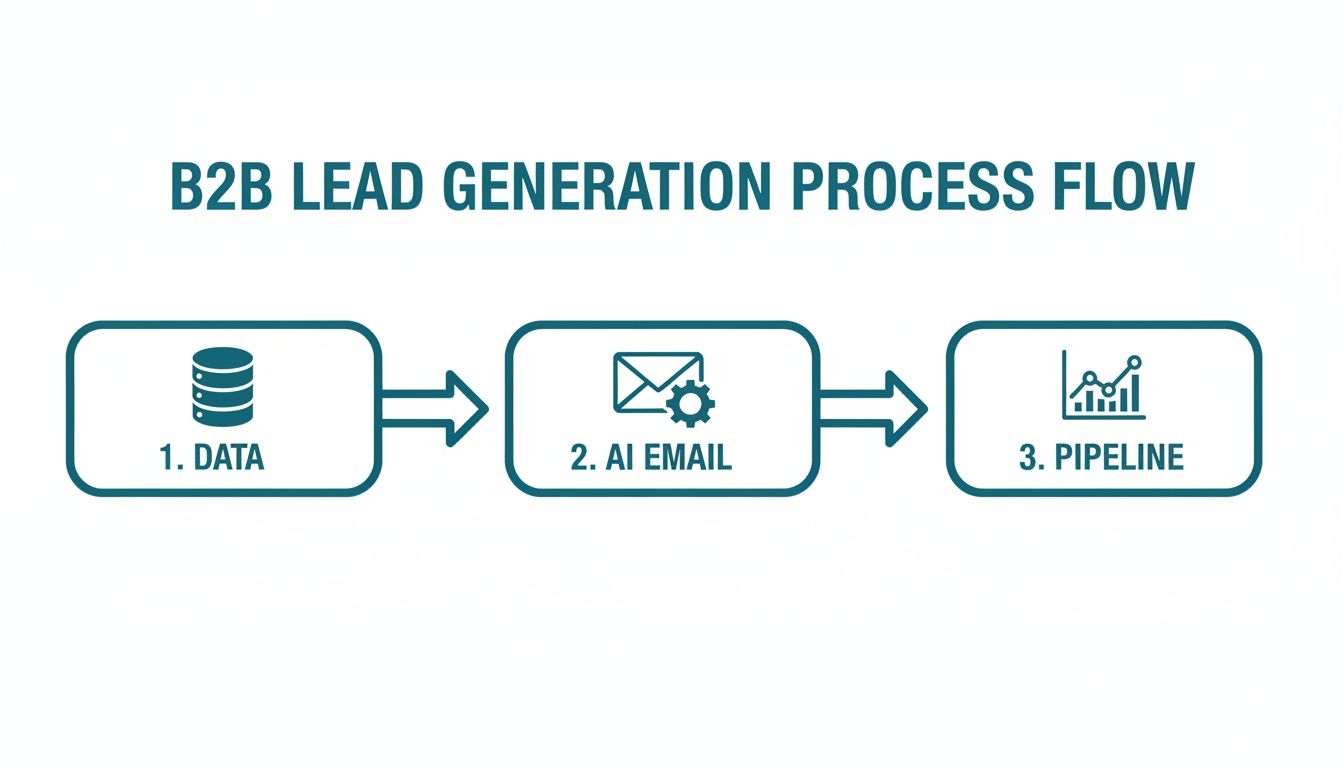
This is where an all-in-one GTM (Go-to-Market) platform like Willbe comes in. It replaces that chaotic, inefficient workflow with a streamlined, automated process. The entire motion, from sourcing high-quality data to launching AI-powered outreach and syncing it all back to your pipeline, becomes seamless.
This is what that modern process looks like in action:
This isn’t just a theory; the data tells the same story. Email marketing continues to be a top performer for generating leads. In fact, 48% of marketers rate it as their most effective tactic, putting it ahead of even website landing pages (44%) and content marketing (43%). If you want to dive deeper, you can find more lead generation statistics and insights from recent studies.
This playbook is designed for sales teams that need to build a predictable pipeline without simply throwing more people at the problem. We’re going to walk through exactly how to build a high-precision outreach engine that turns cold contacts into qualified meetings, faster than you thought possible.
Building a High-Intent B2B Prospecting List
A killer subject line won't save a campaign built on bad data. Most sales teams are fighting an uphill battle, stuck with outdated contacts and messy, fragmented lists. This is a one-way ticket to high bounce rates and torched domain reputations—a slow, manual grind that kills momentum before you even hit "send."
The old way of buying static, decaying lists is over. The real secret to driving results today is tapping into a platform that aggregates data from multiple B2B databases in real-time. This approach gives you a constant flow of fresh, verified contacts, so your data is always accurate.
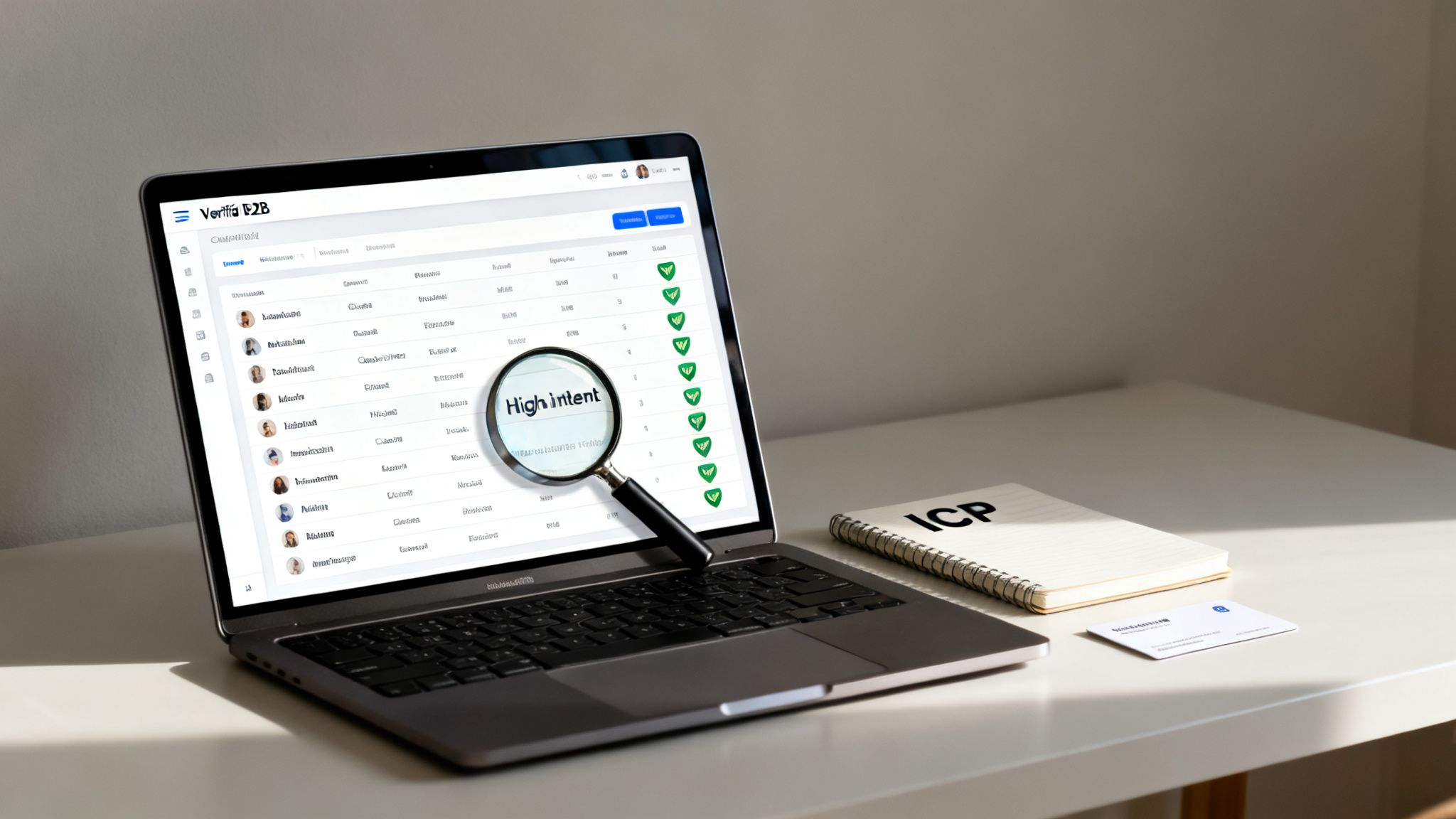
This method builds a clean, targeted foundation from the start. It cuts out the mind-numbing data work that RevOps teams dread and positions your outbound campaigns for serious impact.
Defining Your Ideal Customer Profile with Precision
Before you can build a list, you have to know exactly who you're targeting. Your Ideal Customer Profile (ICP) needs to be more than a vague guess about an industry and company size. A truly effective ICP is a razor-sharp set of firmographic and technographic filters that pinpoints your most valuable potential customers.
Think about the complaints you hear from your sales team. An Account Executive might gripe that an SDR's handoffs are weak because the accounts lack budget or are stuck in a competitor's contract. A well-defined ICP solves this problem by focusing on attributes that scream "good fit."
Treat your ICP as a living document, not something you create once and forget about. It has to be specific enough to filter out the wrong accounts automatically.
For instance, a generic ICP like "SaaS companies with 50-500 employees" is practically useless. A modern, data-driven ICP is far more detailed:
- Industry: B2B Software & Services
- Headcount: 101-500 employees
- Geography: North America & EMEA
- Job Titles: VP of Sales, Head of Revenue Operations, Sales Director
- Technologies Used: Salesforce, Outreach, HubSpot
- Recent Funding: Series A or B within the last 12 months
This level of detail makes sure your SDRs aren't wasting their breath on accounts that will never convert. It's the first real step toward building a predictable pipeline.
From Static Lists to Dynamic Segmentation
Once you've locked in your ICP, it's time to build dynamic segments. Forget exporting a static spreadsheet. A dynamic segment is a living list that constantly updates with new contacts matching your criteria. This is where an all-in-one prospecting platform like Willbe becomes a game-changer, eliminating the need to stitch together multiple data providers.
A great prospecting list isn’t a one-time purchase; it’s a living asset. The ability to access continuously verified data from aggregated sources means your team is always working with the freshest, most accurate information available, directly impacting deliverability and reply rates.
With advanced filters, you can go beyond your core ICP and start targeting accounts based on powerful buying intent signals. These are the triggers that tell you a prospect is actively looking for a solution just like yours.
Targeting High-Intent Segments
Creating high-intent segments makes your outreach incredibly timely and relevant. Instead of sending another generic "just checking in" email, you can reference a specific event that makes your message impossible to ignore.
Here are a few examples of dynamic segments that spark much better conversations:
- New Leadership Hires: Target companies that just brought on a new executive, like a VP of Marketing. New leaders almost always have the budget and authority to bring in new tools.
- High-Growth Companies: Filter for companies showing significant headcount growth over the past quarter. Rapid growth is a massive indicator of new operational needs.
- Technology-Driven Triggers: Build a list of companies that recently adopted a complementary technology. For example, if your product integrates with Salesforce, you can target companies that are brand new to their ecosystem.
When you build your email marketing for lead generation strategy on a foundation of precise ICPs and dynamic, high-intent segments, you shift your team's entire focus from quantity to quality. Reps spend less time cleaning data and more time talking to prospects who are actually a great fit. This leads to more qualified meetings, a faster sales cycle, and the ability to scale what works without burning out your team or your lists.
Crafting Outreach That Actually Gets Replies
Your prospects' inboxes are a war zone, flooded with generic, copy-paste emails that all sound the same. To cut through that noise and actually get a reply, your outreach has to feel like it was written specifically for them—a genuine one-to-one conversation, not a mass blast.
This means going way beyond the simple {{first_name}} tag. It's about proving you've done your homework and understand their world. The old playbook of sacrificing quality for quantity is dead. Today, winning sales teams deliver highly relevant messages at scale, and that’s where the right tech changes the game entirely.

Beyond Templates: The Power of AI That Sounds Human
Most of the "AI" writing tools out there are just glorified template-fillers. They spit out robotic, predictable copy that prospects can spot from a mile away. The moment someone senses your email wasn't written for them, you've lost all credibility.
A truly effective approach uses proprietary, template-free AI designed to write like an actual sales rep, not like generic AI copy. This kind of technology dives deep into a prospect's profile, their company's data, and recent news to generate unique, context-aware messaging. It picks up on nuance and even adapts to your personal writing style, making every single email feel authentic.
This is what makes true personalization at scale possible. Instead of an SDR burning 20 minutes researching a single prospect for one custom line, Willbe's AI can generate hyper-personalized outreach for an entire list in seconds. The result? A message that feels deeply researched and genuinely helpful.
Orchestrating Multi-Touch Sequences
One great email is a good start, but it's rarely enough to get the job done. Real success in email marketing for lead generation comes from a well-thought-out, multi-touch sequence that builds familiarity and trust over time.
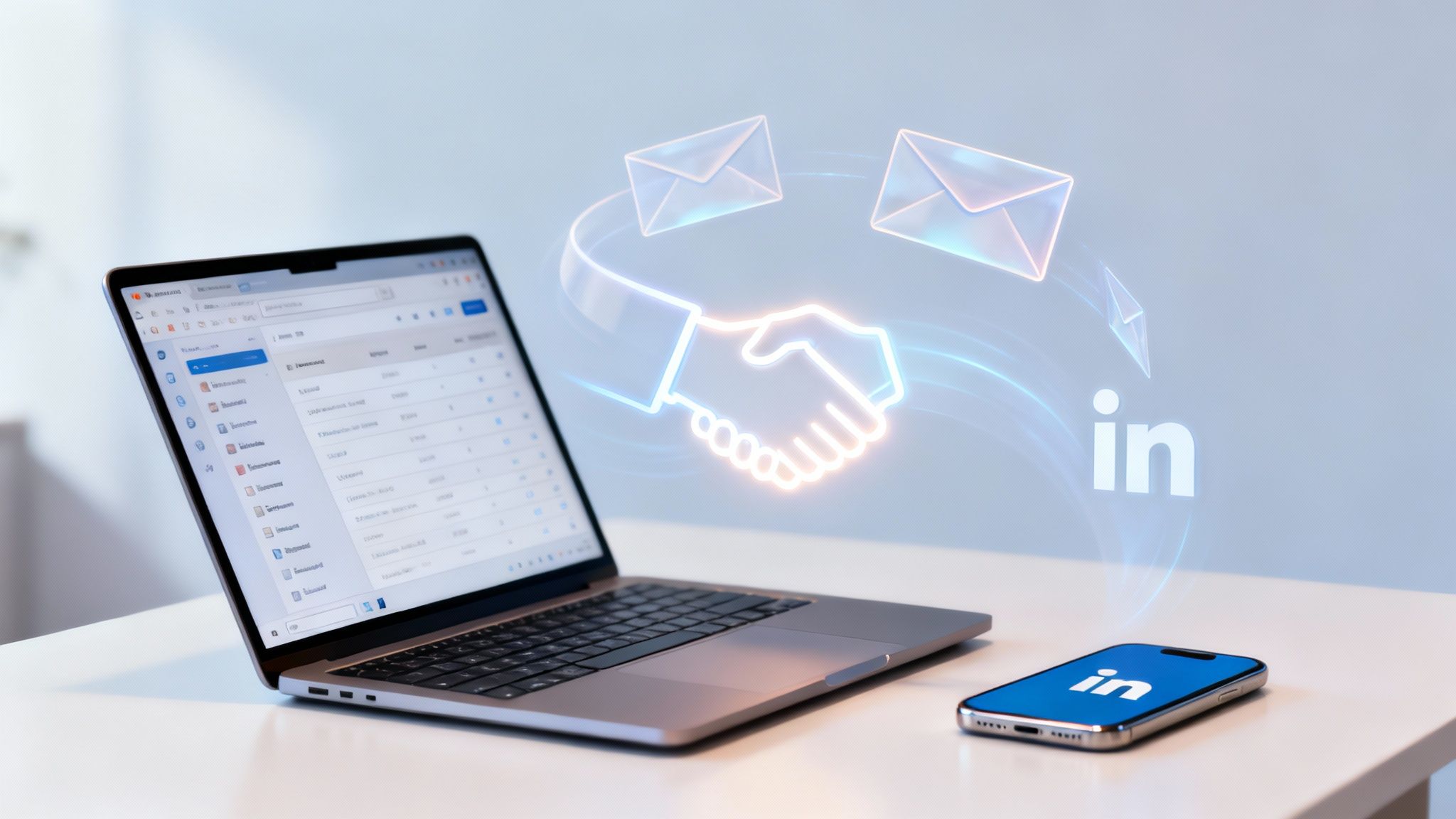
This isn't about spamming people with the same "just following up" line. It’s about orchestrating a series of valuable touchpoints, often across different channels. A modern go-to-market platform like Willbe makes this seamless.
A smart sequence might look something like this:
- Email 1: A hyper-personalized message that references a specific company trigger, like a recent funding round or a new executive hire.
- LinkedIn Touchpoint: A connection request or a thoughtful comment on their latest post. This reinforces your outreach without being pushy.
- Email 2: A follow-up that delivers more value—maybe a relevant case study or a quick insight on a pain point common to their industry.
- Email 3: A final, direct call-to-action that clearly proposes a next step, like a quick call to discuss their specific challenges.
This multi-channel approach keeps you on their radar and shows you’re persistent, not annoying. It proves you're serious about starting a relevant conversation.
The goal of a sequence isn't just to get a reply; it's to build a narrative. Each touchpoint should add a new layer of value and context, making it progressively harder for the prospect to ignore your relevance to their business problems.
Real-World Personalization Examples
Theory is great, but execution is what counts. Let's look at how to take an outreach message from generic and forgettable to genuinely compelling.
The Generic (and ineffective) Attempt:
"Hi Sarah, I saw you're the VP of Sales at [Company Name]. I'd love to show you how Willbe helps teams like yours improve their sales process."
This is lazy, self-serving, and will be ignored 99% of the time.
The AI-Powered, Personalized Approach:
"Hi Sarah, I noticed [Company Name] just announced its expansion into the APAC region. Scaling a sales team across new territories often brings challenges with data accuracy and consistent messaging. Willbe's platform is designed to provide global contact data and multi-language personalization to ensure your new SDRs can ramp up quickly and effectively."
See the difference? This message is specific, timely, and immediately connects your solution to a problem they are likely facing right now. It's no longer about what you sell; it's about solving their problem.
The difference in results is night and day. Simply put, personalization works.
Personalization Impact At a Glance
The table below breaks down the typical performance gap between generic spray-and-pray tactics and a modern, hyper-personalized strategy.
The numbers speak for themselves. Personalized outreach doesn't just get slightly better results; it fundamentally changes the economics of cold outreach. By leveraging technology to surface key triggers, you can make every message feel like a carefully crafted one-to-one conversation and dramatically increase your chances of booking that next meeting.
Automating Your Outreach Without Sounding Like a Robot
Let's get one thing straight: scaling your outbound doesn't mean you have to sound like a machine. The whole point of smart automation is to handle the tedious stuff so your reps can focus on being human. It's about building intelligent, multi-channel sequences that actually adapt to how a prospect behaves, creating a smooth path from the first "hello" to a signed contract.
This is exactly why having everything in a single, unified platform is no longer a luxury—it’s a necessity. When you're patching together separate tools for data, sequencing, and your CRM, things inevitably fall through the cracks. Your RevOps team ends up spending half their day troubleshooting a broken sync, or an SDR forgets to log a critical call, leaving the AE walking into a meeting completely blind. All that friction just grinds the revenue engine to a halt.
Building Adaptive Multi-Channel Sequences
Good automation isn't about setting up a rigid "send-send-send" email blast and hoping for the best. It’s about orchestrating a series of smart touchpoints that react in real-time. A great sequence should feel like a natural, persistent conversation, not a robotic monologue.
An all-in-one platform like Willbe makes it simple to build these adaptive workflows. For instance, a sequence can automatically change its path based on specific triggers.
Here’s what that looks like in the real world:
- A prospect opens your email but doesn't reply? The system can automatically queue up a LinkedIn connection request for the next day.
- They click the link to your new case study? The sequence can instantly follow up with a message that directly addresses that specific use case.
- What if they reply with an objection? The automation pauses immediately and creates a manual task for the SDR to jump in and craft a thoughtful, personalized response.
This kind of orchestration keeps you relevant and responsive without piling on more manual work. It lets your reps focus on actual conversations instead of living in a spreadsheet trying to manage their follow-ups.
The Critical Role of a Bi-Directional CRM Sync
Ask any sales leader or RevOps pro, and they'll tell you the CRM is their single source of truth. If that data is garbage, your pipeline is built on a shaky foundation. That's why a rock-solid, bi-directional CRM sync is completely non-negotiable for any team that's serious about scaling its email marketing for lead generation.
A bi-directional sync is about more than just dumping new contacts into your CRM. It creates a constant, two-way conversation between your systems.
- Automatic Activity Logging: Every single email sent, opened, clicked, and replied to gets logged on the contact's record in your CRM instantly. No more nagging reps to do the tedious data entry they hate (and usually forget).
- Real-Time Status Updates: When a prospect's status changes in the CRM (say, from "Working" to "Qualified"), that info flows right back to your prospecting platform. This stops reps from accidentally reaching out to someone already in an active sales cycle.
- Effortless Data Enrichment: Did you find a direct dial or notice a title change during outreach? That new info automatically updates the corresponding fields in the CRM, keeping your data clean and accurate without lifting a finger.
A broken CRM sync isn't just an inconvenience; it's a direct threat to your pipeline. When reps can't trust the data, they waste precious time double-checking everything and inevitably miss opportunities. A seamless, automated sync is the backbone of an efficient GTM motion.
This closed-loop system gives everyone a 360-degree view of every interaction. Sales leaders get crystal-clear visibility into what's working, AEs get warm handoffs with full context, and SDRs can finally stop doing admin work and start doing what they were hired to do: sell.
Of course, none of this matters if your emails don't land in the inbox in the first place. To learn more about that, check out our guide on email deliverability best practices.
Measuring What Matters for Pipeline Growth
Are you tracking the right numbers? Many sales teams get hung up on open and click rates, but those are just the starting line. If you want to build a predictable revenue engine, you have to measure the metrics that directly impact your sales pipeline and, ultimately, your bottom line.
It’s time to move past vanity metrics and get serious about actionable sales analytics. This is how you stop making reactive tweaks and start building a proactive, data-driven go-to-market strategy that actually works. Leaders who nail this can see exactly what's working, coach their teams to replicate that success, and forecast with real confidence.
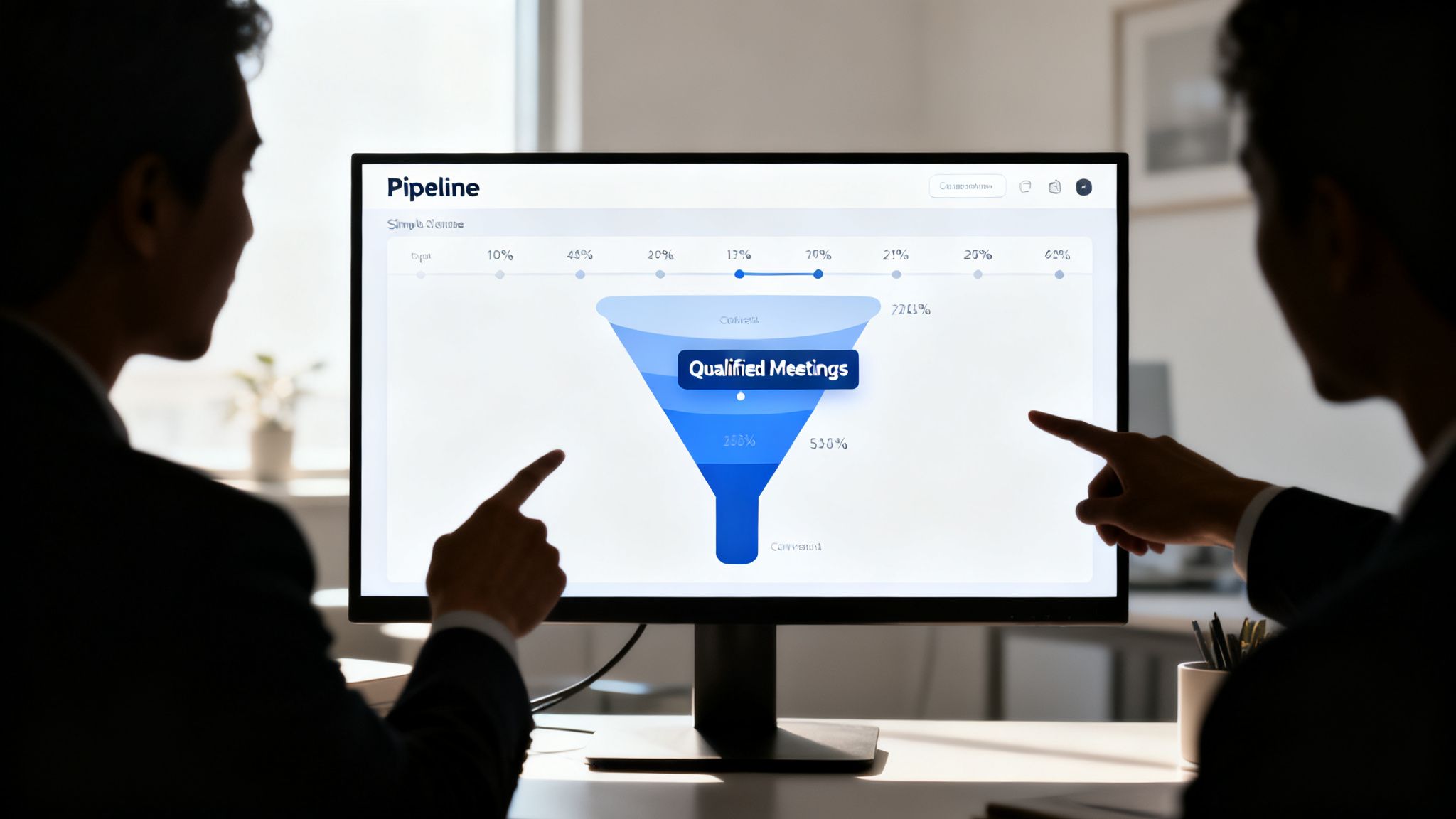
From Vanity Metrics to Revenue-Driving KPIs
The old-school way of measuring email outreach was simple: check the open rates and click-through rates (CTR). While those numbers can give you a basic pulse check, they don't tell you a thing about the quality of your pipeline. A sky-high open rate means nothing if none of those people ever turn into a real sales conversation.
Modern sales teams have to track metrics that connect directly to business outcomes. That means looking at the entire journey, from that very first email to a signed contract.
The most effective sales leaders I know don't just ask, "How many emails did we send?" They ask, "Which sequences are generating the most qualified meetings with our ideal customers?" That simple shift in perspective changes everything.
Here are the key performance indicators (KPIs) you should actually be obsessed with for pipeline growth:
- Positive Reply Rate: This is the percentage of prospects who respond with genuine interest—asking for more info, saying "let's talk," or agreeing to a meeting. It’s your best leading indicator that your messaging is hitting the mark.
- Meeting Booked Rate: This is the big one for most outbound campaigns. It's the raw percentage of contacts you targeted that converted into a scheduled demo or discovery call for your AEs.
- Lead-to-Opportunity Conversion Rate: This one is crucial. It measures how many of those booked meetings are actually qualified by the AE and get promoted to a real, active sales opportunity in your CRM. If this number is low, you likely have an ICP or messaging mismatch.
- Pipeline Value Generated: This is where the rubber meets the road. This KPI ties your outreach efforts directly to dollars and cents, showing exactly how much potential revenue each campaign is pumping into the pipeline.
By zeroing in on these metrics, you get a much clearer, more honest picture of what's actually driving growth. For teams looking to really master this, our guide on how to build a sales pipeline offers a more detailed framework.
Gaining Real-Time Visibility into Performance
The problem for a lot of sales leaders is that this critical data is usually scattered everywhere. Your SDRs might have reply rates living in a sequencing tool, but all the juicy pipeline data is locked away in the CRM. Trying to stitch it all together is a manual, time-sucking nightmare, usually for some poor soul in RevOps.
This is where having everything in one place becomes a game-changer. When your outreach, data, and analytics are all unified in a single platform, you get a real-time dashboard that answers your most important questions in seconds.
Suddenly, you can immediately see:
- Which specific messaging angles are driving the most positive replies.
- Which prospect segments (by industry, title, or company size) are booking the most meetings.
- Which of your SDRs are crushing it and what exactly makes their approach so effective.
This level of visibility lets you stop guessing and start making decisions based on cold, hard data. You can spot a sequence that’s falling flat and A/B test a new subject line on the fly. Or you can see that one rep is having massive success with a new persona and instantly roll that playbook out to the whole team. This is how you scale what works, and you do it fast.
Got Questions About B2B Email Lead Gen? We've Got Answers.
Even with a solid game plan, questions pop up. The world of email marketing for lead generation changes fast, and yesterday's winning tactics can fall flat today. Let's tackle some of the most common questions from sales leaders, RevOps pros, and front-line SDRs trying to build an outbound engine that actually works.
No fluff here, just straight, practical answers to the real-world challenges you're facing.
How Do I Keep My Emails Out of the Spam Folder?
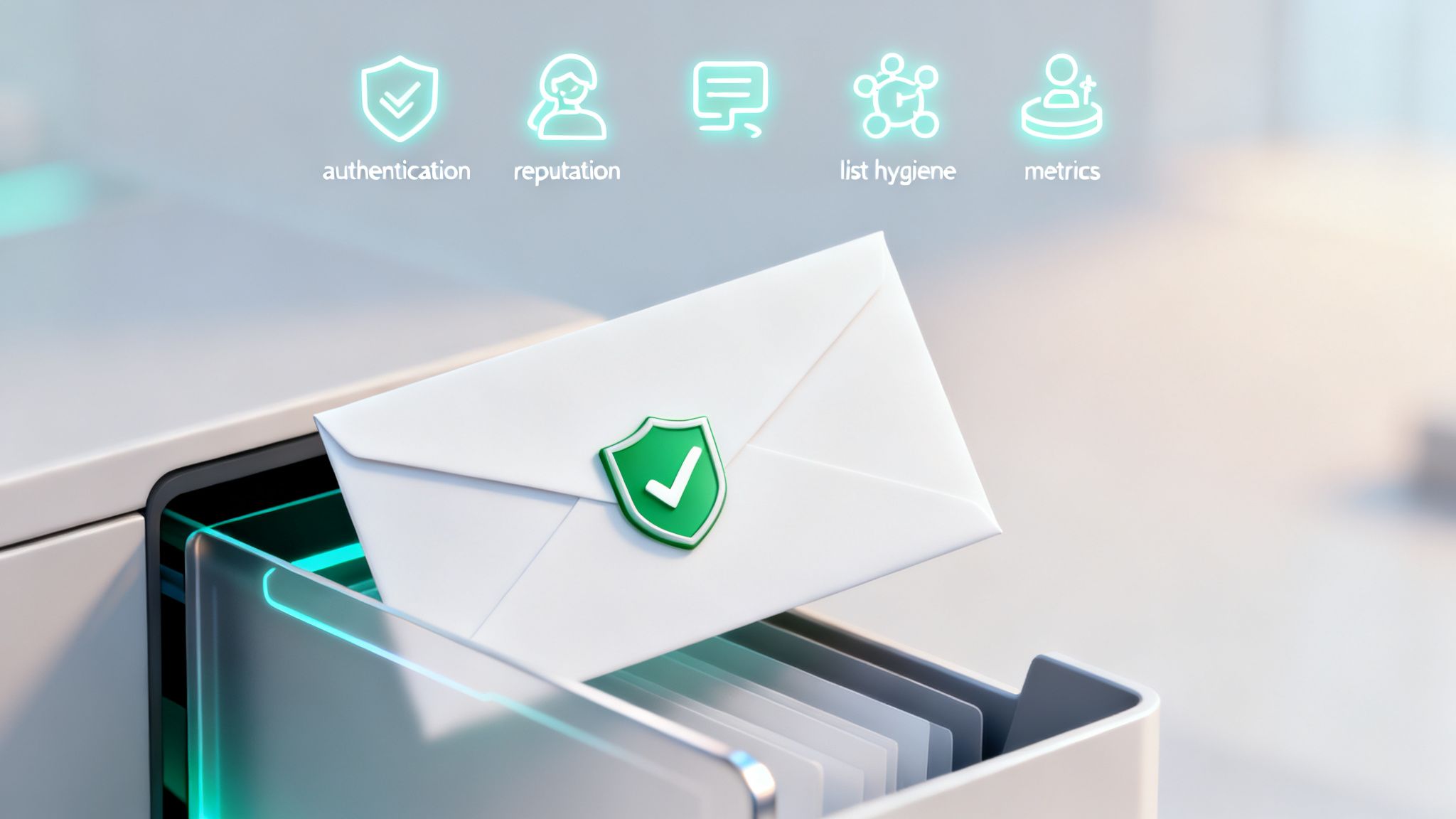
Landing in spam kills a campaign before it even gets started, so it's no wonder sales leaders obsess over it. Staying in the inbox isn't about one magic trick; it's a constant commitment to a handful of best practices that protect your domain reputation.
Here’s what really matters:
- Nail the Technical Setup: First things first, get your domain authenticated with SPF, DKIM, and DMARC. This is non-negotiable. It’s like showing your ID at the door—it tells email providers you are who you say you are.
- Keep Your Data Clean: Never, ever use stale, purchased lists. A high bounce rate is a huge red flag for providers like Google and Microsoft. Your best defense is continuously verified data, which is why using an all-in-one platform like Willbe is a game-changer. It keeps your lists clean from the start.
- Earn Positive Engagement: Your real goal isn't just opens; it's replies. Every email that gets ignored or marked as spam dings your sender score. This is precisely why hyper-personalization that sparks a real conversation is so critical to modern outreach.
Spam filters have gotten incredibly sophisticated. They're not just scanning for keywords anymore; they're analyzing how people interact with your emails. The more your messages are opened, replied to, and forwarded, the more inbox providers will trust you. Your best deliverability tool is sending great emails that people actually want to read.
What’s the Right Number of Follow-Ups for a Sequence?
The honest answer? There's no single magic number. It really depends on who you're targeting—their industry, their seniority, and your overall ICP.
That said, a solid rule of thumb for B2B outreach is a multi-touch sequence of 5-8 steps spread out over two to three weeks.
A single email just won't cut it. The data is clear: a huge chunk of replies come from the follow-ups. Smart persistence pays off, but it has to be the right kind of persistence. Your sequence shouldn't just be a series of "just checking in" pings. Each touchpoint needs to add new value, offer a different angle, or share a new resource.
Try orchestrating a sequence that mixes email with a few LinkedIn touchpoints. This multi-channel approach feels more natural, keeps you on their radar, and avoids burning out your prospect with a cluttered inbox.
What Is the Single Biggest Mistake Sales Teams Make?
Without a doubt, the most common and damaging mistake is choosing quantity over quality. Far too many teams get laser-focused on a volume metric—like "send 500 emails a day"—and completely forget about the person on the other end. This "spray and pray" mindset is a relic that needs to be left in the past.
It creates a domino effect of problems:
- Abysmal Reply Rates: Generic, one-size-fits-all emails are destined for the trash folder.
- Damaged Reputation: Annoyed prospects mark you as spam, tanking your domain health for future campaigns.
- Burned Lists: You torch your addressable market with low-impact outreach, leaving no room for a better-timed, more relevant attempt down the road.
- SDR Burnout: Nothing crushes a rep's spirit faster than sending hundreds of emails a day and getting nothing but silence in return.
The modern playbook is all about precision and personalization at scale. Instead of blasting 500 generic templates, a top-performing SDR uses a platform like Willbe to send 100 hyper-personalized messages that hit on specific triggers and pain points. The reply rates are exponentially higher, the conversations are better, and the impact on the pipeline is undeniable. Focusing on quality isn't a luxury; it's the core of a sustainable go-to-market engine.
Ready to move beyond fragmented tools and manual workflows? Willbe is the all-in-one platform that helps B2B sales teams find better accounts, reach the right people with messages that sound human, and convert pipeline faster.
See Willbe in action and discover how top teams build a predictable revenue engine.