


Finding a business email from a phone number isn't a magic trick—it's a critical capability for any high-performance B2B sales team. The most effective method isn’t a back-alley data scrape, but using a professional B2B prospecting platform to reliably match a phone number to a verified corporate email. This single step transforms a contact number into a multi-channel opportunity, unlocking faster and more effective outreach.
Why Connecting Phone Numbers to Emails is a Sales Superpower

In B2B sales, momentum is everything. A prospect’s direct dial or mobile number is a strong starting point, but serious business—proposals, meeting confirmations, and detailed follow-ups—happens over email. Connecting a phone number to a valid business email isn't just a convenience; it's a core component of a modern sales motion.
Consider these common scenarios that stall pipeline for countless sales teams:
- The Post-Call Follow-Up: You've just had a great discovery call. Now you need to send over the case study you mentioned. Spending the next 15 minutes hunting for their email kills the momentum you just built.
- Activating Cold Leads: An SDR inherits a list of contacts with only names and phone numbers. Without emails, they can't be added to a nurture sequence to warm them up before a call.
- Fixing a Leaky CRM: Your CRM is likely filled with contacts missing an email address. These leads are invisible to your marketing team and outbound campaigns, representing untapped pipeline.
In each case, the missing email address creates a frustrating bottleneck. It slows down the sales cycle, reduces your team's efficiency, and puts a hard ceiling on your pipeline potential.
Turning a Data Point Into Pipeline
The ability to find a work email from a phone number converts a single data point into a strategic advantage. It enables multi-channel selling, allowing you to warm up a lead with a personalized email before you call or send a relevant note after leaving a voicemail. Knowing the best times to call for cold calling is one piece of the puzzle; having a verified email for follow-up is the other.
A phone number is just a lead. A phone number and a verified business email? That's a qualified opportunity ready for a real conversation. It’s the difference between a dead end and a deal in progress.
This capability is only becoming more critical. With a projected 4.73 billion email users by 2026 and 90% of professionals using email daily for work, a valid email address is your direct line into a prospect’s primary workspace. When a platform can deliver 98% email accuracy, a list of phone numbers is no longer just a call sheet—it's a goldmine that saves your team hours of manual research and directly fuels pipeline growth.
This is where an all-in-one prospecting platform like Willbe makes a decisive impact. Instead of juggling fragmented tools and tedious manual searches, you can enrich entire lists of phone numbers with accurate, verified emails in minutes. It’s about empowering your reps to connect with the right person, through the right channel, and turn every contact point into a potential conversation.
Comparing Manual and Automated Lookup Methods

When you have a phone number but no email, you’re at a crossroads. You can either roll up your sleeves for manual digital sleuthing or let a modern platform handle the heavy lifting. For a sales team chasing quota, the choice directly impacts their ability to hit their number.
Let's break down what these two approaches look like in the real world.
The Manual Grind: Time vs. Reward
The manual route is the default for reps without an effective tech stack. It’s a tedious, time-consuming process that turns highly-paid sellers into low-level data miners—a massive drain on their most critical resource: time.
A manual email lookup by phone number is a frustrating game of connect-the-dots. An SDR might start by plugging the number into Google, hoping a social profile or old blog post pops up with the contact info they need.
From there, the rabbit hole gets deeper:
- Social Media Detective Work: They find a LinkedIn profile tied to the number. Great. Now they have a name and company but still no email. The next step is to figure out the company's email format.
- Advanced Search Tactics: They’ll try using search operators like
("Jane Doe" AND "Acme Corp" AND email)to dig up a press release or bio that happens to list the address. - Educated Guesswork: After hunting down the company’s likely email pattern (e.g.,
first.last@company.com), they have to create a list of potential variations and run them through a free email verifier one by one.
Each of these steps is a gamble. A rep can easily burn an hour tracking down a handful of emails with no guarantee the information is accurate. It could be an old address, a personal one, or simply wrong.
The core problem is that this manual process doesn't scale. If an SDR spends an hour finding five emails, that's an hour they could have spent having five meaningful sales conversations. It’s a perfect example of working in the business instead of on it.
The Automated Advantage: Speed and Precision
Now, let's look at the alternative. With an automated approach, the entire manual hunt is replaced by a powerful platform that does the work in seconds. This is how modern sales teams build a massive competitive advantage.
Automated solutions are purpose-built to solve this exact problem at scale. They tap into enormous, constantly verified B2B data sources to perform reverse lookups with incredible speed and accuracy.
The workflow is fundamentally different. Imagine this:
An Account Executive uploads a list of 500 contacts that only have phone numbers directly into a platform like Willbe. The system instantly cross-references those numbers against its aggregated databases.
Within minutes, the list is returned—fully enriched. You don't just get an email address; you get a 98% accurate business email, along with current job titles, company firmographics, and even buying intent signals.
The difference is staggering. The hour a rep once spent finding five questionable emails can now enrich a quarter's worth of leads with clean, actionable data. For sales leaders, this means your team spends their day selling, not searching. For RevOps teams, it ensures the data flowing into your CRM is reliable, preventing the data decay that cripples so many outbound campaigns.
To see how this technology fits into a broader strategy, it's worth exploring the best data enrichment tools on the market and understanding how they integrate with larger prospecting platforms.
Ultimately, automation is about more than speed. It's about elevating your sales team's capabilities, freeing them from mind-numbing tasks so they can focus on building pipeline with confidence.
Choosing The Right Tools For Precision And Scale
Let's be clear—not all tools promising an email lookup by phone number are built for a modern, high-performance sales team. As a sales or RevOps leader, your goal isn't just to find an email. It's to find the right email, along with the context your reps need to initiate a valuable conversation.
A cheap, standalone email finder might seem like a quick win, but it’s a classic case of 'you get what you pay for.' These tools often scrape outdated public databases, leading to low match rates for business contacts and a high risk of finding personal emails that are useless for B2B prospecting. It's a fast track to frustrating reps and damaging your domain reputation.
What Really Matters in a Tool
When evaluating solutions, look past flashy features and focus on two things that actually drive pipeline: data quality and workflow efficiency. A tool is only as good as the data it provides and how easily your team can turn that data into revenue.
Here are the questions to ask any vendor:
- Data Source and Quality: Where does the data come from? A top-tier platform doesn't rely on a single source. It aggregates and cross-references data from multiple, verified B2B streams to ensure the highest possible accuracy.
- Verification and Freshness: B2B contact data decays at a rate of over 30% per year. Does the platform have a continuous verification process to ensure emails are active and tied to the right person?
- B2B Match Rates: Ask for the numbers. What percentage of phone numbers can the tool reliably match to a verified corporate email? For B2B sales, this metric is a direct reflection of the database's quality.
Here’s the most important question: "Does this tool just find an email, or does it deliver a complete prospect profile?" A simple email address is a data point. An email address plus a verified job title, company details, and firmographic data—that's a real opportunity.
This is what separates a basic finder from a true B2B intelligence platform. A finder gives you one piece of information. A comprehensive platform like Willbe gives you the full picture, empowering your reps to ditch generic outreach for a targeted message that resonates with a prospect's role and business challenges. You can see how these integrated solutions stack up in our guide on the best sales prospecting tools.
The Non-Negotiable: Native CRM Integration
Every RevOps leader has seen this horror story: an SDR uses a standalone tool to find an email, manually copies it, and pastes it into the CRM. A week later, another rep does the same, creating a duplicate contact. This fragmented process is a nightmare for data hygiene, wastes countless hours, and leaves leaders with zero visibility.
This is why native CRM integration isn't a "nice-to-have"—it's a requirement. A platform that automatically syncs enriched data back to your CRM creates the single source of truth your revenue team needs.
This seamless, two-way sync delivers significant advantages:
- No More Data Silos: All prospect intelligence lives in one place, accessible to everyone from SDRs to AEs to CSMs.
- An End to Manual Data Entry: Reps get hours back each week, no longer needing to juggle windows and copy-paste information. That’s more time they can spend selling.
- Pristine Data Hygiene: Automated syncing prevents duplicates and ensures your CRM—your most critical system of record—is always clean and reliable.
The right tool isn't just another widget in your tech stack. It's a core component of your go-to-market engine. It consolidates workflows, cleans your data, and gives your team the intelligence to have smarter, more impactful conversations. It’s about replacing a clunky, fragmented process with the speed and precision needed to build and convert pipeline predictably.
Building A Scalable Outreach Workflow
Finding a prospect's email is just the first domino. The real impact comes from building that data point into a repeatable, high-performance outreach system. This is how top sales teams turn a simple email lookup by phone number into a predictable stream of qualified meetings.
A scalable workflow isn't about blasting more emails; it’s about sending smarter ones. It’s a process that takes a raw list of phone numbers, enriches it with verified data, and orchestrates a personalized, multi-channel approach that gets a response.
From Raw Data to Actionable Segments
You start with a list of contacts—from a trade show, a dusty CRM export, or inbound leads with missing info. Any seasoned sales or RevOps professional knows this raw data is usually a mess.
The first move is to use a bulk enrichment tool. Instead of hunting down contacts one by one, you upload the entire list to a platform like Willbe. Within minutes, it doesn't just return verified emails—it provides the context needed for strategic segmentation:
- Accurate Job Titles: Know exactly who you're talking to and their seniority.
- Company Firmographics: Filter by industry, company size, or revenue to make your outreach relevant.
- Geographic Data: Segment by region for territory-based plays or localized campaigns.
With this enriched data, you can finally build smart segments. An SDR can now easily pull a list of "VPs of Engineering at SaaS companies with 50-200 employees" and build a campaign that speaks directly to their priorities.
AI Orchestration That Sounds Human
Once your target segment is locked in, the next challenge is crafting outreach that doesn't sound robotic. Generic templates and basic mail-merge fields don't cut it anymore—prospects spot them instantly.
This is the exact problem an AI Orchestrator, like the one built into Willbe, is designed to solve. It goes beyond templates by analyzing the rich data for each prospect—their job title, their company’s recent news, their LinkedIn activity—to generate a unique, human-sounding first email.
This diagram breaks down the key elements to look for when choosing a tool to power this workflow.
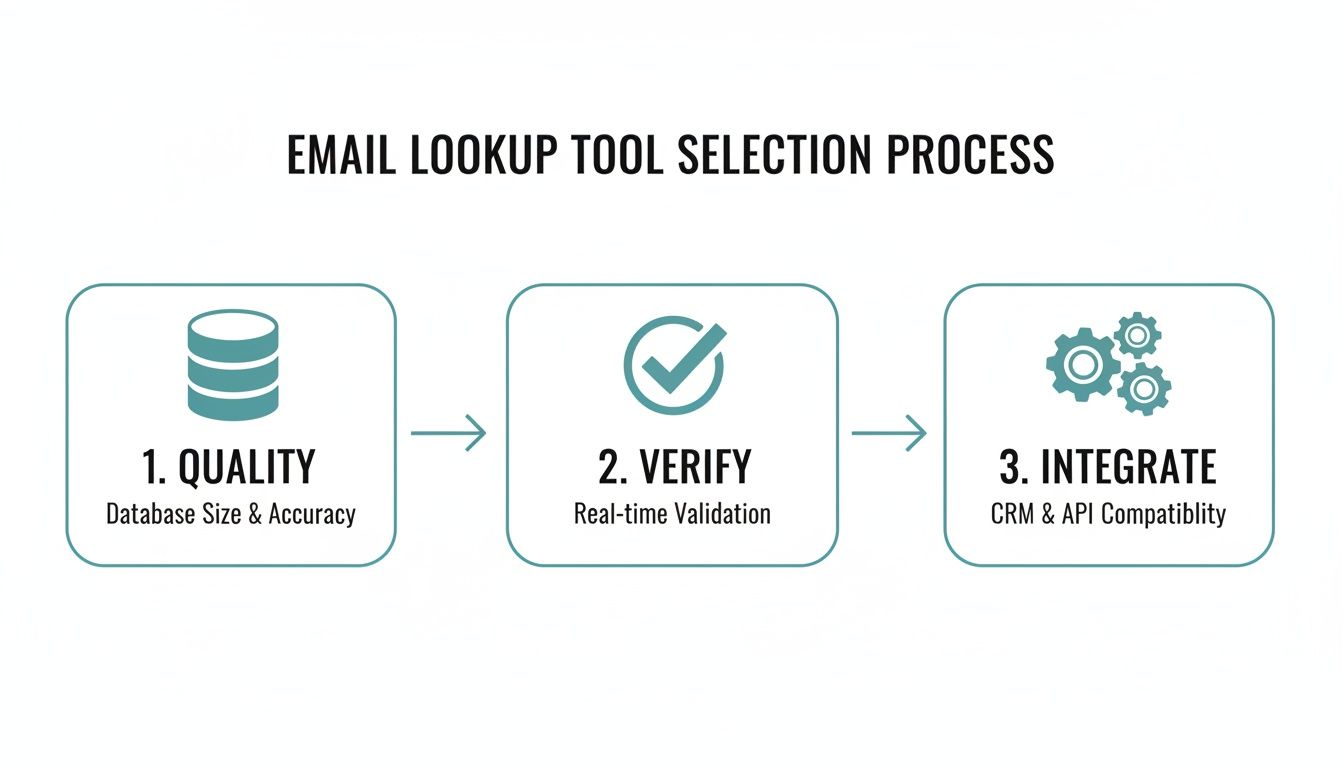
As the graphic shows, an effective platform hinges on three pillars: the quality of the data it finds, its ability to verify that data is accurate, and how easily it integrates into your existing sales process. An AI-generated message referencing a prospect's specific role and a relevant company initiative is infinitely more compelling. It’s the difference between a template and a genuine conversation starter.
Unifying Channels and Closing the Loop
An effective workflow doesn't stop at email. With a verified email and a complete profile, your reps can run a multi-touch sequence. The AI-generated email might be step one, followed by an automated LinkedIn connection request a day later, and then a well-timed phone call on day three.
The goal is to create a connected experience. Each touchpoint should build on the last, making your outreach feel thoughtful and persistent, not just noisy. This integrated approach dramatically boosts reply rates.
Finally, any scalable system must close the loop. As your team runs these sequences, every action—every email sent, LinkedIn message delivered, or call logged—needs to sync back to your CRM automatically. This eliminates the manual data entry that reps hate and gives sales leaders clean, real-time data to see what’s actually working.
For reps in the trenches, tools like an email extractor Chrome extension can help grab contacts on the fly and feed them right into this engine. The impact of this data-driven personalization is significant. Well-personalized emails can boost open rates by 18.30%—a massive advantage when experts predict 392.5 billion emails will be sent daily by 2026. Using verified, enriched data is your best bet to cut through the noise and write messages that demand to be opened.
Staying on the Right Side of Data Compliance
Let's be direct: when using tools for email lookup by phone number, you're handling sensitive information. Your credibility and your company's reputation are on the line with every email you send. This isn't about getting bogged down in legal jargon; it's about operating with integrity and building trust from the first touchpoint.
The good news is that for B2B outreach, compliance is straightforward. Most regulations, like GDPR in Europe or CCPA in California, center on the concept of legitimate interest. They exist to stop spam, not to prevent legitimate sales efforts. As long as you're a professional contacting another professional about something relevant to their job, you are generally on solid ground.
Of course, this all hinges on where you source your data. Using ethically sourced information doesn't just keep you compliant—it shows prospects you respect their professional boundaries.
The Ground Rules for Compliant Outreach
To keep your outreach effective and above board, build your process around a few non-negotiable practices. Think of these not as rules, but as the foundation for a sustainable pipeline engine.
Your playbook must include:
- Stick with Compliant Data Partners: Your data is only as good as its source. Only work with B2B data providers who are transparent about how they collect and verify information and are fully compliant with global privacy laws.
- Practice Aggressive Data Hygiene: A dirty CRM is a liability. You must be militant about cleaning and updating your records. Stale data leads to bounces and spam reports, which will tank your domain reputation.
- Honor Opt-Outs Instantly: Every email needs a dead-simple way to unsubscribe. More importantly, your system must process those requests automatically and immediately, removing contacts from all campaigns. No exceptions.
- Make Personalization Your North Star: This is what separates genuine outreach from spam. Your message must provide real value and speak directly to the challenges of your prospect’s specific role.
When automating any data gathering, like scraping, it's also smart to know the legal boundaries. For a deep dive, this Legal Guide to Web Scraping is a great resource.
Compliance isn't a barrier; it's a guardrail. It keeps your sales engine on track by ensuring every prospect interaction is built on professionalism, relevance, and trust. Getting this right is non-negotiable.
Why a Single Platform is Your Best Bet for Compliance
Managing compliance across a patchwork of different tools is a recipe for disaster. A lookup tool here, a spreadsheet there, a separate email sequencer—it's impossible to track where data came from or ensure an opt-out in one system is respected by another.
This is where an all-in-one prospecting platform changes the game. When you centralize data sourcing, enrichment, and outreach, compliance becomes an integrated part of the workflow, not an afterthought.
Consider the practical advantages of an integrated system:
- Verified, Business-Only Data: A platform like Willbe provides professionally sourced and constantly verified B2B contact info. You can be confident you’re reaching a business inbox, not someone's personal email.
- Automatic Suppression Lists: When a prospect clicks "unsubscribe," the system can automatically flag them and sync that status back to your CRM. This prevents the common mistake of another rep accidentally reaching out again.
- A Single Source of Truth: With every prospecting action logged in one place, you have a complete audit trail. This gives sales leaders and RevOps total visibility and ensures team-wide accountability.
Ultimately, using a unified, compliant platform is the single best way to de-risk your outreach strategy. It lets your team build pipeline quickly without cutting corners, ensuring every email lookup by phone number leads to a conversation that’s both effective and ethical.
Common Questions About Email Lookup By Phone Number
Even with a solid plan, questions will come up as you start finding emails from phone numbers. That's normal. Getting straight answers is the fastest way to prospect with confidence, so let's tackle the questions we hear from sales teams every day.
We'll skip the fluff and give you the direct, practical advice you need to move faster and stay compliant.
How Accurate Are Email Lookup By Phone Number Tools?
Accuracy varies widely and depends entirely on the data source. Free, public reverse lookup sites are practically useless for B2B prospecting. They scrape old personal directories, so you'll either get no match or a personal email address you can't use for business.
Professional B2B platforms are a different story. They aggregate data from dozens of constantly updated business databases and cross-verify everything. As a result, they can achieve accuracy rates of 95-98%. The best platforms even ping emails in real-time to verify they’re active before delivering them.
For any serious sales team, a platform with a transparent, multi-step verification process isn't a "nice-to-have." It's essential for protecting your sender reputation and building pipeline.
Is It Legal To Find And Use Emails For Sales Outreach?
In a B2B context, the short answer is yes—as long as you adhere to regulations like GDPR and CAN-SPAM. The key concept is "legitimate interest." This means your outreach must be relevant to the person's professional role and their company's needs.
Your goal is to start a genuine business conversation, not send spam. To ensure you’re always compliant, your process must include:
- Sourcing data exclusively from compliant, professional providers.
- Giving every person a clear and easy way to opt out of your emails.
- Ensuring every message you send is personalized and provides real value.
Can I Automate Finding Emails From A List Of Phone Numbers?
Absolutely. In fact, you should automate this. This is where modern prospecting platforms deliver a massive ROI. Forget the one-by-one lookup process; today's workflows are built for enriching lists in bulk.
You simply upload a CSV file or connect a list from your CRM. The platform then appends verified emails, job titles, company data, and more to your entire list in minutes. This single step saves your team countless hours and gets them back to selling.
What Is Better: A Standalone Finder Or An All-In-One Platform?
For any team looking to build a scalable sales engine, an all-in-one platform is the clear winner. A standalone finder might seem like a quick fix, but it only solves a tiny piece of the puzzle and often creates more headaches.
Think about the workflow. With a standalone tool, you find an email. Then what? You still have to manually export it, import it elsewhere, use another tool for sequencing, and try to track everything in a spreadsheet or CRM. It's a clunky, inefficient process that invites data errors.
An all-in-one platform like Willbe consolidates data enrichment, AI-powered writing, multi-channel outreach, and analytics into one seamless system.
This approach is fundamentally smarter. It gives your reps hours back each week, ensures your CRM stays clean and accurate, and provides a single source of truth for tracking what’s driving revenue. You’re not just buying a tool; you're adopting a complete system designed for speed and predictable results.
Ready to stop wasting time on manual research and start building pipeline with precision? Willbe consolidates over 30 B2B data sources, proprietary AI, and multi-channel outreach into a single platform that finds your ideal buyers and crafts messages that sound human—at scale. Explore how top teams scale outbound and see what a unified prospecting engine can do for you.