


Your sales team is drowning in a sea of disconnected tools. SDRs spend hours wrestling with stale data, AEs get stuck with low-quality handoffs, and you lack clear visibility into what actually converts. The result is a cycle of burned lists, frustrated reps, and a pipeline that feels anything but predictable.
This isn't a people problem; it's a workflow problem. The modern GTM motion requires speed, precision, and personalization at scale, something a fragmented tech stack simply cannot deliver. Your team deserves better than toggling between ten tabs just to send one personalized email. The right tools don't just add features; they remove friction and consolidate workflows, giving your team a direct path from account identification to qualified meeting.
This guide cuts through the noise. We will break down the best sales prospecting tools designed for how elite teams operate in 2026, moving beyond generic feature lists to analyze real-world use cases, data quality, and the strategic impact on your revenue engine. You’ll find direct comparisons of platforms for data sourcing, outreach automation, and all-in-one prospecting, complete with screenshots and direct links for each entry.
Our goal is to help you find the right system to fix broken processes, boost rep efficiency, and build a repeatable engine for generating high-quality opportunities. It's time to stop letting your tech stack hold your pipeline hostage and start building a predictable GTM machine.
1. Willbe
Willbe stands out as a powerful, all-in-one B2B prospecting and lead generation platform designed for revenue teams ready to move beyond a fragmented tech stack. It’s built to centralize data, outreach, and analytics, enabling teams to scale personalized engagement without adding headcount. For organizations focused on predictable pipeline and efficient growth, Willbe offers a robust alternative to managing multiple single-purpose tools. It directly addresses the core challenges of modern outbound sales: finding the right accounts, crafting messages that resonate, and scaling what works with precision.
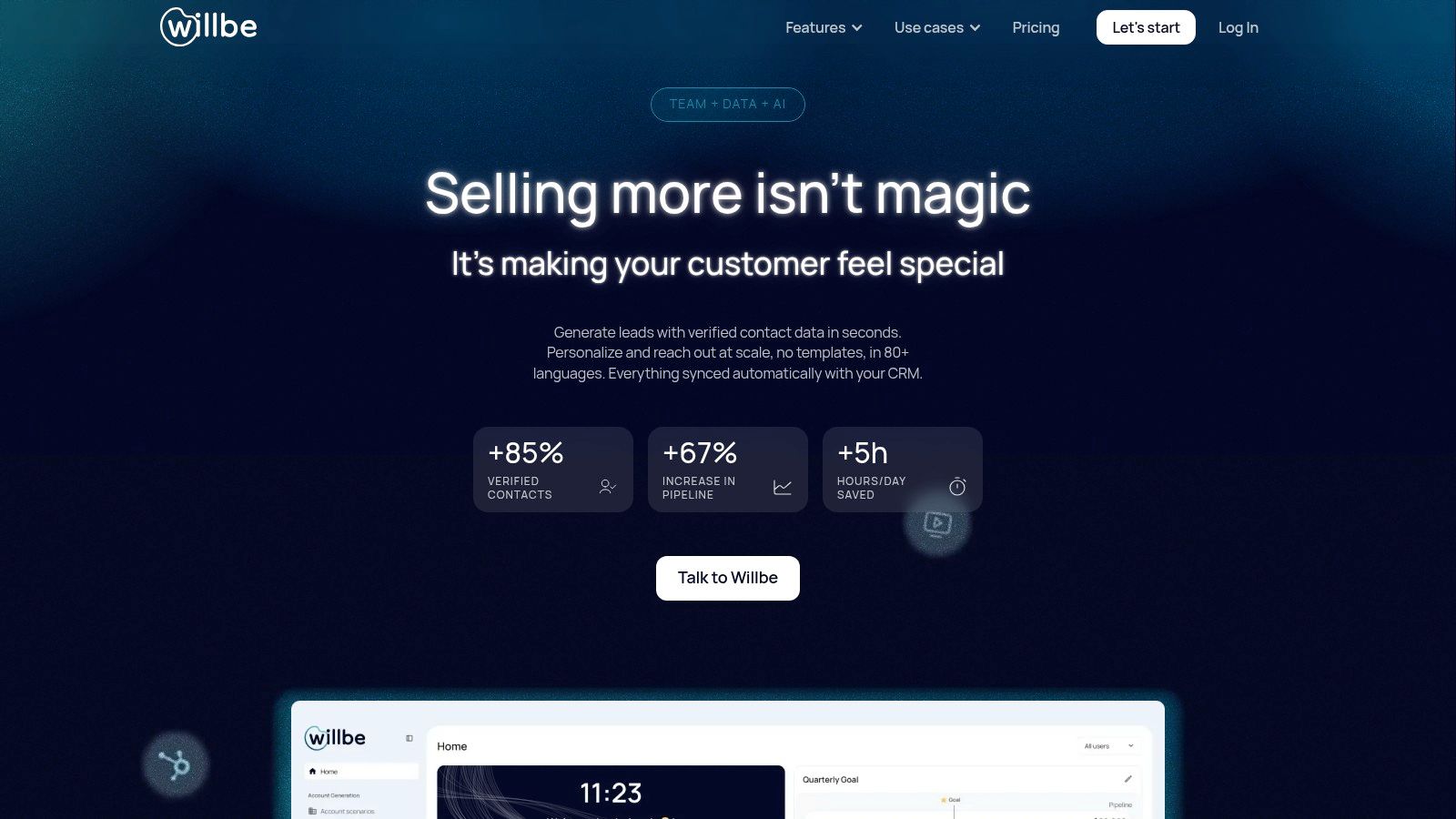
This platform consolidates workflows that typically require separate tools for data sourcing, email automation, LinkedIn engagement, and analytics. By aggregating over 30 B2B contact databases, Willbe delivers a continuously updated pool of leads with high data integrity, claiming over 85% verified contact accuracy. This foundation allows sales development representatives (SDRs) and account executives (AEs) to build hyper-targeted segments for outbound campaigns.
Why Willbe Ranks as a Top Choice
Willbe’s core strength lies in its proprietary AI orchestrator, which moves past generic templates to generate authentic, voice-matched outreach across email and LinkedIn. This system is designed to mimic a user's unique communication style, creating messages that feel genuinely 1:1, even at scale. It supports outreach in over 80 languages, making it a strong fit for teams targeting global markets.
Another significant advantage is the real-time analytics engine. It provides clear visibility into which channels, prospect profiles, and messaging strategies are driving results. With reported sales prediction accuracy improvements of over 35%, leaders can make data-backed decisions to optimize team performance and forecast pipeline more reliably.
Use Cases and Practical Benefits
- For SDRs & BDRs: Automate list building and research, allowing more time for active selling. The AI helps create high-quality, personalized messages that break through the noise and generate more qualified meetings.
- For Sales Leaders: Gain a unified view of team activity and performance without manually pulling reports. Use predictive insights to scale successful plays and build a more repeatable revenue engine.
- For RevOps: Ensure clean data flows seamlessly into your CRM with automatic syncs, reducing manual data entry and broken workflows. Consolidate the sales stack to reduce costs and complexity.
Access and Pricing
Willbe does not offer public pricing. Access to the platform requires scheduling a demo to receive a custom quote tailored to your team’s specific needs. While this may slow down the evaluation process for smaller businesses, it reflects the platform’s enterprise-grade capabilities and focus on providing a solution configured for high-growth and established sales organizations.
Website: https://www.willbe.ai
2. LinkedIn Sales Navigator
LinkedIn Sales Navigator is the professional network’s built-in platform for B2B prospecting. It gives sales teams direct access to LinkedIn's massive first-party member and company data, layered with advanced search filters that go far beyond what a standard account offers. For any sales team whose ideal customer profile (ICP) lives on LinkedIn, it’s an indispensable resource for building targeted lists, identifying key decision-makers, and tracking buying signals.
Its core function is enabling hyper-specific searches. SDRs can filter by seniority, function, company headcount, geography, and even keywords in a person’s profile. This precision is critical for building account-based marketing (ABM) lists or identifying specific personas within a target account. Real-time alerts on job changes, company funding news, and prospect activity provide timely triggers for outreach, allowing for more relevant and contextual conversations. Mastering its search capabilities is a key skill; for a deeper dive, check out this guide on advanced LinkedIn search techniques.
Key Features & Considerations
- Advanced Lead & Account Search: Zero in on prospects with dozens of filters, saving searches to create dynamic lists.
- Real-Time Alerts: Get notified when saved leads change jobs, post content, or when their company is mentioned in the news.
- TeamLink: See how your team is connected to a prospect to request warm introductions.
- Saved Leads & Accounts: Build and organize prospect lists directly within the platform.
Pros & Cons
Best for: B2B sales teams that rely on relationship-building and account intelligence to drive their pipeline. It's not an all-in-one outreach tool but is arguably one of the best sales prospecting tools for the initial discovery and research phase.
Website: business.linkedin.com/sales-solutions
3. ZoomInfo SalesOS
ZoomInfo SalesOS is an enterprise-grade sales intelligence platform known for its expansive US-centric B2B database. It is built for go-to-market teams that need broad contact and company data coverage combined with actionable buying signals. The platform gives sales teams access to direct-dial phone numbers, verified emails, organizational charts, and technographics, positioning it as a foundational data layer for high-velocity outbound teams.
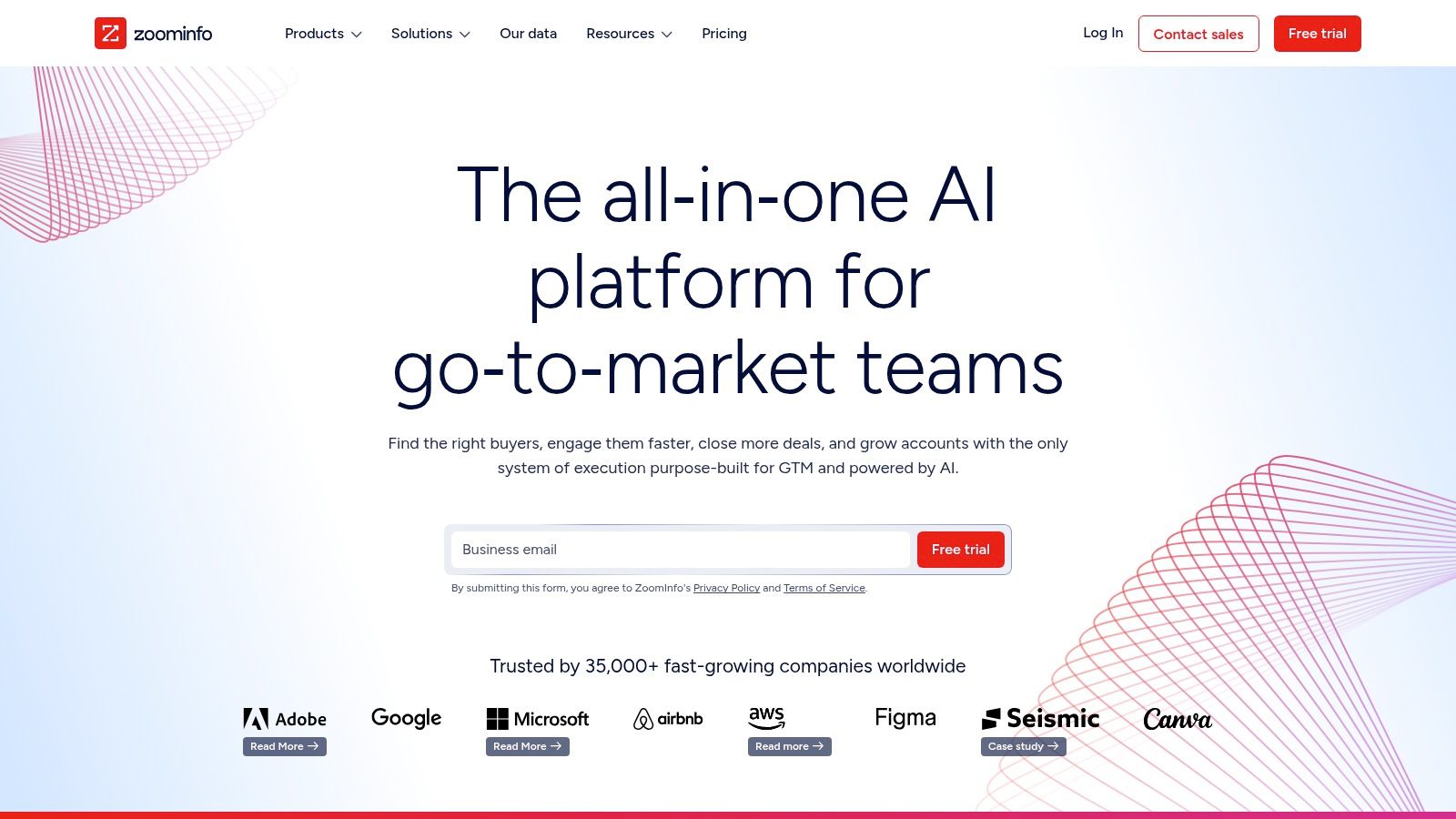
Its strength lies in providing direct contact information at scale, which is essential for any team running cold calling or email campaigns. The platform also offers intent data, which flags accounts that are actively researching solutions like yours, allowing for timely outreach. While its primary function is data acquisition, its deep integrations with major CRMs and sales engagement tools make it a central hub for GTM operations, though it still requires manual work to turn that data into effective outreach. You can explore how this fits into a wider strategy by looking into the best data enrichment tools available.
Key Features & Considerations
- Broad Contact & Company Data: Extensive coverage of North American contacts, including direct-dial phone numbers and email addresses.
- Intent Data & Scoops: Identifies accounts showing purchase intent and provides alerts on company news like funding or leadership changes.
- Technographics & Org Charts: Reveals a company’s tech stack and helps identify key decision-makers within complex hierarchies.
- Robust Integrations: Native connections with Salesforce, HubSpot, Outreach, and Salesloft for seamless data syncing and workflow automation.
Pros & Cons
Best for: Enterprise and mid-market sales teams that need a large, reliable source of B2B contact data and intent signals to fuel a high-volume outbound engine. It is one of the best sales prospecting tools for teams prioritizing data acquisition.
Website: https://www.zoominfo.com
4. Apollo
Apollo has become a go-to platform for sales teams aiming to consolidate their tech stack. It combines a massive B2B contact database with a suite of outreach tools, including sequencing, a dialer, and call recording. This all-in-one model allows sales development teams to find prospects and engage them through multiple channels without toggling between separate data and sales engagement platforms. Its value is in unifying the top-of-funnel workflow into a single, cohesive system.
The platform's core strength is its large, searchable database of contacts and companies, complete with verified emails and direct-dial phone numbers. A Chrome extension overlays this data directly onto LinkedIn profiles and company websites, streamlining the research process. For sales leaders focused on building a scalable outbound engine, Apollo offers a powerful combination of data acquisition and outreach automation, making it one of the best sales prospecting tools for teams that prioritize operational efficiency and speed. Finding accurate contact information is a critical first step, and this guide on how to find company email addresses offers further strategies.
Key Features & Considerations
- B2B Database & Chrome Extension: Access a large pool of contacts with verified emails and phone numbers, and enrich profiles on the web.
- Native Sequencing & A/B Testing: Build, test, and automate multi-step, multi-channel outreach campaigns.
- Integrated Dialer & Call Recording: Make and record calls directly within the platform to keep all activity in one place.
- Lightweight CRM & Deal Management: Track pipeline and manage deals for teams that don't have a separate CRM.
Pros & Cons
Best for: SDR and BDR teams that need an integrated solution for sourcing data and executing outbound campaigns. It's ideal for high-growth companies looking to build a repeatable GTM engine without a complex, fragmented toolset.
Website: www.apollo.io
5. Cognism
Cognism is a sales intelligence platform with a strong emphasis on global data coverage and compliance. It's built for teams that need accurate, verified contact information, particularly mobile numbers, while adhering to strict privacy regulations like GDPR and CCPA. Its focus on Do-Not-Call (DNC) list screening across numerous countries makes it a reliable choice for organizations prioritizing compliant outbound dialing.
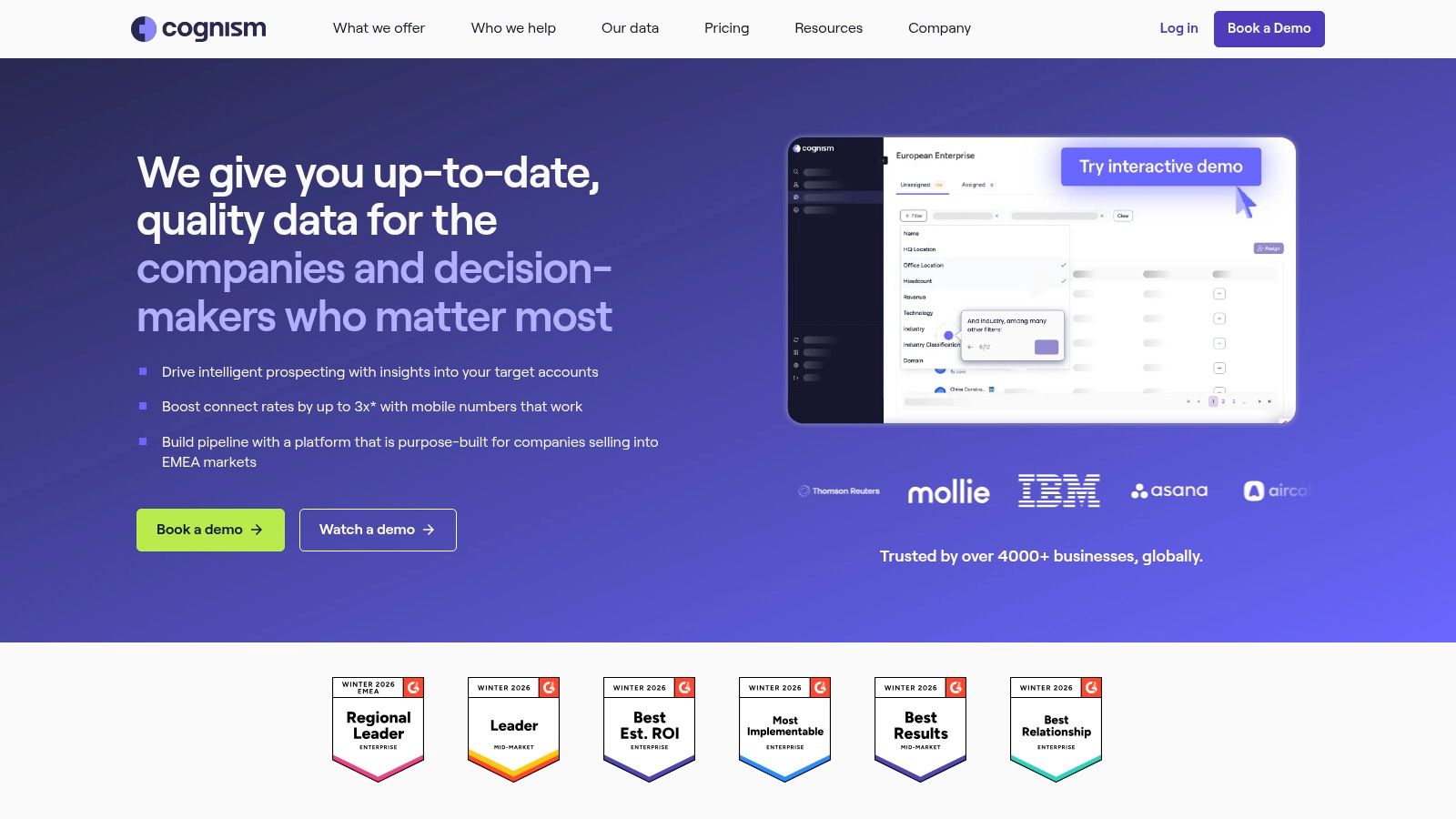
The platform’s core value lies in its high-quality, globally-focused B2B data, which includes direct-dial and mobile numbers that are often difficult to source. Cognism is also known for its "Diamond Data" feature, which provides phone-verified contact information to boost connect rates. For teams operating in regulated industries or across European markets, its built-in compliance features provide a critical safety net, helping to minimize risk without slowing down prospecting momentum. This makes it one of the best sales prospecting tools for teams needing both reach and responsibility.
Key Features & Considerations
- Global Contact Data: Access a large database of emails and mobile numbers with broad international coverage.
- Compliance-First Workflows: Features GDPR and CCPA alignment with extensive DNC list screening.
- Data Verification: Offers "Diamond Data" for phone-verified contacts to improve accuracy and connection rates.
- Contact & Account Enrichment: Augments existing CRM records with fresh, accurate data.
Pros & Cons
Best for: Global sales teams that prioritize compliant outbound calling and require high-quality mobile phone data to hit their numbers. It’s an ideal tool for organizations in risk-averse or regulated sectors.
Website: www.cognism.com
6. Lusha
Lusha is a sales intelligence tool known for its simplicity and easy-to-use Chrome extension. It’s popular with small to mid-sized teams needing quick access to verified emails and phone numbers without the complexity of larger data platforms. The platform's transparent credit model makes it straightforward for individual reps and managers to forecast costs and manage usage.
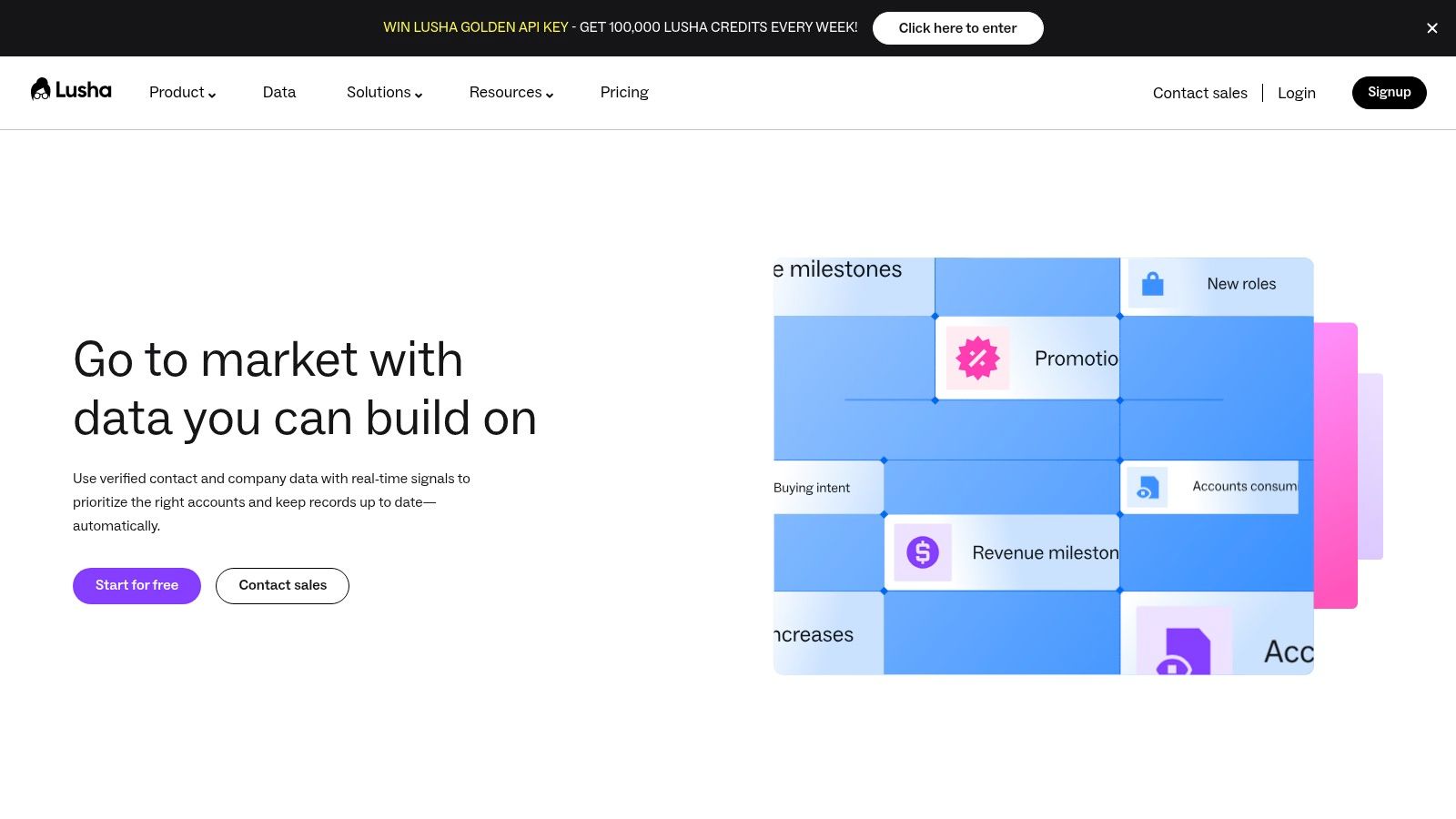
Its core strength lies in its browser extension, which allows SDRs to find contact details directly from LinkedIn profiles or company websites with a single click. This workflow minimizes friction and speeds up list-building for outbound campaigns. For teams that need a fast, no-frills solution to enrich prospect lists with actionable contact data, Lusha is often one of the best sales prospecting tools to get started with, thanks to its generous free plan and quick deployment.
Key Features & Considerations
- Credit-Based Pricing: A simple model where credits are used for specific data points (e.g., 1 credit per email, more for a phone number).
- Browser Extension: Quickly captures contact information from LinkedIn, Salesforce, and company websites.
- Free Plan: Offers a monthly credit allotment, allowing teams to test data quality and fit before committing.
- CRM Integrations: Syncs revealed contact data directly into platforms like Salesforce and HubSpot.
Pros & Cons
Best for: SDRs and SMB sales teams who need a fast, easy way to find direct emails and phone numbers. It’s an excellent entry-level data enrichment tool for teams prioritizing speed and simplicity over deep account intelligence.
Website: www.lusha.com
7. Seamless.AI
Seamless.AI is a well-known prospecting platform that provides sales teams with direct access to B2B contact data, including verified emails and phone numbers. Its main appeal lies in a broad feature set and a generous free plan, which removes the initial friction for SDRs and small teams wanting to test data coverage before committing. This makes it a popular entry point for organizations looking to add a dedicated data provider to their sales stack without a significant upfront investment.
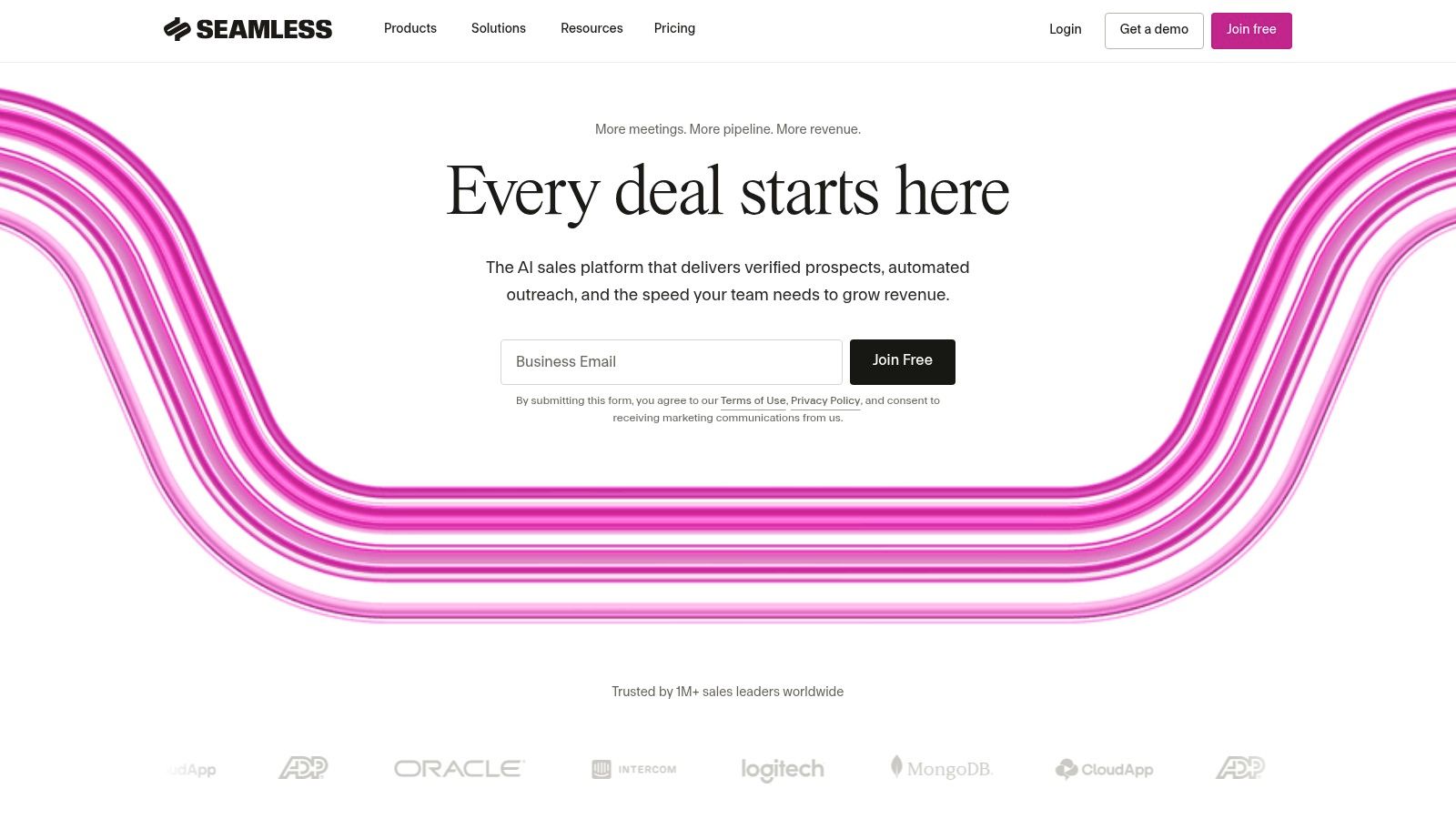
The platform combines its core prospector with several other useful modules, including buyer intent signals, data enrichment for existing records, and job change tracking. This combination allows teams to not only find new contacts but also to act on timely triggers and maintain a cleaner CRM. Its real-time search engine finds contacts across the web and social profiles, making it one of the more flexible sales prospecting tools for teams that need both volume and basic intelligence signals in one place.
Key Features & Considerations
- Real-Time Contact Search: Finds emails and mobile numbers for contacts directly from its web app or browser extension.
- Buyer Intent Data: Identifies companies that are actively researching solutions like yours.
- Data Enrichment & Job Changes: Automatically updates your CRM with fresh contact data and alerts you when key prospects switch roles.
- Generous Free Plan: Offers free credits to new users, allowing teams to validate its data quality for their specific ICP.
Pros & Cons
Best for: SMB and mid-market sales teams that need a straightforward, affordable data provider to quickly build lists and find contact information. Its free plan makes it an excellent choice for testing the waters of automated prospecting.
Website: https://seamless.ai
8. SalesIntel
SalesIntel is a sales intelligence platform that carves out its niche by focusing intently on data accuracy, particularly for direct-dial phone numbers. Its core value proposition is its “human-verified” data layer, where a team of researchers validates contact information, a process it repeats on a 90-day cycle. For outbound teams where cold calling is a critical motion, this commitment to accurate, recently confirmed phone numbers can dramatically reduce wasted time and connect reps with decision-makers more reliably.
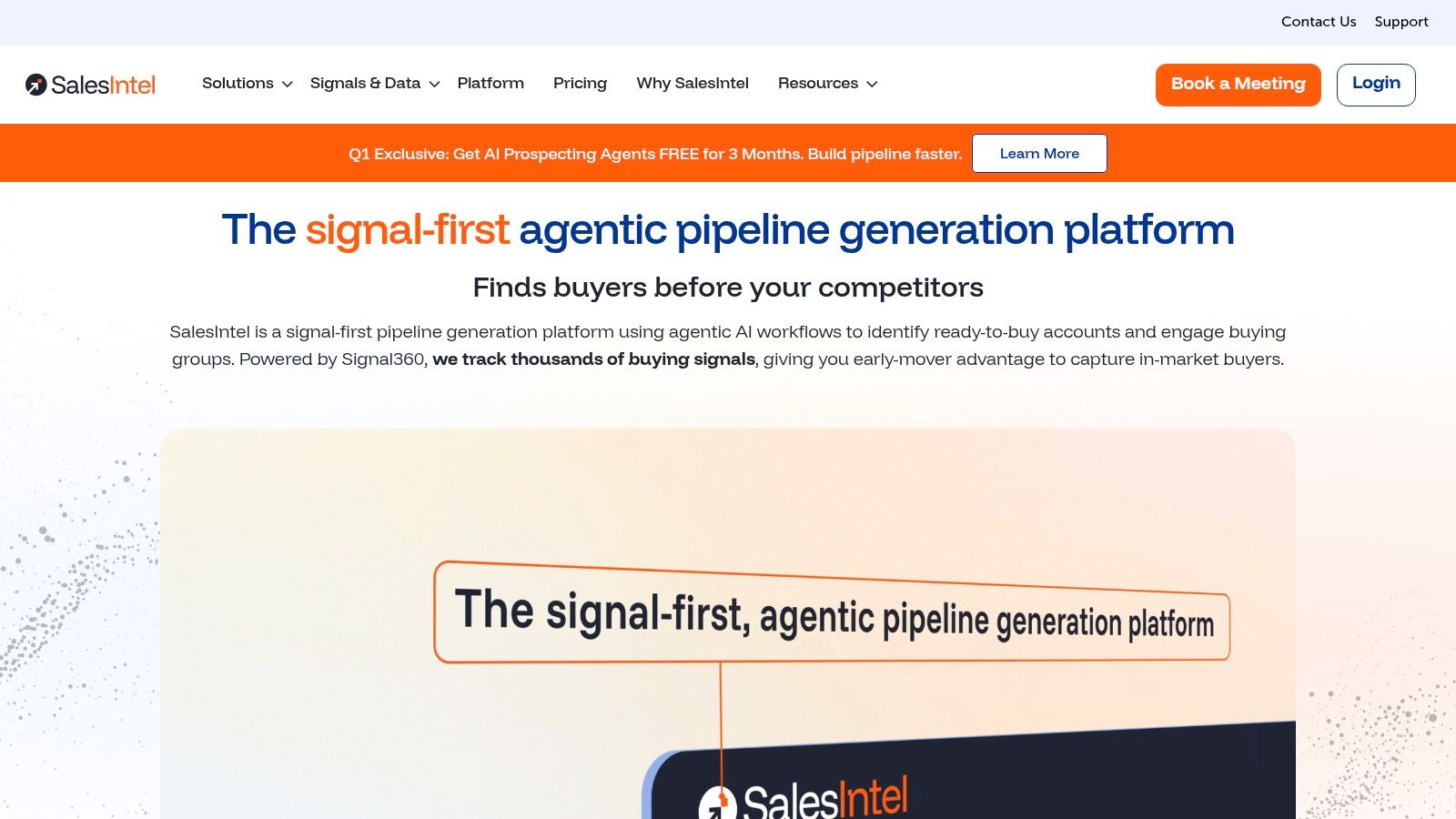
This platform isn’t just a contact database; it offers a full suite of tools including company data, technographics, and intent signals. The transparent labeling of its verification status for each contact allows SDRs to prioritize outreach to the highest-confidence prospects first. It’s built for GTM teams that need to ensure their CRM data is clean and actionable, providing both enrichment for existing records and robust search for net-new prospecting. For organizations struggling with low connect rates, SalesIntel is one of the best sales prospecting tools to evaluate.
Key Features & Considerations
- Human-Verified Data: Contact details are checked and confirmed by human researchers to ensure high accuracy.
- 90-Day Re-verification: Key data, especially mobile numbers, is re-validated every 90 days to combat data decay.
- Universal Search: Find prospects and companies with advanced filters, including firmographics and technographics.
- Data Enrichment & Intent: Enrich your existing CRM records and access Bombora’s intent data to target active buyers.
Pros & Cons
Best for: B2B sales teams that depend heavily on phone outreach and require the highest possible accuracy for direct-dial numbers to drive their outbound engine.
Website: salesintel.io
9. LeadIQ
LeadIQ is a prospecting and data capture tool designed for speed and efficiency, operating as a lightweight extension over LinkedIn and company websites. Its primary function is to help sales reps capture verified contact information-work emails, personal emails, and mobile numbers-with a single click and sync it directly to their CRM or sales engagement platform. This workflow is tailored for SDRs who spend their days building lists and need to move quickly without getting bogged down by manual data entry or switching between multiple tabs.
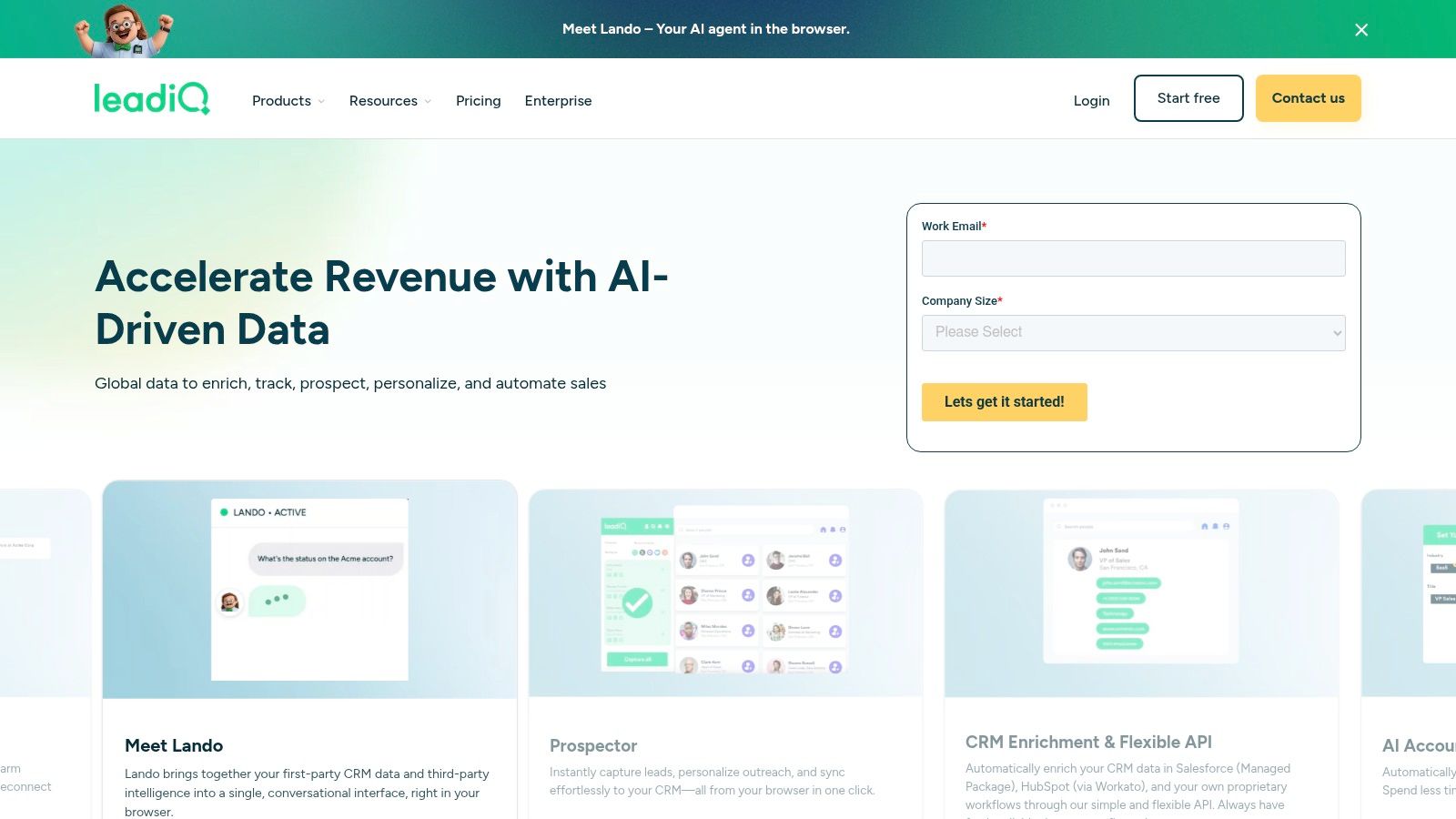
The platform stands out for its simplicity and direct integration into an SDR's existing process. As you browse a LinkedIn profile or a company's team page, LeadIQ allows you to instantly capture that contact and their data, enriching it in real-time before sending it to Salesforce, HubSpot, Outreach, or Salesloft. This one-click capture is a significant time-saver, reducing the friction between finding a good-fit prospect and adding them to a sequence. The tool also includes AI-powered features to help generate first-touch messaging, making it a strong contender among the best sales prospecting tools for teams focused on high-volume, high-quality outreach.
Key Features & Considerations
- 1-Click Capture: Instantly capture contact data from LinkedIn, Sales Navigator, and company websites.
- Verified Contact Data: Provides verified work emails, personal emails, and mobile phone numbers to improve connect rates.
- Direct CRM & SEP Sync: Native integrations with Salesforce, HubSpot, Salesloft, and Outreach to eliminate manual data entry.
- AI-Generated Messaging: Assists in crafting personalized opening lines for cold outreach.
Pros & Cons
Best for: SDR teams who live on LinkedIn and need a fast, reliable way to capture contact data and push it directly into their sales tools without disrupting their workflow.
Website: leadiq.com
10. Clay
Clay is a powerful automation and data enrichment workbench designed for technical sales and growth teams. It acts as a central hub, connecting over 100 data providers, web scraping, and AI into a spreadsheet-like interface where users build custom "recipes" to find and qualify prospects. This makes it one of the best sales prospecting tools for teams that need to create highly specific, programmatic workflows that go beyond what off-the-shelf platforms offer.
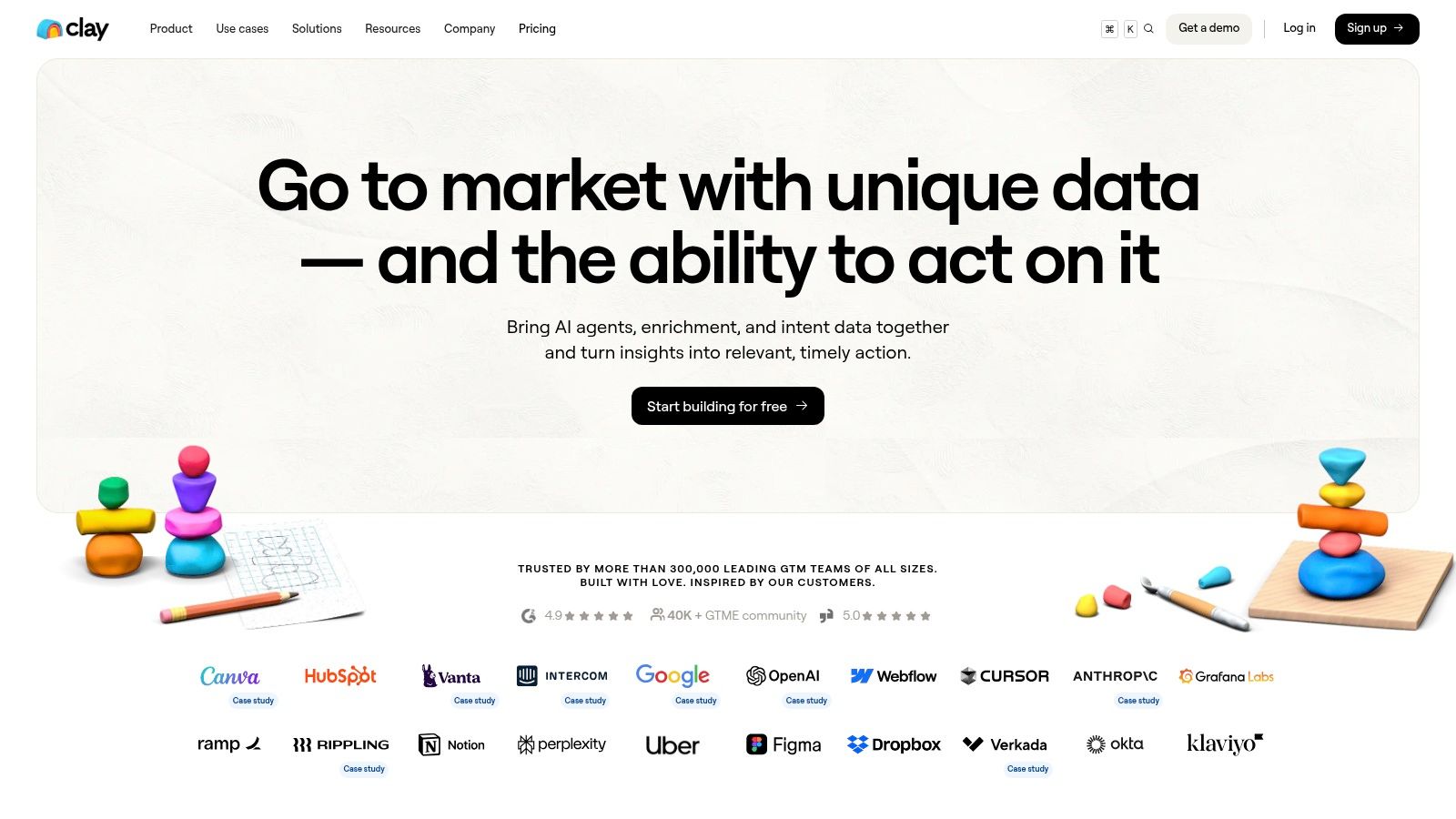
The platform's core strength is its flexibility. Instead of subscribing to multiple disparate data tools, teams can use Clay's credit-based system to access a wide range of enrichments on a pay-per-use basis. You can chain actions together, for example: start with a list of domains, find their employees on LinkedIn, enrich those contacts with verified emails from multiple providers, and then use AI (Claygent) to research each person and draft a personalized opening line. This level of customization allows for truly unique prospecting motions that are difficult for competitors to replicate.
Key Features & Considerations
- 100+ Data Integrations: Access numerous data sources for contact, company, and techographic enrichment in one place.
- AI Agent (Claygent): Automates research and personalization tasks, like summarizing a prospect's recent activity or drafting outreach messages.
- Waterfall Enrichments: Sequentially try different data providers to find information, ensuring higher fill rates while controlling costs.
- Webhooks & CRM Integrations: Push enriched and qualified data directly into your CRM or sales engagement platform to trigger sequences.
Pros & Cons
Best for: Growth teams and RevOps professionals who need to build custom, scalable data enrichment and prospecting engines without being locked into single-vendor solutions.
Website: www.clay.com
11. Hunter
Hunter is a widely used email finder and verifier that excels at providing clean, verified email addresses. It's often favored by teams that need a simple, cost-effective way to source contact information, especially when augmenting a LinkedIn-driven workflow. The platform allows sales reps to perform domain-level searches to find all email addresses associated with a company or to look up specific individuals by name and company.
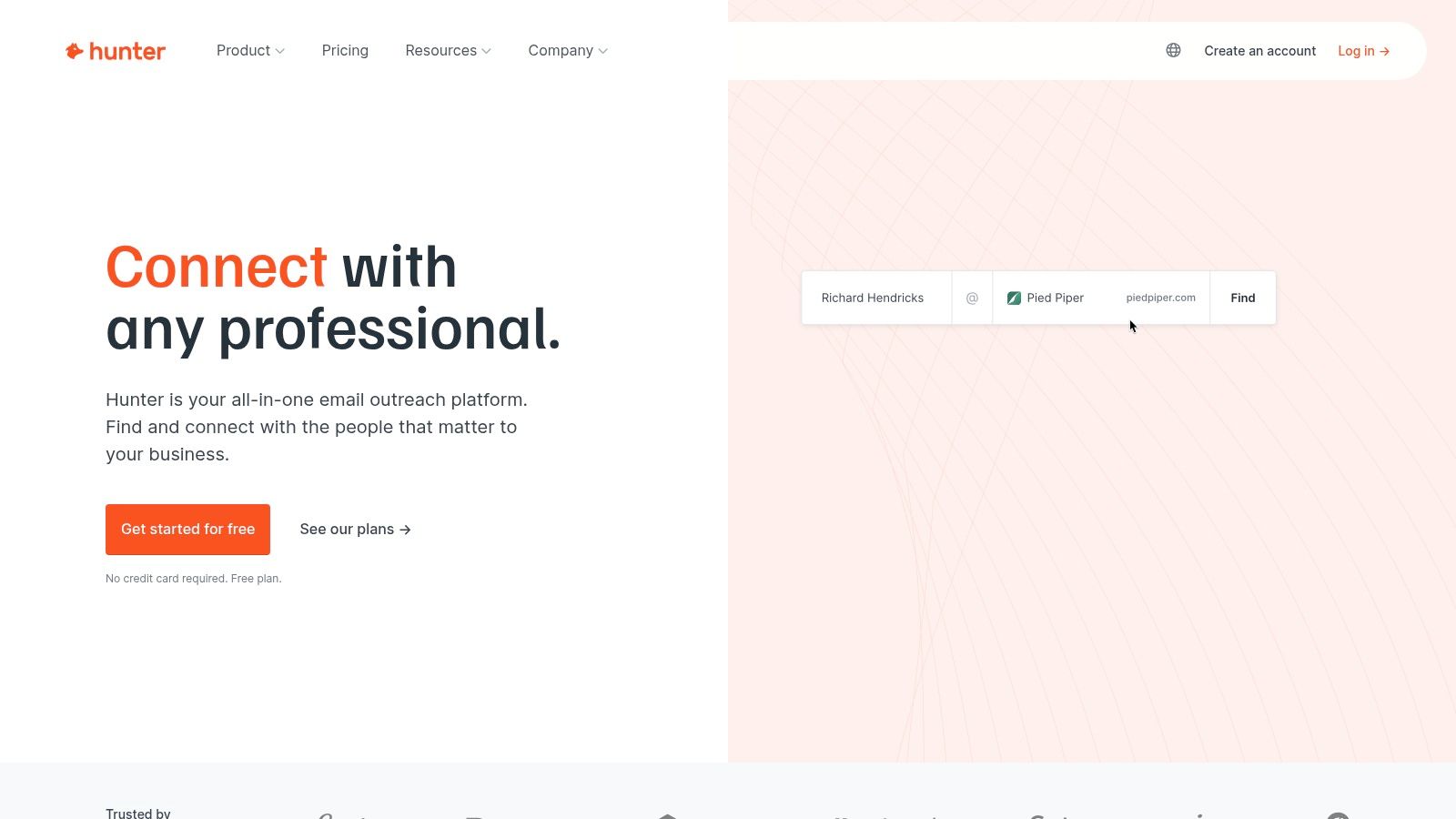
Its strength lies in its straightforward approach to data acquisition. You can find emails individually, in bulk via its Domain Search, or through an API, making it flexible for different prospecting motions. The built-in email verifier is a key function, helping sales teams protect their sender reputation by reducing bounce rates before an outreach campaign begins. While not a full-stack sales platform, Hunter offers a basic "Campaigns" feature for sending simple sequences from your connected inbox, making it a solid entry point into cold email.
Key Features & Considerations
- Domain Search: Find all email addresses associated with a specific domain, complete with confidence scores.
- Email Finder & Verifier: Search for individual emails and validate lists to ensure deliverability.
- Transparent Quotas: Clear, documented pricing tiers based on a credit system for searches and verifications.
- Basic Campaigns: Send simple cold email sequences directly from the platform.
Pros & Cons
Best for: Startups and SMB sales teams that need a reliable, budget-friendly tool for email discovery and verification. It's one of the best sales prospecting tools for teams that primarily need to add email data to prospect lists built elsewhere.
Website: hunter.io
12. Crunchbase
Crunchbase is a company intelligence platform focused on private and public company data, particularly within the startup and tech ecosystems. For sales teams, its primary function is top-of-funnel account discovery. It allows SDRs to build highly targeted account lists based on firmographic data and timely growth signals like recent funding rounds, acquisitions, leadership changes, and investor backing. This makes it one of the best sales prospecting tools for identifying companies with fresh capital or a specific strategic intent.
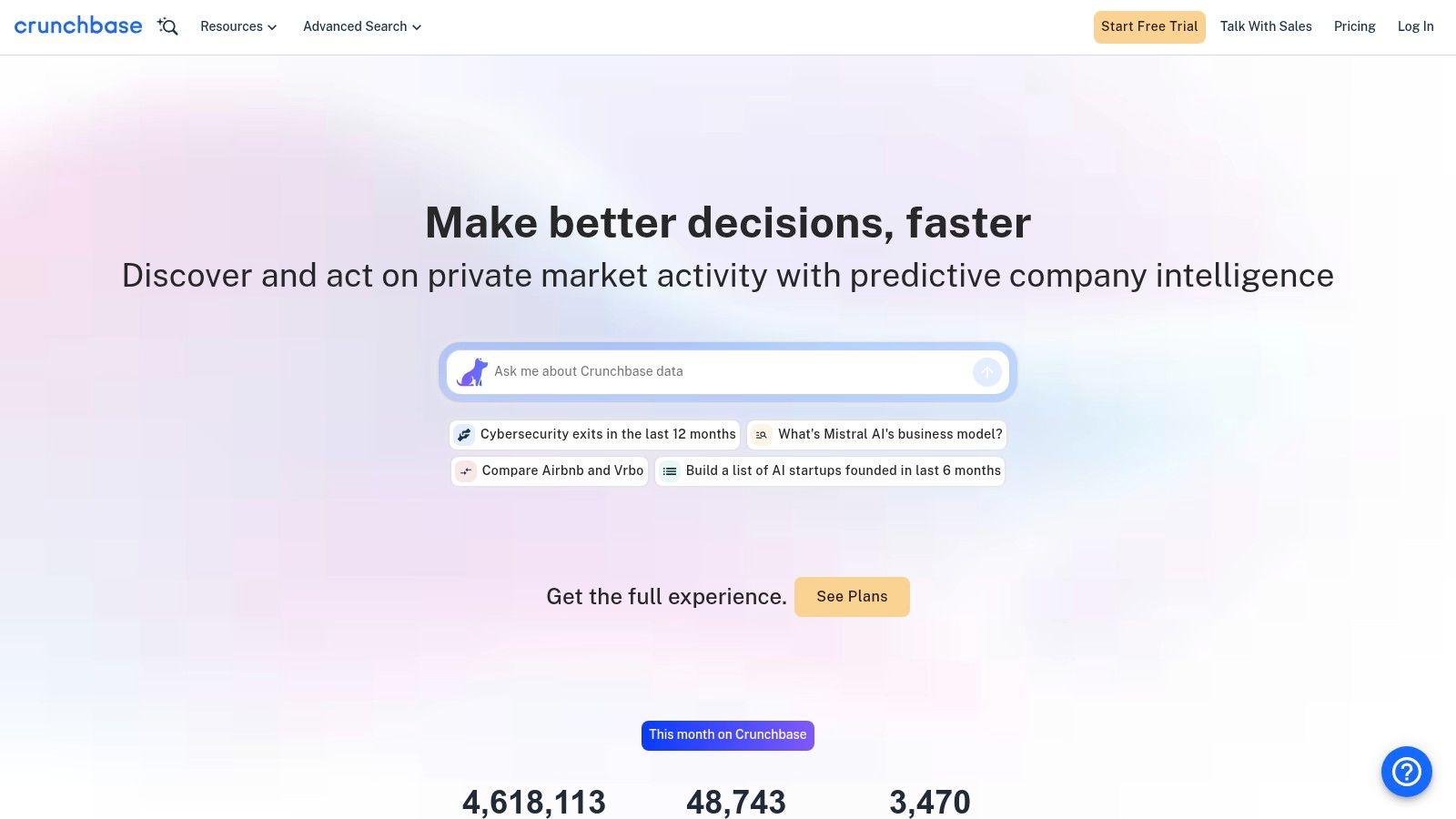
The platform excels at helping teams execute account-based marketing (ABM) strategies by filtering for accounts that fit a precise ideal customer profile. For instance, a team selling to Series B fintech startups can instantly generate a list of every company that meets that criteria. While it provides limited direct contact information, its real value lies in identifying which accounts to target. It pairs well with data providers or all-in-one platforms that can then enrich these target accounts with the necessary email and phone data for outreach.
Key Features & Considerations
- Advanced Search Filters: Build lists using data points like funding rounds, investors, industry categories, and growth signals.
- Company Activity Alerts: Track target accounts for news on funding, acquisitions, and other key events.
- Partner Data Marketplace: Access additional data and signals through third-party integrations (add-ons).
- Investor & Startup Focus: Deep data on venture capital, private equity, and the startup landscape.
Pros & Cons
Best for: Sales teams targeting startups, tech companies, or any organization where funding and growth signals are strong buying indicators. It's a foundational tool for building hyper-targeted account lists before the contact discovery phase.
Website: www.crunchbase.com
Top 12 Sales Prospecting Tools — Feature Comparison
From Tool Overload to a Unified GTM Engine
The days of duct-taping together a dozen different point solutions are numbered. As we've explored, the market for the best sales prospecting tools has moved far beyond simple contact databases. Today’s top-performing sales organizations aren't just buying lists; they are building intelligent, cohesive systems that drive their entire go-to-market strategy. The real cost of a fragmented stack isn't just the subscription fees, it's the hidden friction: the hours SDRs waste toggling between tabs, the messy data that pollutes your CRM, and the inconsistent messaging that burns through valuable prospect lists.
Moving from tool chaos to a unified engine is the single biggest opportunity for most sales teams. This means consolidating data enrichment, sequencing, and AI-driven personalization into a single workflow. While specialized tools like Cognism or Lusha excel at providing raw data, and platforms like Clay offer powerful data orchestration for technical teams, the future belongs to all-in-one solutions that simplify the entire process from account identification to meeting booked.
The ultimate goal is to empower your reps to do what they do best: build relationships and close deals. A unified platform makes this possible by automating the most repetitive, low-value tasks while giving them the high-quality data and contextual insights needed to craft messages that actually resonate.
Key Takeaways: From Data Points to Revenue Engine
Reflecting on the tools we’ve analyzed, several core principles emerge for building a modern, effective prospecting function:
- Data Quality Over Quantity: A massive database is useless if it’s inaccurate. Tools like SalesIntel and ZoomInfo built their reputations on data accuracy, but the new standard is real-time verification and enrichment that ensures your outreach hits the mark every time. Don't settle for stale data that leads to high bounce rates and wasted effort.
- Personalization is Non-Negotiable: Generic, templated outreach is dead. Prospects can spot an automated, low-effort message from a mile away. The most effective tools use AI not to write generic copy, but to find specific, relevant insights that allow your reps to sound genuinely human, even at scale. This is the difference between being ignored and starting a conversation.
- Workflow Integration is Everything: The best tool is the one your team actually uses. If a tool doesn't seamlessly integrate with your CRM (like Salesforce) and daily workflows (like LinkedIn), it will create more problems than it solves. Look for native, bi-directional syncs that keep your data clean and give your reps a single source of truth.
- Consolidation Drives Efficiency: The true cost of managing multiple tools is the operational drag. Juggling separate subscriptions for data, sequencing, and analytics creates complexity and drains productivity. An all-in-one platform like Willbe or Apollo eliminates this friction, providing a single, streamlined workflow that accelerates the entire sales cycle.
Your Next Move: Choosing the Right Path Forward
Selecting the right tool depends entirely on your team's maturity, goals, and existing tech stack. If you're a small team just starting out, a tool like Hunter or Lusha might be a good entry point. If you have a dedicated RevOps team that loves building complex workflows, a platform like Clay could be a powerful choice.
However, for most high-growth B2B companies, the most direct path to a predictable pipeline is through a unified platform. The focus should be on finding a solution that combines a best-in-class B2B database with powerful sequencing and truly personalized AI. This approach allows you to scale your outbound efforts without scaling headcount, ensuring that every SDR and AE is operating at maximum efficiency.
Before you make a final decision, ask yourself these questions:
- How much time is my team currently spending on manual research and data entry?
- Are our current tools creating data silos and integration headaches?
- Does our outreach sound authentic, or are we relying on generic templates?
- Do we have clear visibility into what’s working and what’s not in our prospecting efforts?
Answering these questions honestly will guide you toward the right investment. Stop patching together a broken system and start building a predictable revenue engine.
Ready to see how a unified platform can transform your prospecting? Willbe combines a world-class B2B database with template-free AI personalization and multi-channel sequencing to help your team book more meetings with the right accounts. Explore how top teams use Willbe to scale outbound and book a demo to see it in action.